Tide pool safety
Rocky shores are slippery, the tide comes back, and waves can surge without warning. Every line on this page is taken from a safety agency, park service or medical source, with a link. We choose what goes under which heading, and add nothing of our own.
Last updated · Where this comes from
General
Advice that applies on every rocky shore, from the agencies that manage them.
- Approach a coast trip like any other outdoor recreation activity: safety first.10
- Not all beaches are recommended for swimming or wading. The very things that make these places spectacular can be lethal to those caught unaware along the shoreline.2
- Lifeguard service is limited along some parts of the coast. Check with on-duty park staff about ocean conditions, which can change quickly. When in doubt, don't go out.2
- Be aware of the ocean. Don't be surprised by a wave or the incoming tide.11
- Observe all warning signs posted in the park.7
Ocean
Sneaker waves, rip currents and the incoming tide.
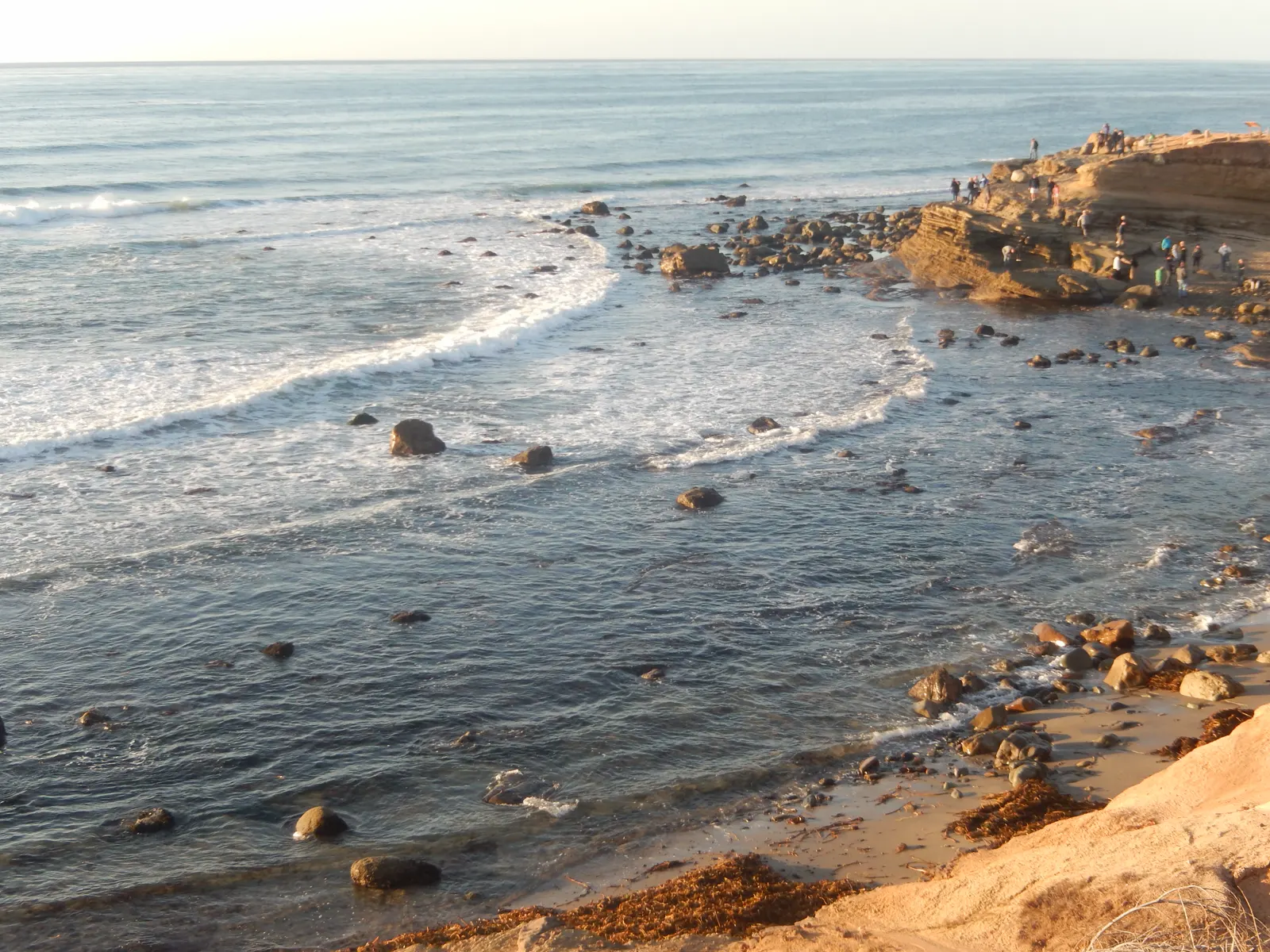
Sneaker waves and logs
- Sneaker waves are deadly, larger-than-average swells that can suddenly and without warning surge dozens of feet higher up the beach than expected.12
- They often come with no warning after long periods of quiet surf and much smaller waves, lulls that can last 10 to 20 minutes.12
- Do what experienced surfers and lifeguards do: watch the ocean for at least 20 minutes, and stay farther back from the ocean than you think is necessary.12
- Always keep one eye on the ocean, so you won't be caught off guard if a bigger wave surges up the beach.10
- Never turn your back to the ocean: the backwash can knock you off your feet and drag both children and adults into deep water.7
- Never stand on logs on the beach. A sneaker wave can lift or roll these water-soaked logs, and people have been injured and even crushed under them.12
- Stay away from logs on the beach or in the surf: they absorb water like sponges, increasing their weight by up to several tons.10
Rip currents
- Rip currents are powerful, channeled currents of water flowing away from shore.2
- Rip currents often form on calm, sunny days. Only swim at a beach with lifeguards.13
- If caught in a rip current, remain calm to conserve energy and think clearly.2
- Don't fight the current. Swim out of the current in a direction following the shoreline. When out of the current, swim towards shore.2
- If you are unable to swim out of the rip current, float or calmly tread water.2
- If you are still unable to reach shore, draw attention to yourself: face the shore, wave your arms, and yell for help.2
Getting cut off by the tide
- Know when the tide is coming in, especially when exploring tidepools or secluded beaches. Incoming tides can quickly leave you stranded away from shore.10
- Be aware of the incoming tide. Do not turn your back to the waves, and make sure that you can always reach dry land (National Park Service, Cabrillo).14
- Always have an escape route when you're on the beach, especially on the steep, enclosed beaches of the Northwest.12
Shore
Slippery rock, unstable bluffs, falling rock and closed areas.
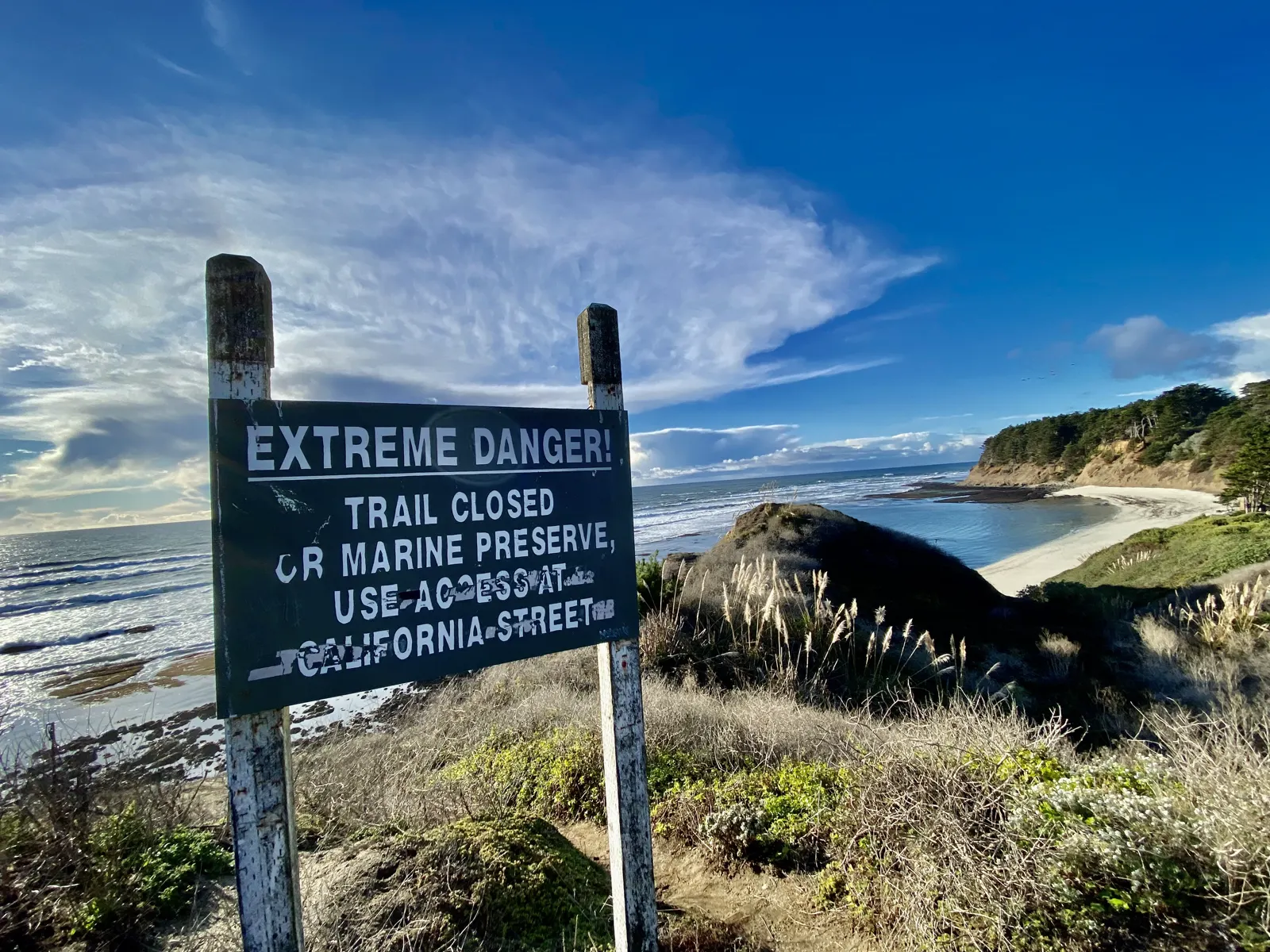
- Waves and algae can make the rocks extremely slippery. Wear sturdy shoes and step with caution (National Park Service, Cabrillo).14
- Wear shoes that give you a good grip on slippery rocks.11
- Be careful on rocks and near cliffs. Rocks can be slippery, and cliffs can be unstable due to erosion. Stay on marked trails and don't climb over fences or other barriers.10
- Avoid walking along the base of cliffs or eroding bluffs. Chunks of cliff or rock can fall at any time; areas with overhangs and caves are especially dangerous. Do not dig in cliffs or bluffs.10
- Do not walk off-trail or enter closed areas.15
- Climbing on rock outcroppings, wading or playing near the surf line can turn deadly with large surf, backwash, sudden drop-offs, pounding shorebreak and rip currents.2
Weather
Cold water, heat, storms and high surf.
Cold water
- Cold water can cause life-threatening effects, including an involuntary gasp for air under water, cardiac arrest, temporary paralysis, hypothermia, and vertigo and disorientation when cold water enters the ear canal.7
- Do not panic if you do find yourself in cold water. Use controlled breathing; do not gasp for air.7
- In the cold waters of the Northwest, cold water paralysis can set in in the limbs within minutes.12
Storms, high surf and forecasts
- Be extra careful during extreme high or low tides and storms.10
- Know the local forecast for the day, and look for statements about sneaker waves or other beach hazards.12
- Check water conditions before you go: look at the local beach forecast before you leave, and talk to the lifeguard at the beach.13
Heat and water
- Drink and carry plenty of water: a minimum of 1 quart every two hours (California State Parks, for hikers).15
Animals
Stings, spines and leaving wildlife alone.
Stings and spines
- Sea urchins, stingrays, jellyfish and sea anemones are among the marine animals whose bites or stings MedlinePlus covers.1
- Do not touch unfamiliar marine life. Even dead animals or severed tentacles may contain poisonous venom.1
- If wading in water where stingrays are known to live, keep your feet on the bottom and shuffle them as you move forward.1
- Observe posted signs that may warn of danger from jellyfish or other hazardous marine life.1
Leave wildlife alone
- Don't touch tide pool animals. Most of them are protected by a coating of slime, and touching them with dry hands can damage them.11
- Step only on bare rock or sand.11
- Collecting organisms will kill them and is illegal in most tide pools.11
- Never feed or touch wildlife, and do not approach or attempt to move sick or injured wildlife.15
- Seals, sea lions and other marine mammals are protected by law: harassing, harming or pursuing them is prohibited, and NOAA urges people to watch them from a safe and respectful distance.16
Kids and pets
Supervision, and where dogs are and aren't allowed.
Children
- Actively supervise children in and around water, giving them your undivided attention. Appoint a designated adult “water watcher”, take turns with other adults, and tell the children who it is.7
- Teach children that open water is not the same as a pool: they need to be aware of uneven surfaces, currents, ocean undertow and changing weather.7
Dogs
Dog rules differ from spot to spot; each spot page lists its own.
- At and around the Haystack Rock Marine Garden, dogs must be kept on a leash. This protects your dog and the nesting sea and shorebirds that live at the rock.17
- On Oregon's ocean shore, a dog's handler must keep direct control of the animal, carry a leash at all times, stop it harassing people or wildlife, and pick up its waste.18
Before you go
The tide, your plan, phone signal and what to bring.
- Check the tide chart so that you start as the tide is on its way out.11
- Visit the tidepools at least one hour before low tide. Start with the pools closest to the ocean and work your way back with the incoming tide. Bring a tide table.19
- Cell connectivity in many state parks is limited or non-existent. Tell a responsible person where you are going and when you plan to return, and ask them to notify local law enforcement if you don't return on time.15
- Go with a buddy: a friend or family member.15
- Wear sturdy, comfortable shoes to help prevent injury.15
- Expect to get wet, and wear appropriate clothing. If you get soaked, dry off soon: evening temperatures on the coast can drop quickly.19
First aid
This is general first-aid information from MedlinePlus (U.S. National Library of Medicine) and California State Parks. It is not medical advice. In an emergency, call 911.1,2
For stings, the national Poison Help hotline is 1-800-222-1222, free and open 24 hours a day.3
In this tab: Someone in trouble in the water · Cuts and scrapes · Sea urchin spines and other marine stings · Stingray stings · Jellyfish stings · Hypothermia and cold water · Heat illness · Sprains from a fall
Someone in trouble in the water
When to call 911: If you see someone in trouble, get help from a lifeguard. If a lifeguard is not available, have someone call 9-1-1.2
- Try to remain calm. Have someone keep their eyes on the person. Give a clear explanation of your location and stay on the line with the dispatcher until told otherwise.2
- Throw the person something that floats, and yell instructions on how to escape: swim out of the rip current in a direction following the shoreline, then towards shore.2
- Only professionally trained rescuers should attempt in-water rescues. Many people drown while trying to save someone else from a rip current.2
Cuts and scrapes
When to call 911: Call 911 or the local emergency number if the bleeding is severe or cannot be stopped (for example, after 10 minutes of pressure), the person cannot feel the injured area or it doesn't work right, or the person is otherwise seriously injured.4
- For minor cuts: wash your hands with soap or antibacterial cleanser, then wash the cut thoroughly with mild soap and water.4
- Use direct pressure to stop the bleeding.4
- Apply antibacterial ointment and a clean bandage that will not stick to the wound.4
- For minor punctures: rinse the puncture for 5 minutes under running water, then wash with soap. Look (but do not poke around) for objects inside the wound; if you find any, don't remove them, and go to an emergency or urgent care center.4
Don't: Do not remove a long or deeply stuck object. Seek medical attention.4
Sea urchin spines and other marine stings
When to call 911: Seek medical help (call 911 or the local emergency number) if the person has difficulty breathing, chest pain, nausea, vomiting or uncontrolled bleeding, if the sting site develops swelling or discoloration, or for other bodywide symptoms.1
- Wear gloves, if possible, when removing stingers.1
- Brush off tentacles and stingers with a credit card or similar object if possible, or gently wipe them off with a towel. Do not rub the area roughly.1
- Wash the area with salt water.1
- Soak the wound in hot water no hotter than 113°F (45°C) for 30 to 90 minutes, if told to do so by trained personnel. Always test the water temperature before applying it to a child.1
Don't: Do not try to remove stingers without protecting your own hands. Do not raise the affected body part above the level of the heart, do not let the person exercise, and do not give any medicine unless a health care provider tells you to.1
Stingray stings
When to call 911: If you or someone with you is stung, call the local emergency number (such as 911) or the Poison Help hotline (1-800-222-1222). Seek medical help right away: some stingray stings can be serious and need professional care.5
- For superficial stings to an arm or leg, while waiting for medical help: get out of the water and into a safe place.5
- Control any bleeding by applying direct pressure to the wound with a clean cloth or bandage.5
- Soak the wound in water at 104°F to 113°F (40°C to 45°C), or as hot as can be comfortably tolerated on an unaffected limb if there's no thermometer, for 30 to no longer than 90 minutes.5
- Then gently wash the wound with mild soap and clean water, apply an over-the-counter antibiotic ointment if not allergic, and cover it with a sterile bandage.5
Jellyfish stings
When to call 911: If you or someone with you is stung, call the local emergency number (such as 911) or the Poison Help hotline (1-800-222-1222). Get medical attention right away if pain increases or there are any signs of breathing difficulty or chest pain.3
- As soon as possible, rinse the sting site with large amounts of household vinegar for at least 30 seconds. If vinegar is not available, wash the site with ocean water.3
- Protect the area: do not rub sand on it, apply pressure or scrape the sting site.3
- Soak the area in hot tap water, 107°F to 115°F (42°C to 46°C) and not scalding, for 20 to 40 minutes.3
Hypothermia and cold water
When to call 911: Call 911 or the local emergency number any time you suspect someone has hypothermia, and give first aid while you wait.6
- If the person is unconscious, check airway, breathing and circulation, and begin rescue breathing or CPR if needed.6
- Get the person indoors and cover them with warm blankets. If that isn't possible, get them out of the wind, insulate them from the cold ground, and cover their head and neck.6
- Remove any wet or tight clothes and replace them with dry, loose clothing.6
- Warm the person, using your own body heat if necessary, with warm compresses to the neck, chest wall and groin. If the person is alert and can easily swallow, give warm, sweetened, non-alcoholic drinks.6
- Stay with the person until medical help arrives.6
Don't: Do not use direct heat (such as hot water, a heating pad or a heat lamp), and do not give the person alcohol.6
Cold-water shock (California State Parks): do not panic if you find yourself in cold water. Use controlled breathing; do not gasp for air.7
Heat illness
When to call 911: Call 911 or the local emergency number if the person loses consciousness at any time, has any other change in alertness (such as confusion or seizures), has a fever over 102°F (38.9°C), has other symptoms of heatstroke such as a rapid pulse or rapid breathing, or doesn't improve or gets worse despite treatment.8
- Have the person lie down in a cool place, and raise their feet about 12 inches (30 centimeters).8
- Apply cool, wet cloths (or cool water directly) to the skin and use a fan to lower body temperature. Place cold compresses on the neck, groin and armpits.8
- If alert, give the person a beverage to sip, such as a sports drink: half a cup every 15 minutes. Cool water will do if salted drinks are not available.8
Don't: Do not give fever medicines such as aspirin or acetaminophen, salt tablets, or drinks containing alcohol or caffeine. Do not give anything by mouth if the person is vomiting or unconscious.8
Sprains from a fall
When to call 911: Go to the hospital right away, or call 911 or the local emergency number, if you think a bone is broken, the joint looks out of position, there is a serious injury or severe pain, or you hear a popping sound and immediately have problems using the joint.9
Disclaimer
Tide tables on this site are predictions, not measurements, so the water on the day can differ. Predictions from NOAA CO-OPS. Not for navigation.
We check every fact against the official source on the date shown, but hours, fees, rules and access can change without notice. Always check with the managing park or agency before you go, and follow posted signs and staff instructions on site.
This site is independent. It is not affiliated with or endorsed by the National Park Service, NOAA, or any park, agency or hospital it lists.
You visit tide pools at your own risk. This guide repeats the named agencies' general safety and first-aid information. It isn't medical or professional advice, and it doesn't replace posted signs, closures or the instructions of park staff and lifeguards. In an emergency, call 911. Read the full disclaimer.
Sources
- MedlinePlus (U.S. National Library of Medicine, NIH): Marine animal stings or bites (opens in a new tab) · accessed 18 November 2026
- California State Parks: Ocean Safety (opens in a new tab) · accessed 18 November 2026
- MedlinePlus (U.S. National Library of Medicine, NIH): Jellyfish stings (opens in a new tab) · accessed 18 November 2026
- MedlinePlus (U.S. National Library of Medicine, NIH): Cuts and puncture wounds (opens in a new tab) · accessed 18 November 2026
- MedlinePlus (U.S. National Library of Medicine, NIH): Stingray (opens in a new tab) · accessed 18 November 2026
- MedlinePlus (U.S. National Library of Medicine, NIH): Hypothermia (opens in a new tab) · accessed 18 November 2026
- California State Parks: Swimming Safety Tips (opens in a new tab) · accessed 18 November 2026
- MedlinePlus (U.S. National Library of Medicine, NIH): Heat emergencies (opens in a new tab) · accessed 18 November 2026
- MedlinePlus (U.S. National Library of Medicine, NIH): Sprains (opens in a new tab) · accessed 18 November 2026
- Oregon Parks and Recreation Department: Be safe exploring the beach (opens in a new tab) · accessed 18 November 2026
- California Coastal Commission: Tidepooling (opens in a new tab) · accessed 18 November 2026
- National Weather Service (NOAA): Sneaker/High Waves and Log Rolls Can Be Deadly (opens in a new tab) · accessed 18 November 2026
- National Weather Service (NOAA): How to Avoid Getting Caught in a Rip Current (opens in a new tab) · accessed 18 November 2026
- National Park Service, Cabrillo National Monument: Intertidal Field Guide (opens in a new tab) · page updated 25 June 2021 · accessed 17 November 2026
- California State Parks: Hiking Safety Tips (opens in a new tab) · accessed 18 November 2026
- NOAA Fisheries: Marine Life Viewing Guidelines (opens in a new tab) · accessed 18 November 2026
- Haystack Rock Awareness Program (City of Cannon Beach): Rules and Regulations (opens in a new tab) · accessed 18 November 2026
- Oregon Parks and Recreation Department: Ecola State Park (opens in a new tab) · accessed 18 November 2026
- Oregon Parks and Recreation Department: Oregon's Rocky Intertidal Areas (brochure 63400-8136, 5/2018) (opens in a new tab) · accessed 18 November 2026