What it looks like
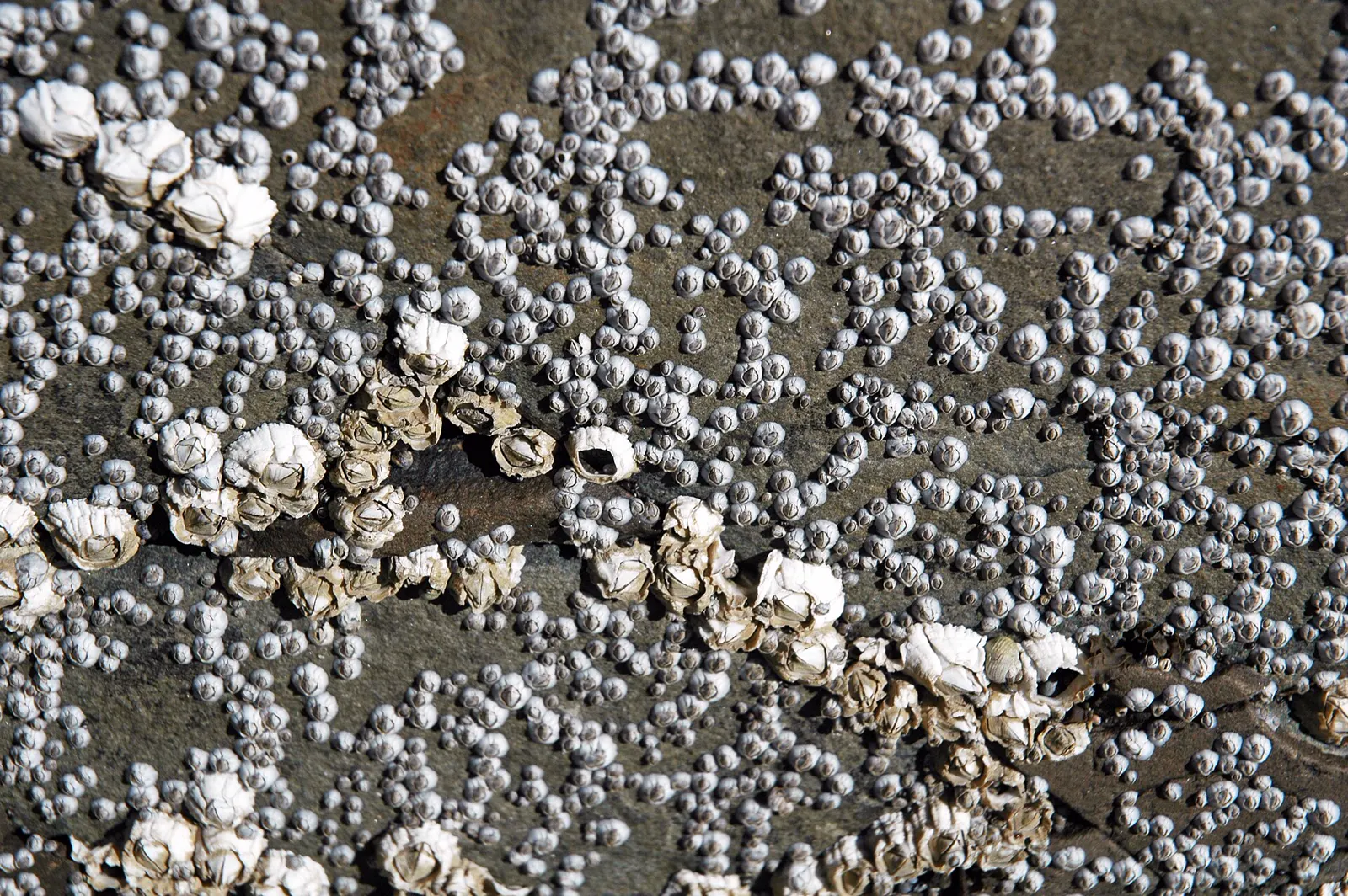
- A volcano-shaped shell made of plates, which the barnacle grows by adding minerals over time (NPS Acadia).1
Where and when to find it
- Cemented to rock in the intertidal zone. In Acadia's tide pools, acorn barnacles glue themselves to the sides of the pool (NPS).2
How it lives
- Young barnacles swim freely, then cement themselves to a rock and settle for life (NPS Acadia).1
- When the water drops, they close their plate-like doors to keep water inside. Underwater, they open and reach out feathery feet to catch food (NPS).2
- The barnacle-eating dorid, a sea slug, prowls Acadia's tidepools and drills into barnacles to eat them (NPS).3
How to watch without harming it
More photos
Where the agencies name them
Spots whose managing agency lists acorn barnacles for that place.
Sources
- National Park Service (Acadia National Park): Marine Wildlife (opens in a new tab) · accessed 18 November 2026
- National Park Service: The Life of a Tide Pool in Acadia (opens in a new tab) · accessed 18 November 2026
- National Park Service: Tidepool Tuesday (Acadia National Park) (opens in a new tab) · accessed 18 November 2026
- National Park Service (Acadia National Park): Tidepooling (opens in a new tab) · accessed 18 November 2026
Last checked 18 November 2026 against the sources above.