What it looks like
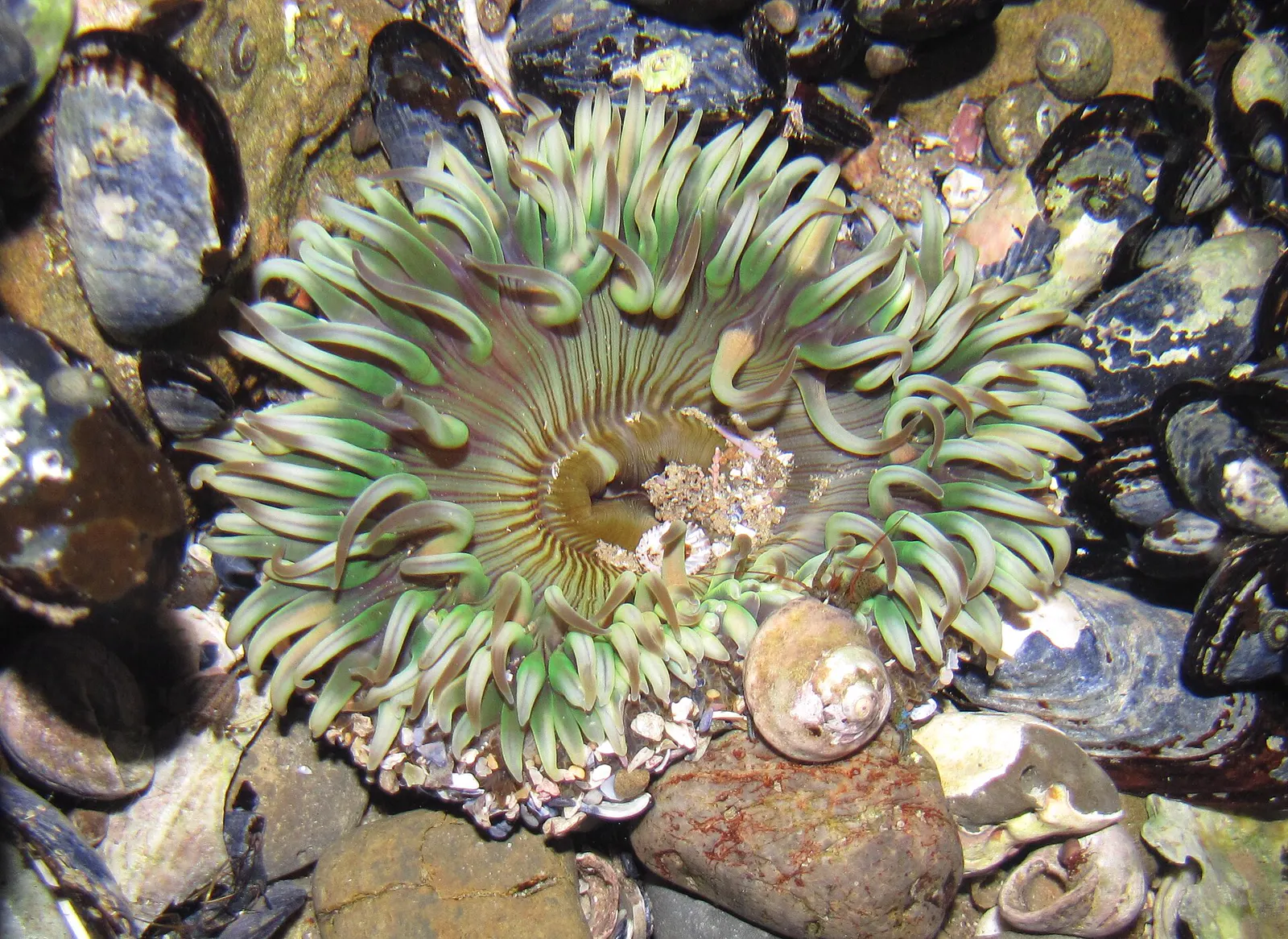
- It has radiating lines on its oral disc and is up to 8 cm across the tentacles, smaller than the solitary anemone.2
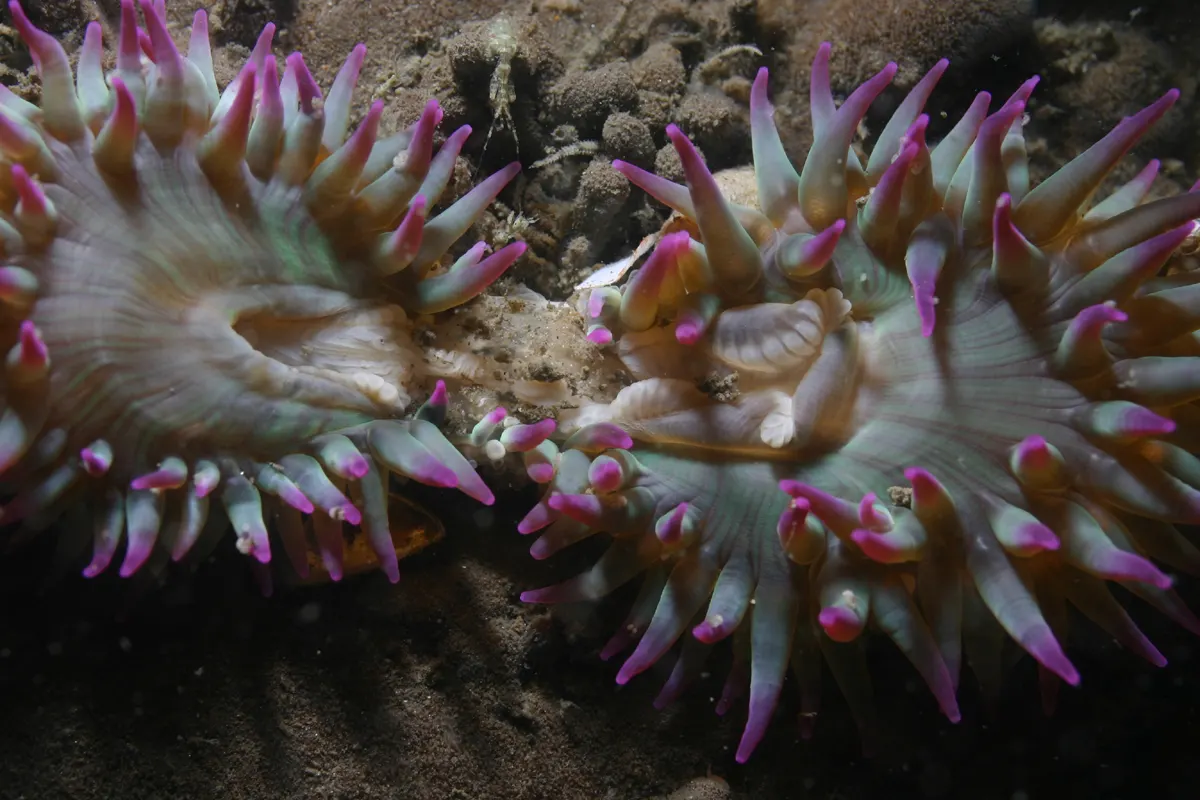
- The column is greenish to white and often covered in bits of shell. The tentacles are greenish to pinkish.2
- At low tide, carpets of these anemones are easy to miss, because each one pulls in to a small blob covered in sand and shell bits.2
Where and when to find it
How it lives
- It reproduces by splitting lengthwise into genetically identical clones, which lets colonies last a very long time in large numbers.2
- Neighbouring anemones from different clones fight stinging battles, which leaves space between the clone groups.2
- It hosts single-celled algae that can add to its energy supply.2
- Its tentacles catch and paralyse small animals and pull them to the central mouth to be digested.3
How to watch without harming it
Range
- The aggregating anemone ranges from Alaska to Baja California.2
More photos
Where the agencies name it
Spots whose managing agency lists aggregating anemone for that place.
Sources
- National Park Service, Olympic National Park: Tidal Life (opens in a new tab) · page updated 8 November 2024 · accessed 17 November 2026
- MARINe (Multi-Agency Rocky Intertidal Network), UC Santa Cruz: Anthopleura (Anemones) (opens in a new tab) · page updated 23 July 2025 · accessed 17 November 2026
- National Park Service, Channel Islands National Park: Anemone (opens in a new tab) · page updated 21 May 2021 · accessed 17 November 2026
- National Park Service: Cabrillo National Monument: The Rocky Intertidal Zone (opens in a new tab) · page updated 31 October 2026 · accessed 17 November 2026
- National Park Service, Cabrillo National Monument: Intertidal Field Guide (opens in a new tab) · page updated 25 June 2021 · accessed 17 November 2026
Last checked 17 November 2026 against the sources above.