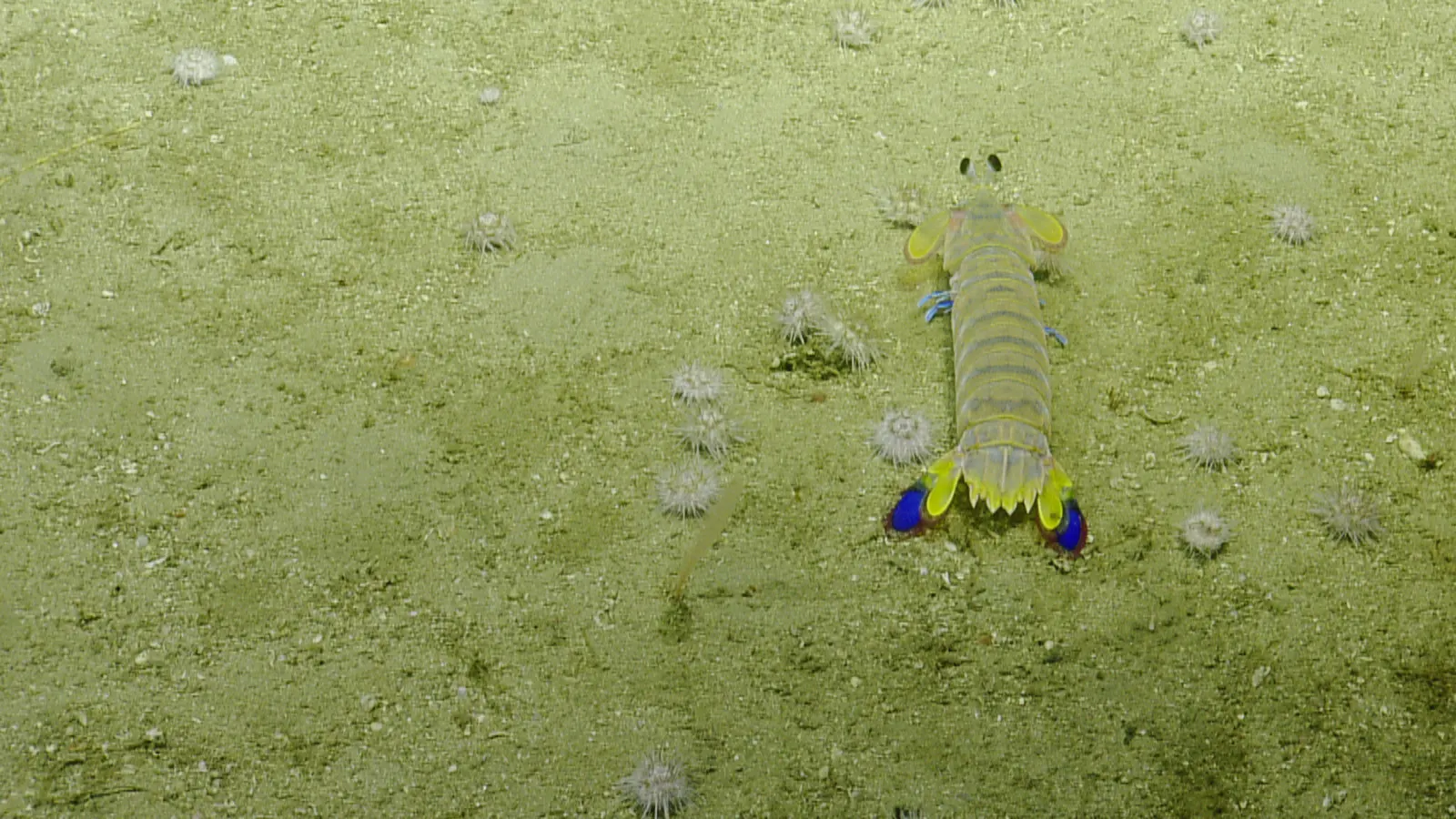
What it looks like
Where and when to find it
How it lives
- Mantis shrimp hunt in one of two ways, spearing or smashing, depending on the type of forelimbs they have.1
- They strike prey with a large claw whose strike is recorded as one of the fastest movements in the animal kingdom.4
- The Cabrillo Marine Aquarium lists their diet as mussels, clams, worms and snails.4
- Recordings of the California mantis shrimp found that it makes noise and each individual seemed to have its own voice. Males made rhythmic rumbling sounds that scientists think may defend territory and attract females.3
How to watch without harming it
Range
Where the agencies name them
Spots whose managing agency lists mantis shrimp for that place.
Further reading
For exploring further. These pages are not sources for the facts above; those are listed under Sources.
Sources
- U.S. Bureau of Ocean Energy Management (Ocean Science News): The Peacock Mantis Shrimp: Nature's Most Unique Predator (opens in a new tab) · page updated 11 March 2024 · accessed 17 November 2026
- California Department of Fish and Wildlife: South La Jolla State Marine Reserve and State Marine Conservation Area (opens in a new tab) · accessed 17 November 2026
- NOAA National Ocean Service, Ocean Today: News of the Day: Talking Shrimp (opens in a new tab) · accessed 17 November 2026
- Cabrillo Marine Aquarium (City of Los Angeles Department of Recreation and Parks): Mantis Shrimp (opens in a new tab) · accessed 17 November 2026
- National Park Service: Cabrillo National Monument: The Rocky Intertidal Zone (opens in a new tab) · page updated 31 October 2026 · accessed 17 November 2026
Last checked 17 November 2026 against the sources above.