Varieties
The main kinds you might see. Each photo is identified as that species in its own record; tap a photo to see it full size.
Residents: fish that live in the pools
Resident intertidal fish spend most or all of their time in the intertidal zone, so they move about very little.3
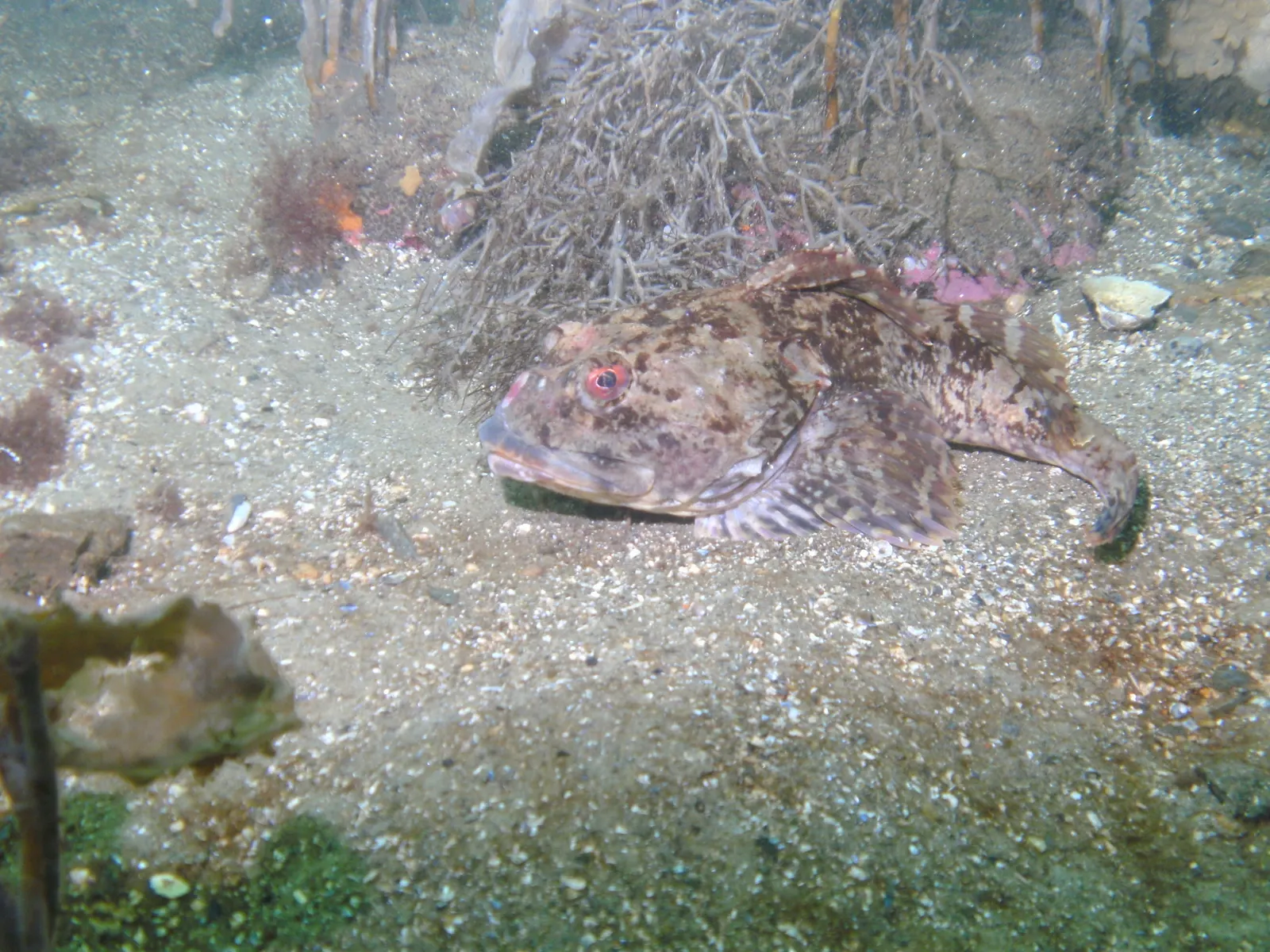
Shorthorn sculpin
Myoxocephalus scorpius1
- A northwestern Atlantic sculpin of the same genus as the grubby. With the grubby, it's the only fish found in Maine's tide pools in winter.1
Photo: U.S. Environmental Protection Agency (opens in a new tab) · Public domain
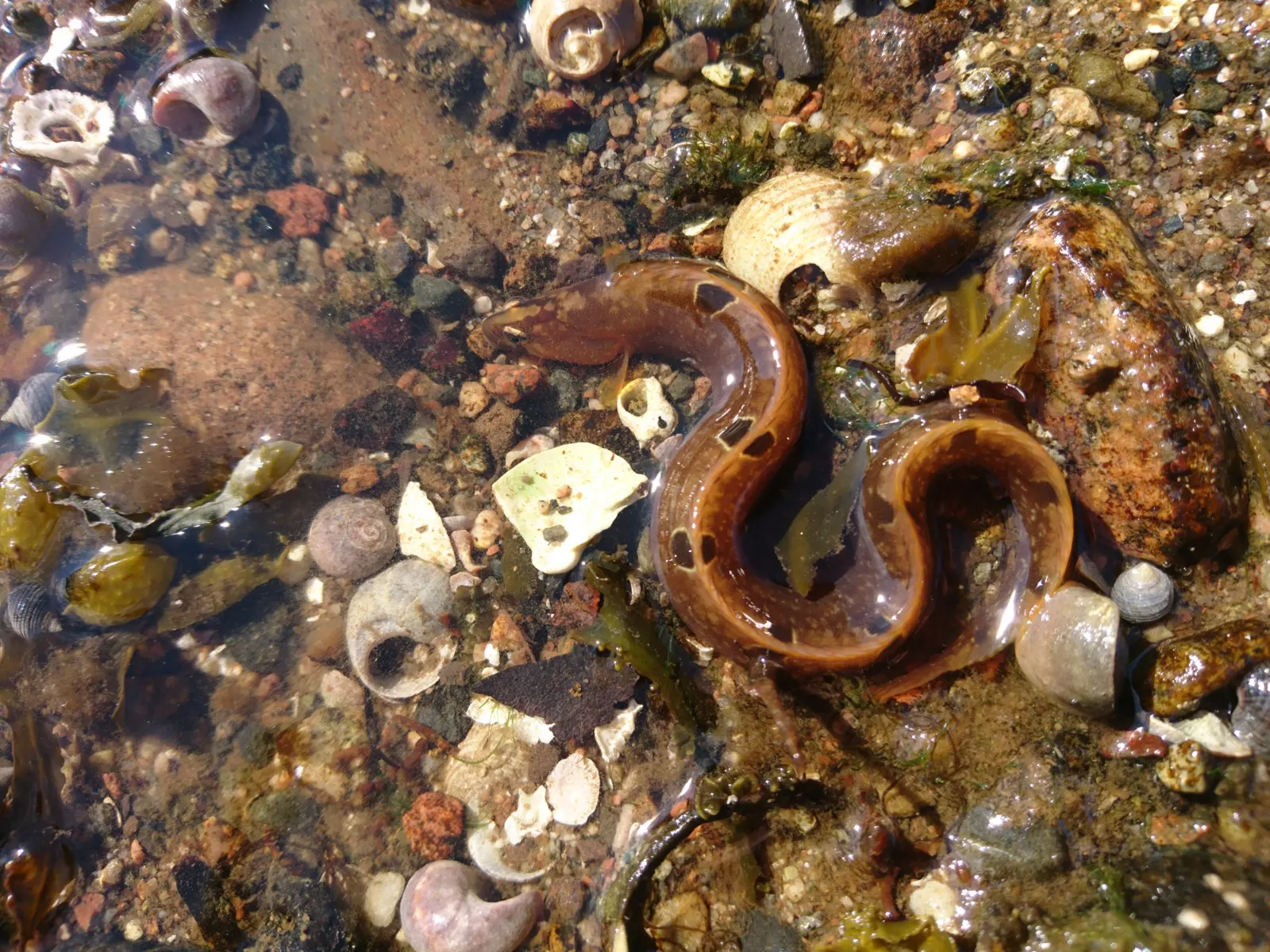
Rock gunnel
Pholis gunnellus2
- A small fish that can breathe air and stay in the intertidal zone at low tide.2
- In surveys in midcoast Maine and New Brunswick, rock gunnels chose the lower intertidal zone: sand, pebbles or gravel under cobbles, tide pools, and thick seaweed.2
- In Maine they're rarely found in the intertidal zone in November, and are gone from December to early March.2
Photo: Jack Sewell (iNaturalist) (opens in a new tab) · CC BY 4.0 (opens in a new tab), resized
How to watch without harming it
Sources
- U.S. Geological Survey: Appearance and possible homing of two species of sculpins in Maine tidepools (publication record and abstract; Northeastern Naturalist, 2001) (opens in a new tab) · page updated 1 January 2001 · accessed 19 November 2026
- Northeastern Naturalist (Eagle Hill Institute): Habitat Selection by the Rock Gunnel, Pholis gunnellus L. (Pholidae) (opens in a new tab) · page updated NaN undefined NaN · accessed 20 November 2026
- University of Oregon, Department of Biology and Clark Honors College: Site Fidelity and Homing Behavior of the Intertidal Stichaeidae, Xiphister atropurpureus (Black Prickleback), honors thesis, 2013 (opens in a new tab) · page updated NaN undefined NaN · accessed 19 November 2026
- National Park Service (Acadia National Park): Tidepooling (opens in a new tab) · accessed 18 November 2026
Last checked 19 November 2026 against the sources above.