What it looks like
- Brown pelicans weigh about 8 pounds, are a little over 4 feet long and have a wingspan of more than 6.5 feet.1
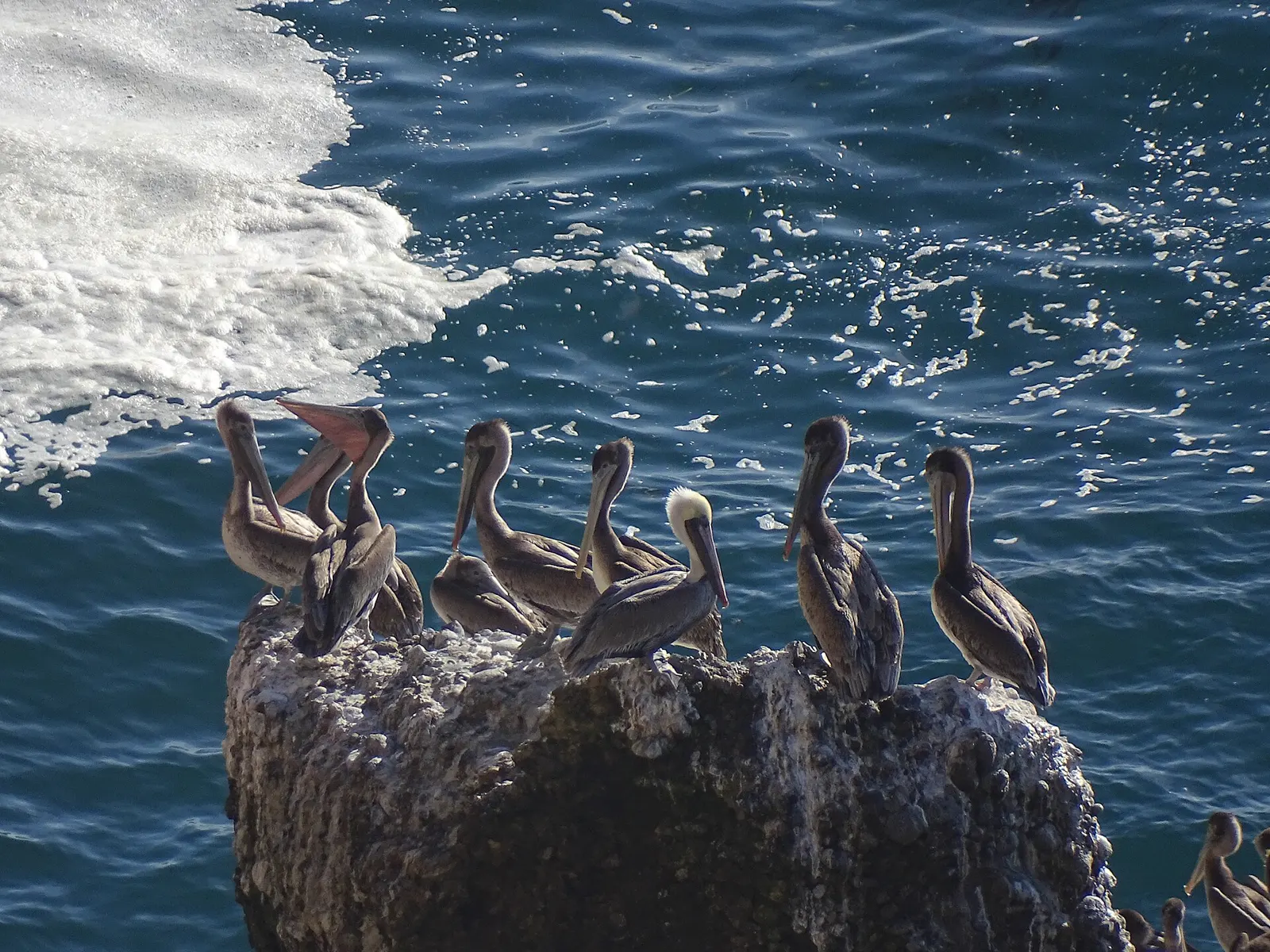
- They have short dark legs, long broad wings, a heavy brown body and a huge bill.1
- Adults are dark gray-brown with white on the head and neck; young birds are gray-brown above with white underparts.2
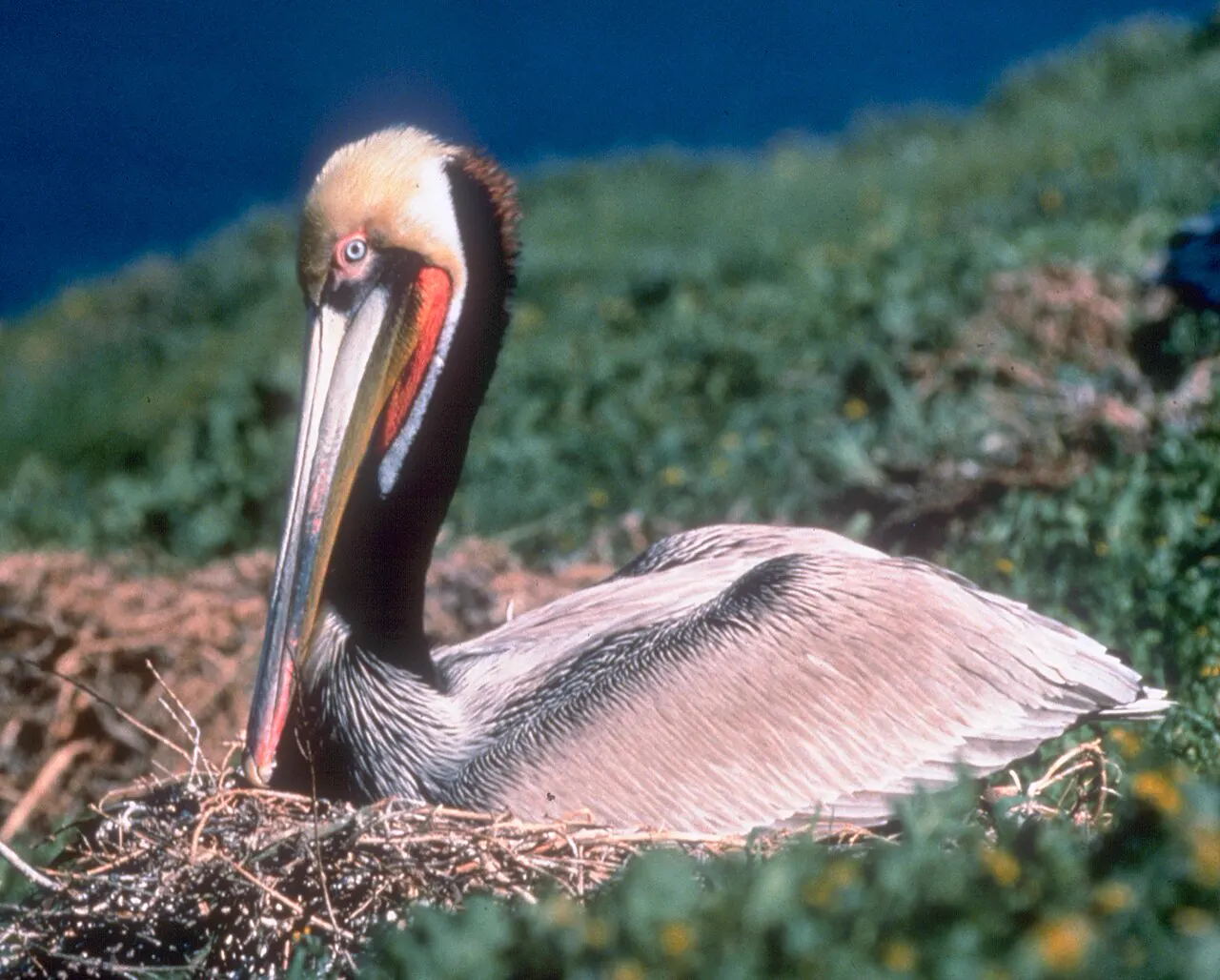
- In breeding season the throat pouch turns bright red.1
Where and when to find it
- Look for them on beaches, harbors, marinas, estuaries and breakwaters, and over open sea where they feed.1
- They stay close to shore, usually hunting within five miles of land.1
- Anglers on fishing piers often see them diving for fish.3
- Offshore rocks and islands are important roosting sites for them all year.3
- In the western US they breed only on West Anacapa and Santa Barbara islands in Channel Islands National Park.1
How it lives
- When it spots a fish, a pelican tips downward, shapes its wings into a V and dives.1
- Northern anchovy is their main food; they also eat Pacific sardine and Pacific mackerel.1
- They usually lay three eggs, and both parents take turns keeping them warm.1
- Brown pelicans can live up to 40 years.1
- The pesticide DDT thinned their eggshells, causing breeding failure in the 1960s and 1970s.1
How to watch without harming it
- Pelicans cannot fully waterproof their feathers, so they come ashore to dry off and rest.3
- If they are flushed off their roosts into cold water again and again, they can get soaked and hypothermic. Give roosting birds space.3
- Near nesting birds, keep at least 100 yards away and move back if birds look alarmed or start flapping.3
- If you fish, avoid casting near groups of seabirds, and take leftover bait and fishing line home.3
- Don't feed pelicans or leave bait out.3
- A hook that rips a pelican's pouch can stop it feeding.3
- Brown pelicans are still protected under the Migratory Bird Treaty Act.1
Range
- The California brown pelican ranges from British Columbia, Canada, south to Nayarit, Mexico; about 90% of the population nests in Mexico.1
More photos
Where the agencies name it
Spots whose managing agency lists brown pelican for that place.
Further reading
For exploring further. These pages are not sources for the facts above; those are listed under Sources.
Sources
- National Park Service, Channel Islands National Park: California Brown Pelican (opens in a new tab) · page updated 9 January 2026 · accessed 17 November 2026
- U.S. Fish & Wildlife Service: Brown Pelican (Pelecanus occidentalis) (opens in a new tab) · accessed 17 November 2026
- California Department of Fish and Wildlife: California Seabirds: Give Them a Break, Not a Line (reprint of a 2002 Outdoor California article) (opens in a new tab) · accessed 17 November 2026
Last checked 17 November 2026 against the sources above.