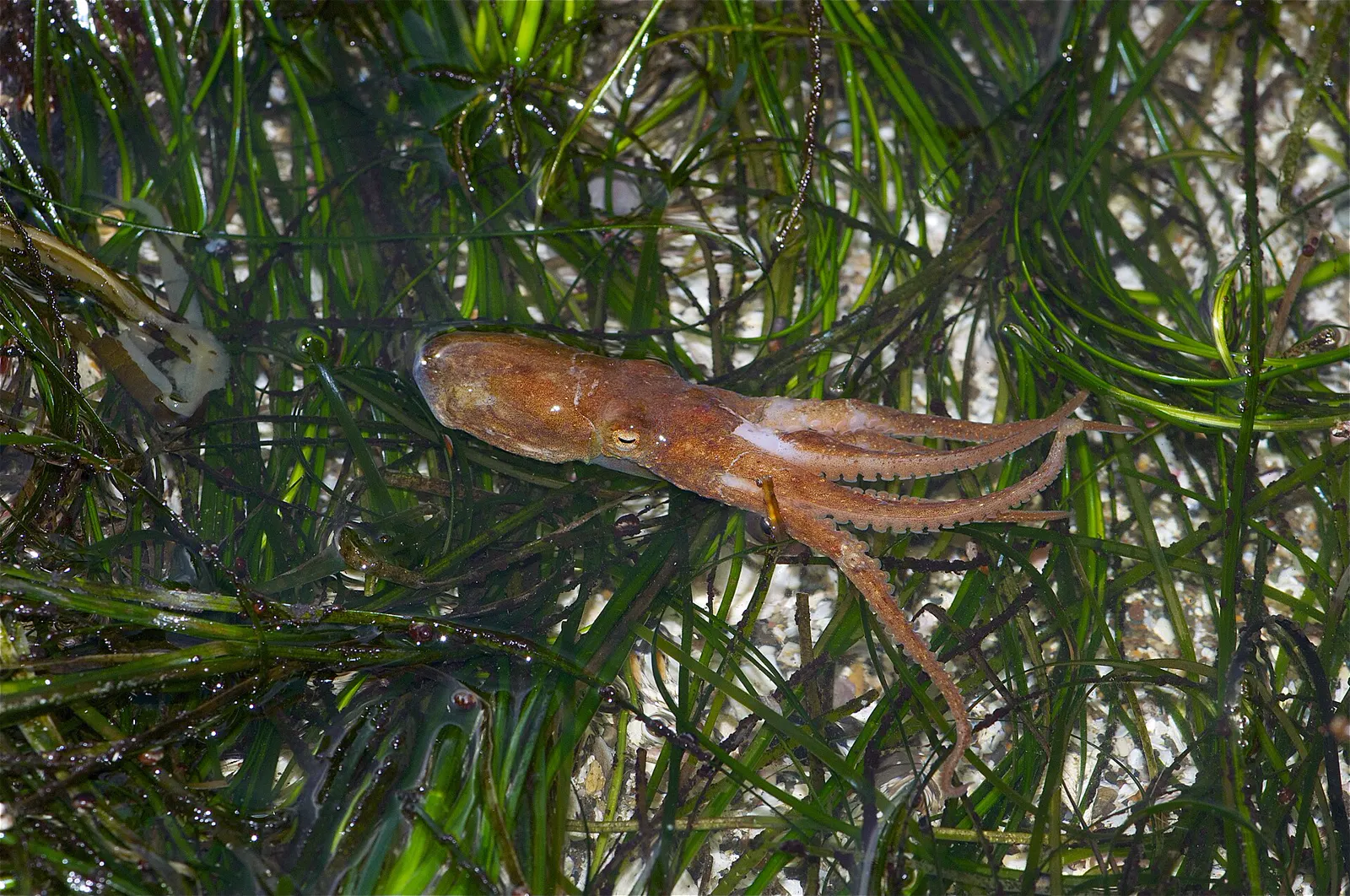
A California two-spot octopus (Octopus bimaculoides)

Animal group

Octopuses of the Pacific coast

Scientific group: Order Octopoda1

Octopuses are among the animals found in the low zone of the tidepools at Cabrillo National Monument.2 Octopuses are secretive and hide in holes or crevices.3

A California two-spot octopus (Octopus bimaculoides). Location: not recorded. Photo: Jerry Kirkhart (opens in a new tab) · CC BY 2.0 (opens in a new tab), resized

Varieties

The main kinds you might see. Each photo is identified as that species in its own record; tap a photo to see it full size.

California two-spot octopus (Octopus bimaculoides)

California two-spot octopus

Octopus bimaculoides3

  • The two-spot octopus (Octopus bimaculoides) has a sack-like body about 2-8 inches long, with eight sucker-bearing arms about three times the length of its body.3
  • The two-spot octopus lives in the intertidal and the shallow subtidal, down to about 3 meters (15 feet).4

Learn more: Wikipedia: California two-spot octopus (opens in a new tab)

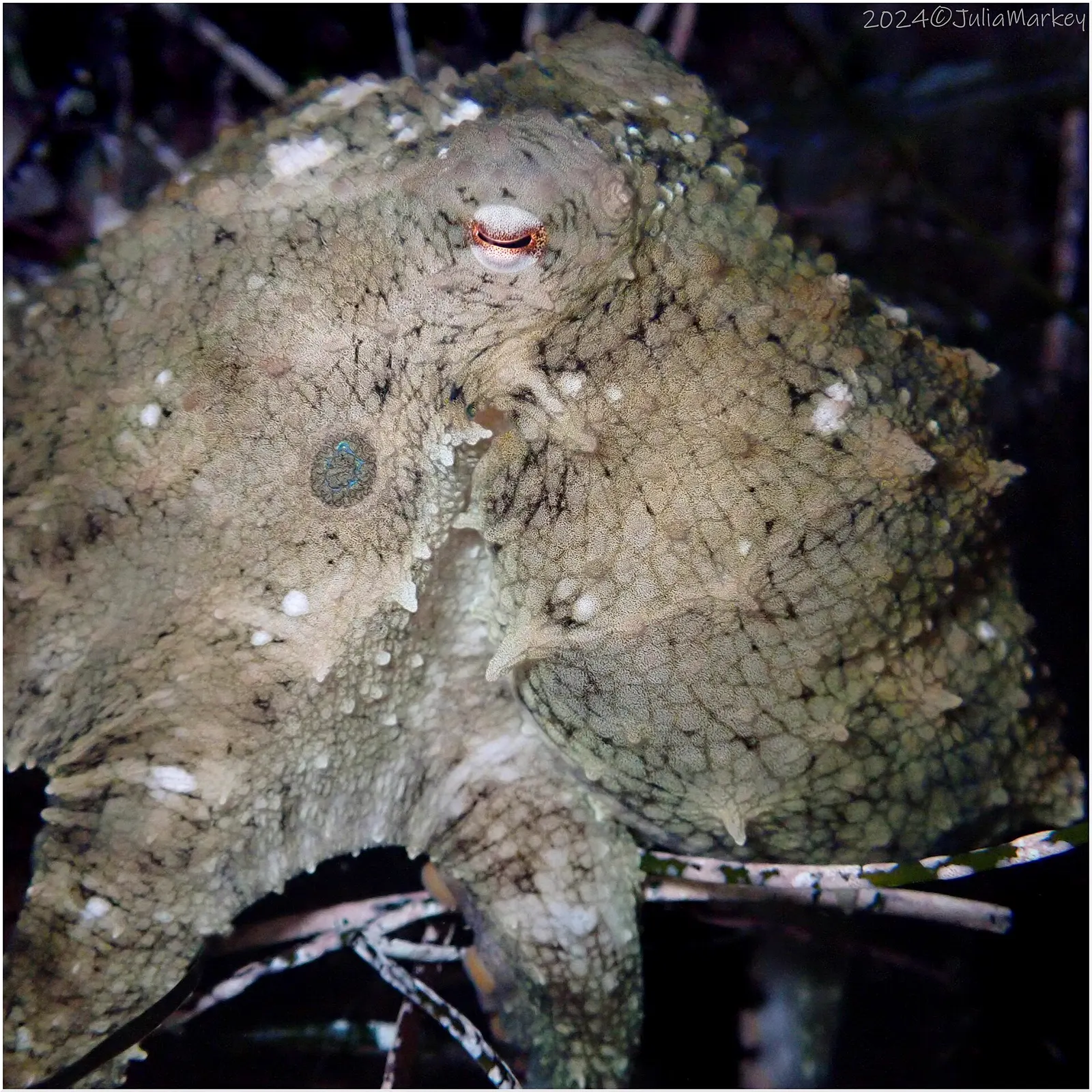
Photo: Julia Markey (opens in a new tab) · CC BY-SA 4.0 (opens in a new tab), resized
What it looks like

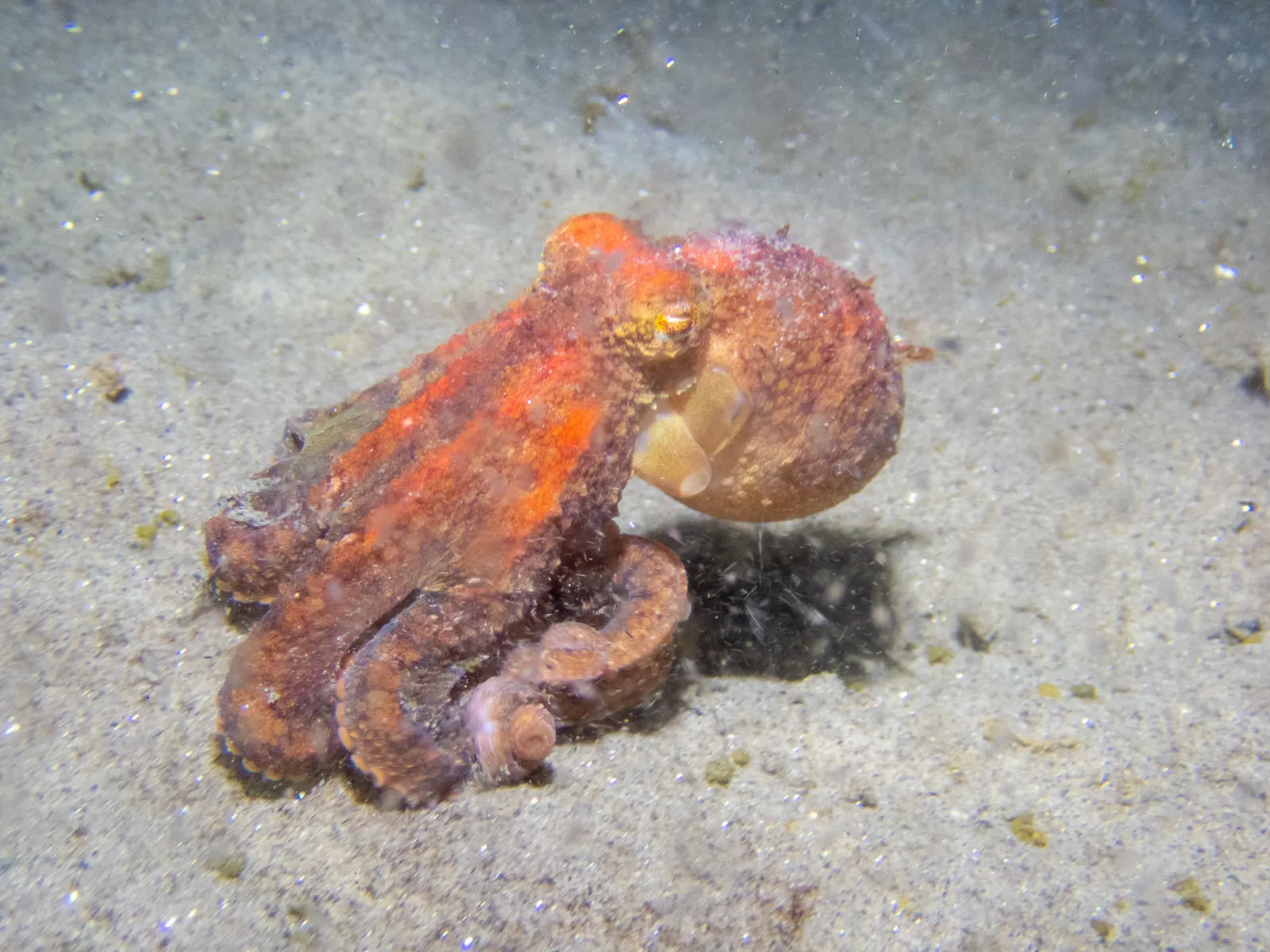
  • Octopuses have eight arms and, unlike other cephalopods, no shell.1
  • It is named for two bright blue spots, one on each side of its body, that look like eyes and are thought to help ward off predators.4
  • It can quickly change its skin colour and texture to match its surroundings, using small pigment cells called chromatophores.3

Where and when to find it

  • The low zone is uncovered only during the lowest tides.2
  • Octopuses that usually prefer deeper water can sometimes end up as temporary residents of tidepools until the tide rises again.6

How it lives

  • The two-spot octopus is mostly active at night and preys on smaller molluscs and crustaceans.4
  • Its predators include moray eels, harbor seals, sea lions and humans.4
  • It typically lives about one year and dies after having young.4
  • A female lays an average of 70,000 eggs in a den and pumps cool water over them.4
  • Octopuses can release a thick cloud of ink when disturbed, to distract predators.3

How to watch without harming it

  • Don't chase or pick up an animal that is moving away, hiding or resisting being handled.2
  • Don't move or turn over rocks. Leave them where and how you found them to protect the animals living underneath.2
  • Be careful about putting your hands into holes: a moray eel hiding there might mistake a finger for a fish.3

Range

  • The California two-spot octopus lives along the Pacific coast from Northern California to Baja California, Mexico.4
  • Octopuses as a group are found in every ocean in the world.1

Where the agencies name them

Spots whose managing agency lists octopuses for that place.

Further reading

For exploring further. These pages are not sources for the facts above; those are listed under Sources.

Sources

  1. NOAA Fisheries: Octopus (topic tag page) (opens in a new tab) · accessed 17 November 2026
  2. National Park Service: Cabrillo National Monument: The Rocky Intertidal Zone (opens in a new tab) · page updated 31 October 2026 · accessed 17 November 2026
  3. National Park Service, Cabrillo National Monument: Intertidal Field Guide (opens in a new tab) · page updated 25 June 2021 · accessed 17 November 2026
  4. California Sea Grant (Scripps Institution of Oceanography, UC San Diego): California Two-Spot Octopus (California Seafood Profiles) (opens in a new tab) · accessed 17 November 2026
  5. National Park Service, Point Reyes National Seashore: Mollusks (opens in a new tab) · page updated 14 January 2026 · accessed 17 November 2026
  6. National Park Service, Olympic National Park: Tidal Life (opens in a new tab) · page updated 8 November 2024 · accessed 17 November 2026

Last checked 17 November 2026 against the sources above.