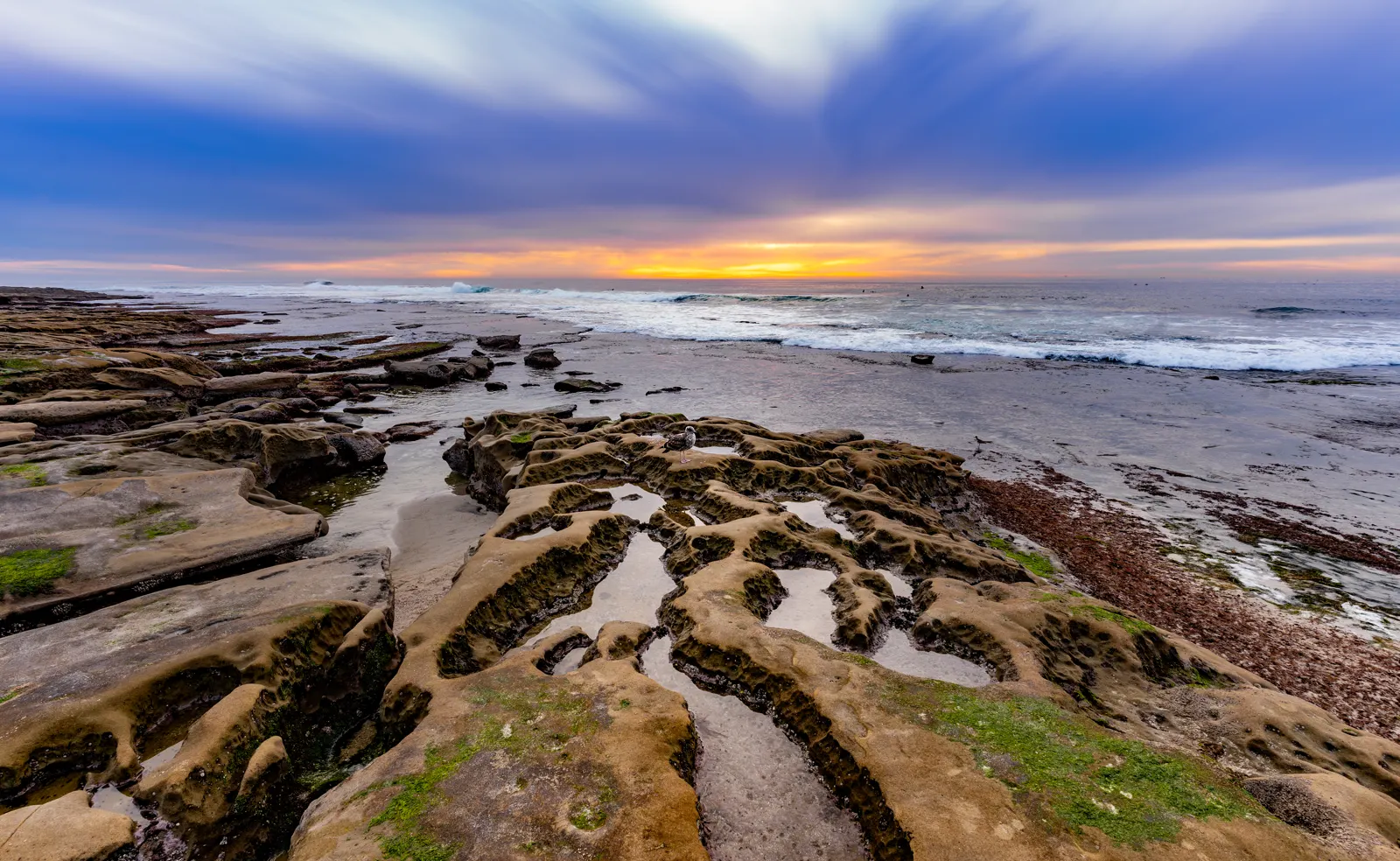
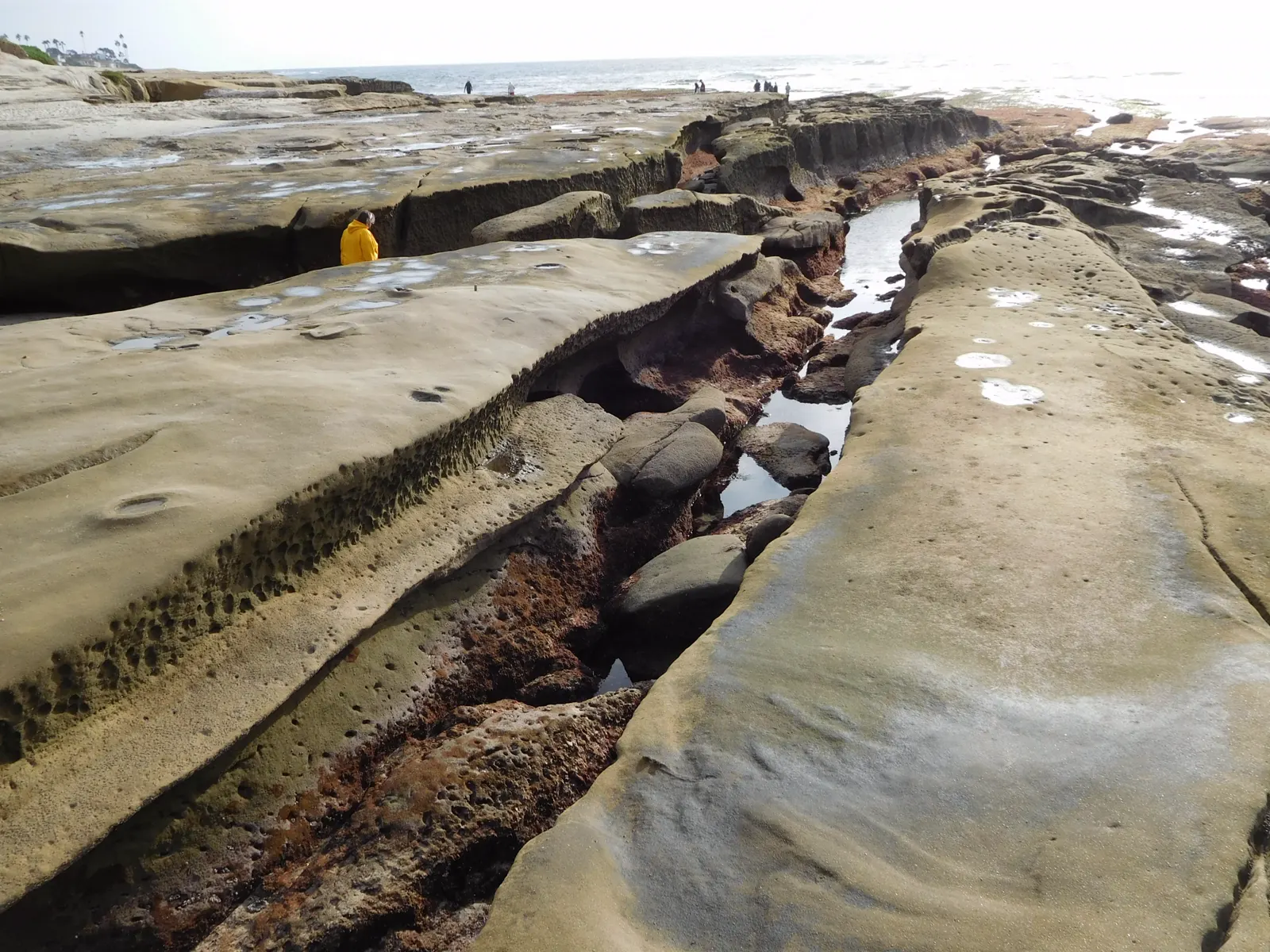
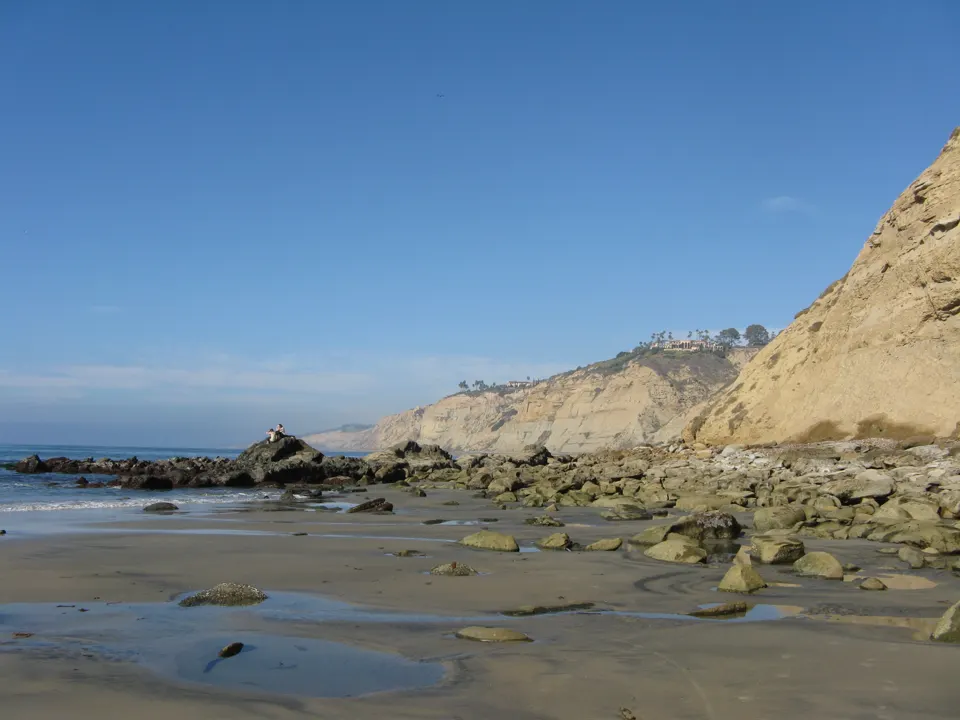
Tidepools run along the La Jolla coastline, from Dike Rock near Scripps Pier in the north to Windansea Beach in the south.1 The National Park Service calls La Jolla an excellent place to see the underwater world when the tide is low.1
In an emergency
Emergency: call 911- Lifeguards San Diego Lifeguards patrol La Jolla Cove from a permanent lifeguard station. 619-221-8899 (for questions, not emergencies)2
- Nearest emergency department UC San Diego Health La Jolla Emergency Department, 9432 Medical Center Drive, San Diego, CA 920373
Nearest full-service emergency department by road distance (OpenStreetMap routing, checked 2026-11-18). No drive time is given.
Best times to go
Tide heights are measured from MLLW, the average of each day's lower low water, so a low below 0.0 ft uncovers more than an average day's low.4
Next low tides below 0.0 ft in daylight4
| Date | Low tide | Height |
|---|---|---|
| Sun 22 Nov 2026 | 1:38 PM | −0.51 ft |
| Mon 23 Nov 2026 | 2:21 PM | −1.05 ft |
| Tue 24 Nov 2026 | 3:06 PM | −1.40 ft |
| Wed 25 Nov 2026 | 3:55 PM | −1.51 ft |
| Sat 5 Dec 2026 | 1:27 PM | −0.19 ft |
| Sun 6 Dec 2026 | 2:04 PM | −0.50 ft |
| Mon 7 Dec 2026 | 2:38 PM | −0.67 ft |
| Tue 8 Dec 2026 | 3:11 PM | −0.72 ft |
| Wed 9 Dec 2026 | 3:45 PM | −0.68 ft |
| Thu 10 Dec 2026 | 4:19 PM | −0.56 ft |
| Sun 20 Dec 2026 | 12:48 PM | −0.23 ft |
| Mon 21 Dec 2026 | 1:33 PM | −0.94 ft |
Predictions from NOAA CO-OPS. Not for navigation. Station 9410230, La Jolla. Heights in feet relative to MLLW, local time, rounded to 0.01 ft. We choose which lows to show; times and heights are NOAA's. Sunrise and sunset are our calculation for the tide station's position.56
Closures
- Point La Jolla and Boomer Beach
- Closed year-round (City ordinance adopted 2023)7
Point La Jolla closure signs read "AREA CLOSED - NO ENTRY"; violators can be cited.7
Rules
The La Jolla coastline is designated an ecological reserve, so you can't remove anything from it, living or dead.1
- Take nothing. No shells, rocks, plants or animals, living or dead.1
- No take of any kind in Matlahuayl State Marine Reserve, which includes La Jolla Cove.9
- Don't approach seals or sea lions. Signs at Point La Jolla warn that they can bite.7
- Outside the reserves, state law still protects tidepools. Tidal invertebrates may not be taken from tidepools and the intertidal zone, apart from a short list of species such as mussels, limpets and crabs.10
What you'll see
Animals the National Park Service names for the La Jolla tidepools.1
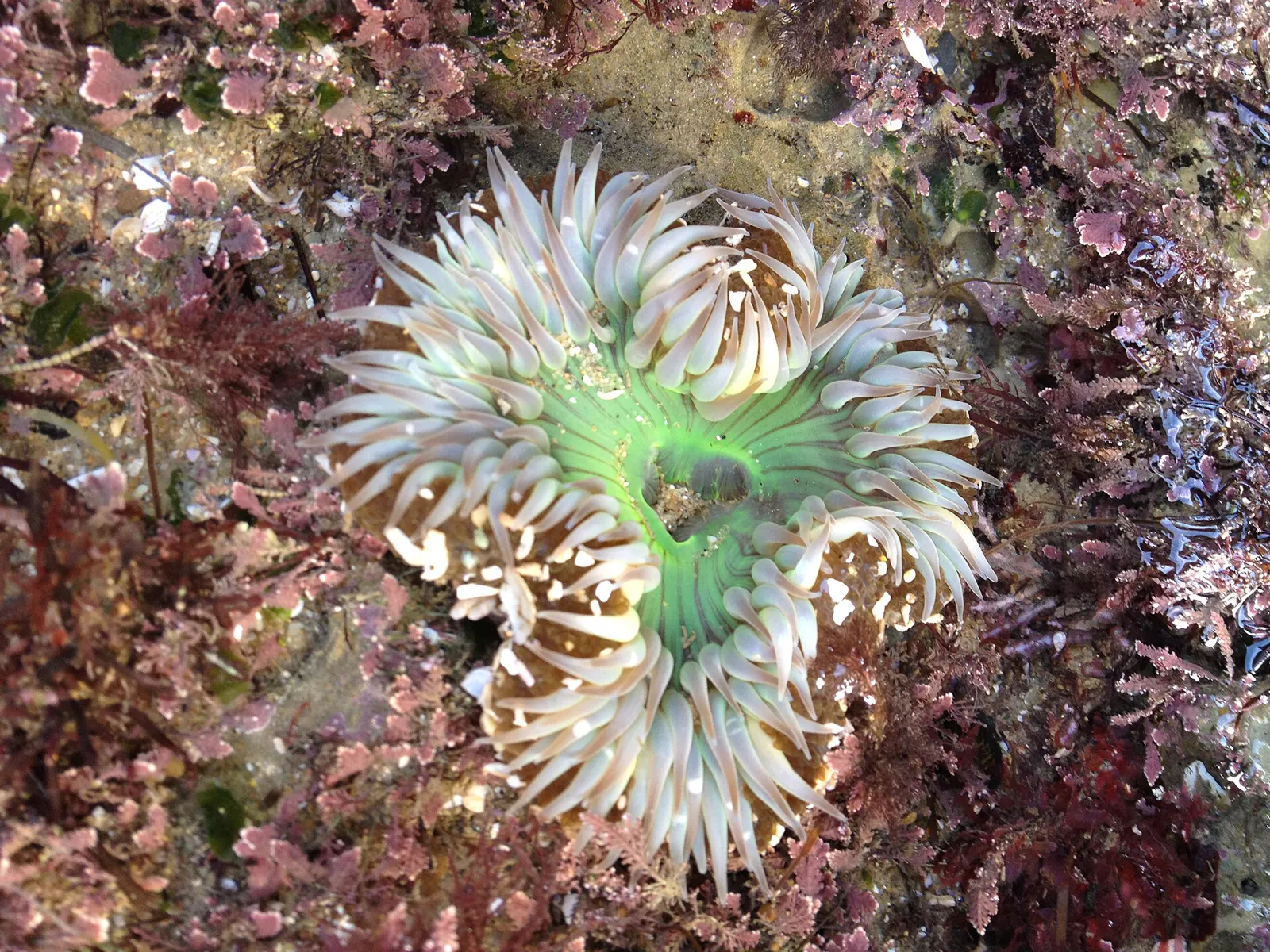
The giant green anemone and the slightly smaller aggregating anemone are both common in tidepools.11 Anemones have no hard shell. Their soft, flexible bodies bend with the moving water.12 They catch prey with stinging cells called nematocysts.13
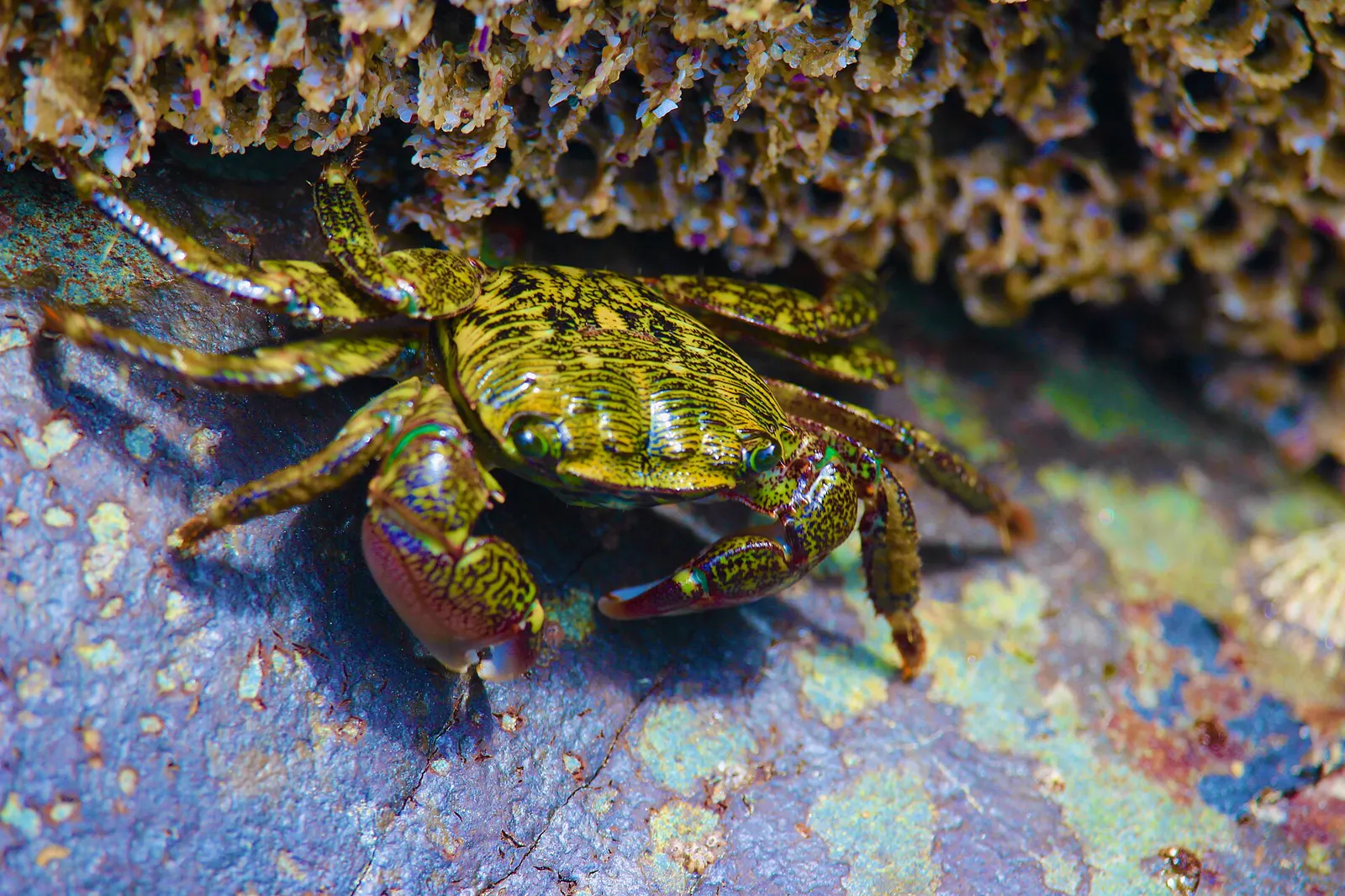
Crabs live even in the high, splash zone of the tidepools, alongside barnacles, limpets, chitons and mussels.14 The shore crab is commonly found in rock crevices in the mid to high intertidal.13
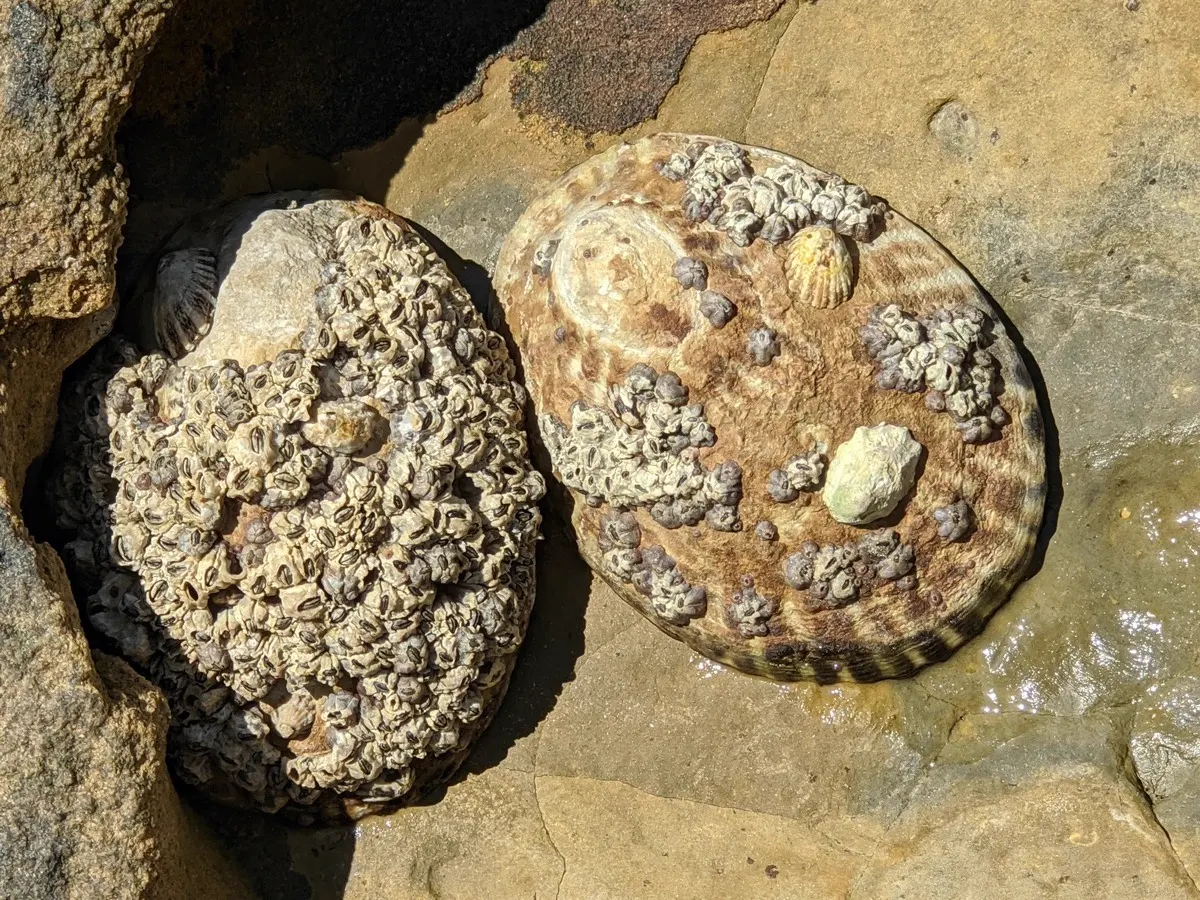
Limpets have small, cone-shaped shells and live on rocks throughout the intertidal zone. Their shells are not coiled, but they are closely related to snails.15 The owl limpet is the largest true limpet on the Pacific coast, growing up to 4 inches.13
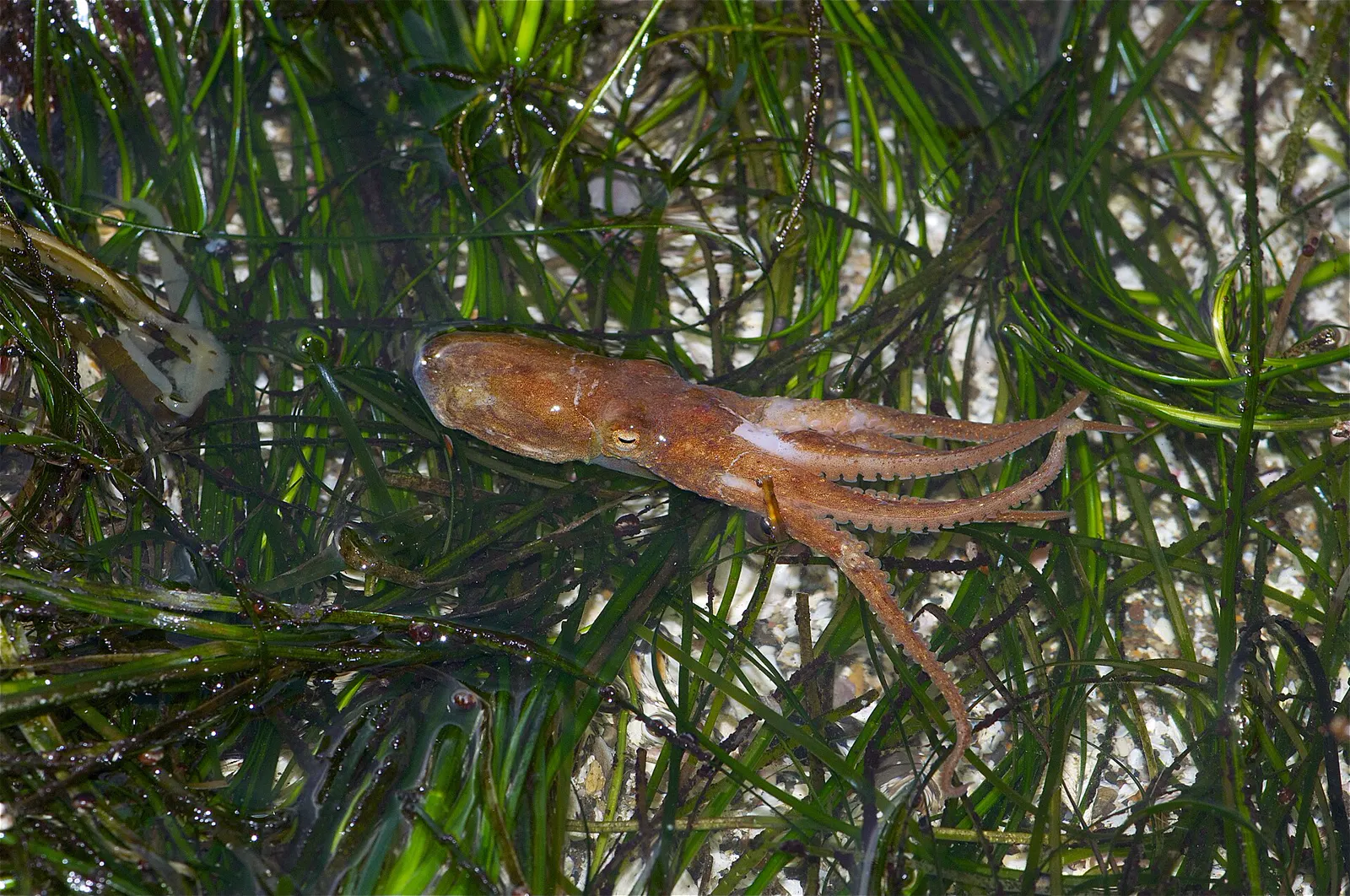
Octopuses are among the animals found in the low zone of the tidepools at Cabrillo National Monument.14 Octopuses are secretive and hide in holes or crevices.13
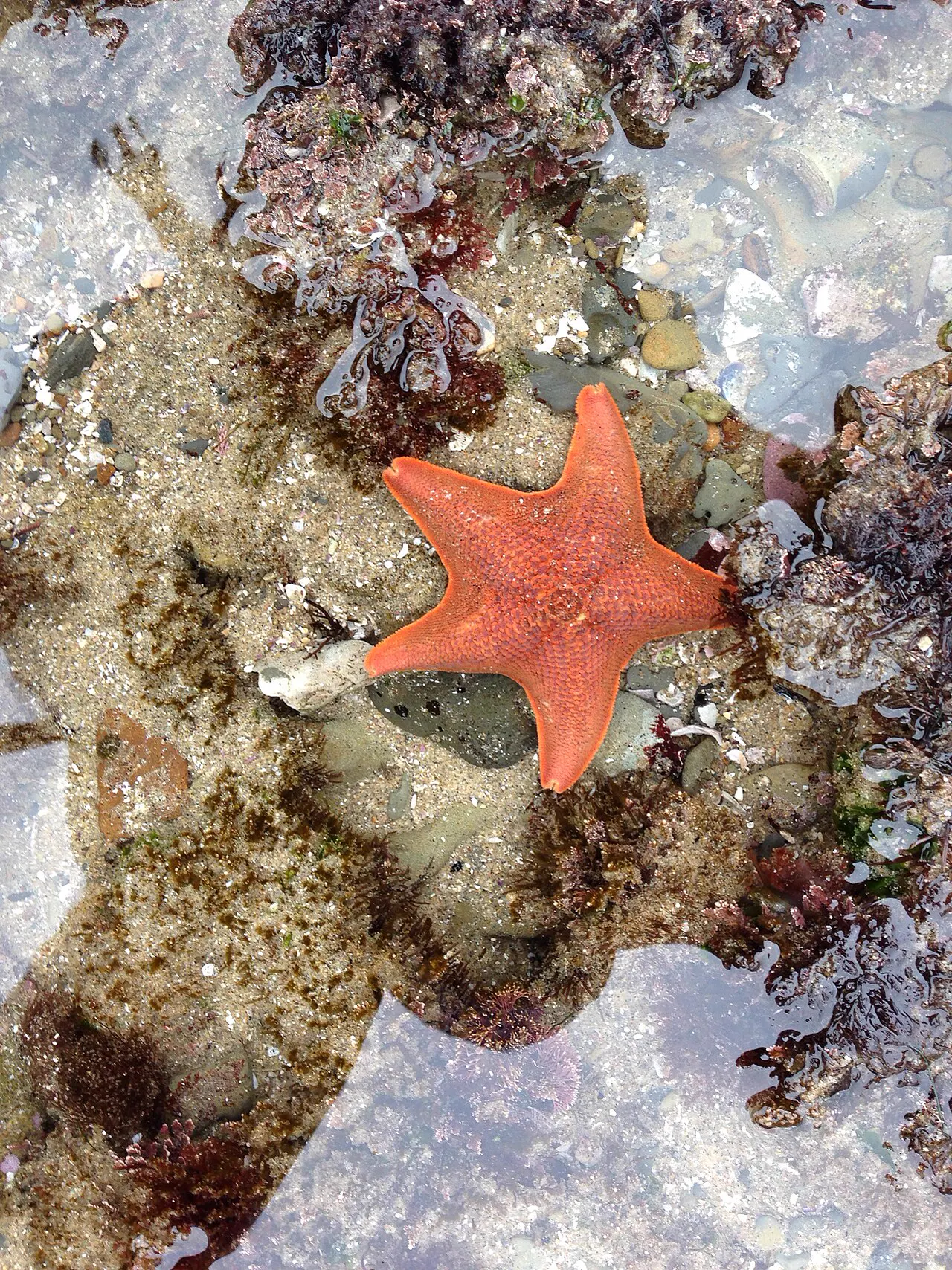
Sea stars are sturdy, flexible predators of the rocky intertidal zone.16 Some species, such as the ochre sea star, play an especially important role in the rocky shore community.17 A wasting disease killed huge numbers of sea stars along the Pacific coast of North America in 2013 and 2014.18
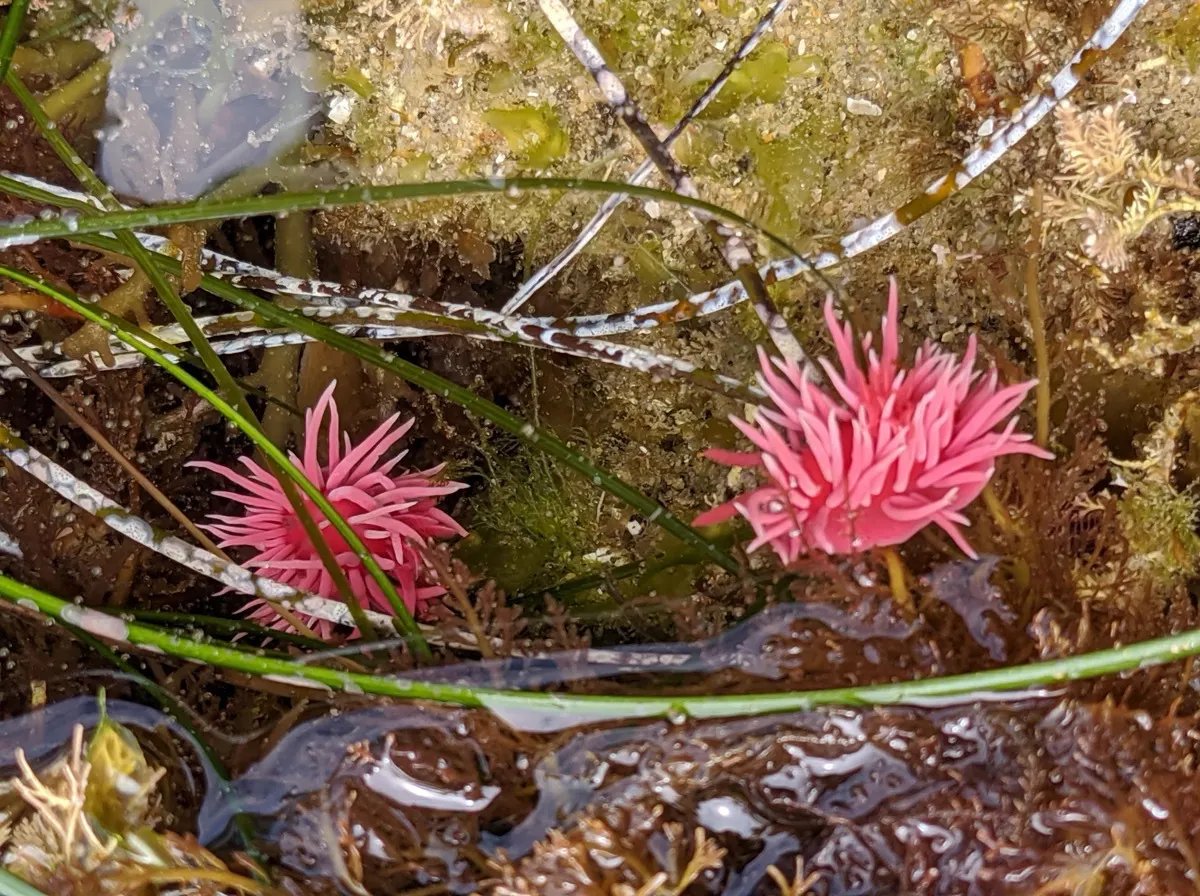
Nudibranchs, sometimes called sea slugs, are among the most eye-catching animals in a tidepool.19 They live in the low intertidal zone, which is uncovered only during the lowest tides.14
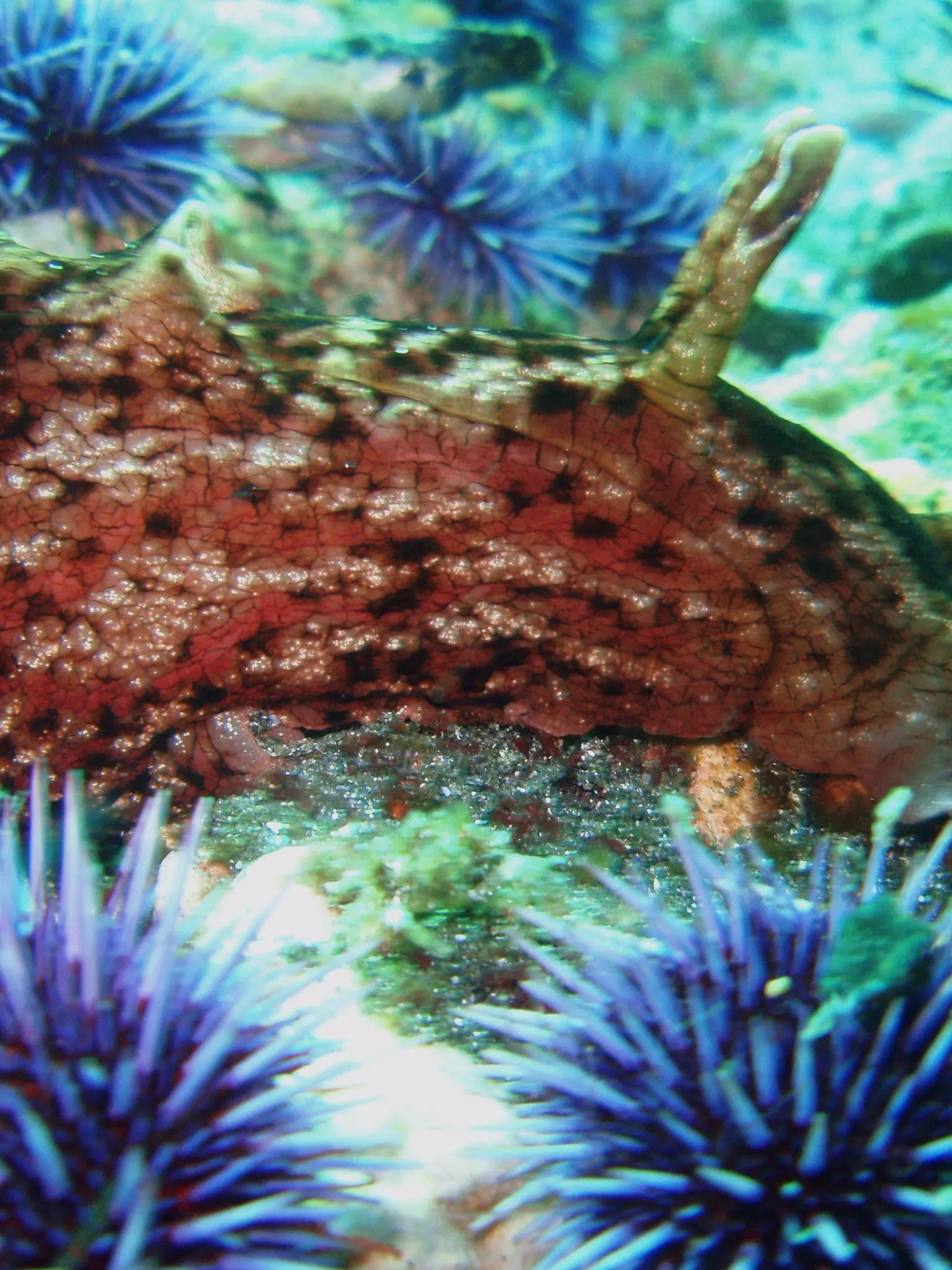
Sea hares are soft-bodied sea slugs. The California sea hare's skin ranges from reddish brown to greenish grey.13 They live in the low intertidal zone, which is uncovered only during the lowest tides.14
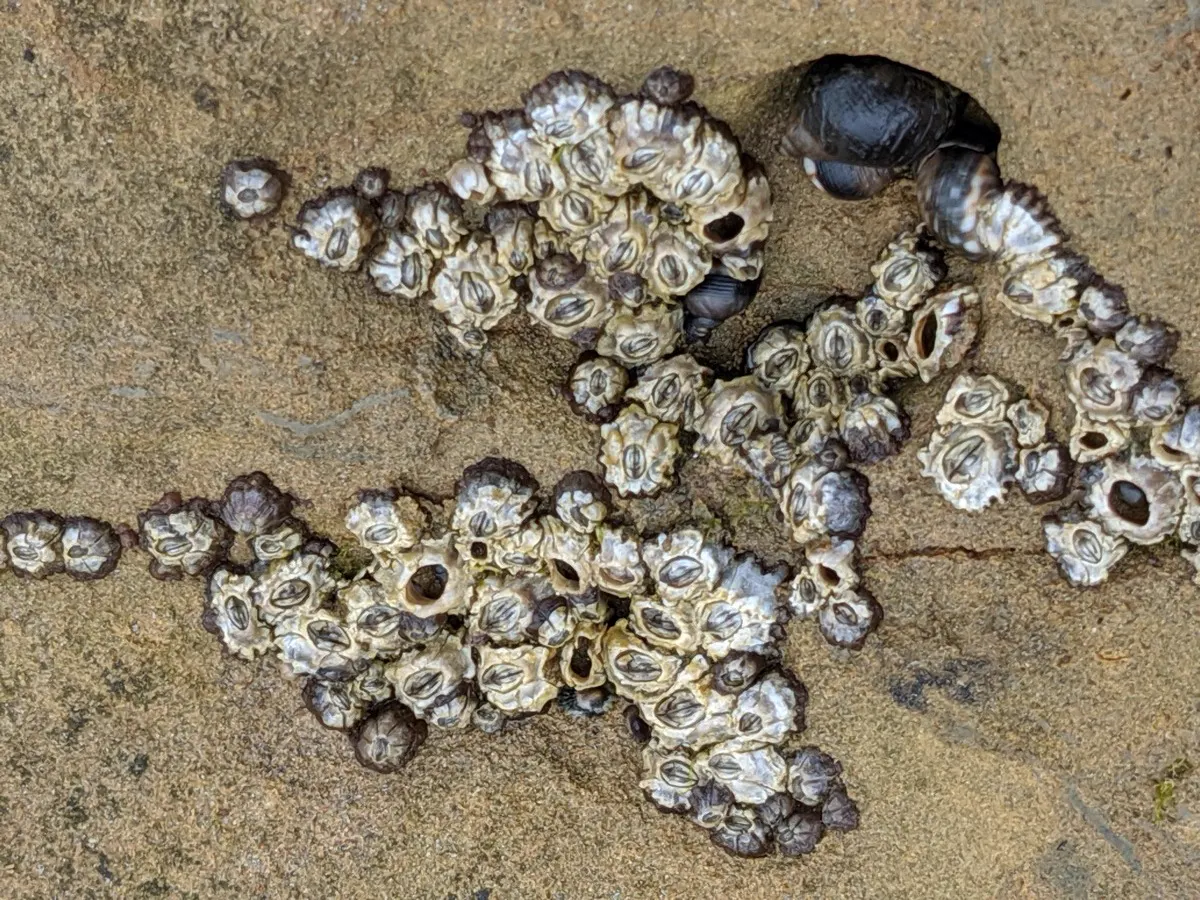
Barnacles are relatives of crabs and shrimp that cluster on surfaces at every level of the intertidal zone.20 They attach head-first and use their feathery legs to take in oxygen and net food floating past.20
Stay safe
- Wear closed-toe shoes with grip. Wet rock and algae are slippery; the park service strongly discourages sandals and flip-flops.1
- Never turn your back to the ocean. San Diego's lifeguards warn that waves can sweep people off coastal bluffs or tide pool areas without warning.21
- Stay clear of coastal bluffs. They can collapse and cause injury.21
Read more: ocean safety · shore safety · weather · first aid
Photos of this spot
Nearby tide pools

Page history
- : La Jolla tide pools: emergency contacts added
- : La Jolla tide pools added
Sources
- National Park Service: La Jolla Tidepools and The Children's Pool (opens in a new tab) · page updated 4 July 2025 · accessed 17 November 2026
- City of San Diego Lifeguard Services: La Jolla Cove (opens in a new tab) · accessed 18 November 2026
- UC San Diego Health: Emergency Departments (opens in a new tab) · accessed 18 November 2026
- NOAA CO-OPS: Tidal Datums (MLLW: average of the lower low water height of each tidal day; the reference datum for predictions) (opens in a new tab) · accessed 17 November 2026
- NOAA CO-OPS: Tide predictions (high/low), station 9410230 La Jolla; MLLW, feet, local time (opens in a new tab) · accessed 17 November 2026
- NOAA CO-OPS: Metadata API: station names and positions (9410166, 9410230, 9410580) (opens in a new tab) · accessed 17 November 2026
- City of San Diego, Parks and Recreation: Point La Jolla (year-round closure of Point La Jolla and Boomer Beach; signage) (opens in a new tab) · accessed 17 November 2026
- City of San Diego, Lifeguard Services: Children's Pool (opens in a new tab) · accessed 17 November 2026
- California Department of Fish and Wildlife: Matlahuayl State Marine Reserve and San Diego-Scripps Coastal State Marine Conservation Area (opens in a new tab) · accessed 17 November 2026
- California Code of Regulations, Title 14, §29.05 (Cornell LII copy): General provisions and definitions: invertebrates (tidepool take rule, subsection (b)) (opens in a new tab) · accessed 17 November 2026
- National Park Service, Channel Islands National Park: Anemone (opens in a new tab) · page updated 21 May 2021 · accessed 17 November 2026
- National Park Service, Klamath Inventory and Monitoring Network: On the Edge: The Curious Lives of Intertidal Organisms and How We Monitor Them (opens in a new tab) · page updated 28 November 2022 · accessed 17 November 2026
- National Park Service, Cabrillo National Monument: Intertidal Field Guide (opens in a new tab) · page updated 25 June 2021 · accessed 17 November 2026
- National Park Service: Cabrillo National Monument: The Rocky Intertidal Zone (opens in a new tab) · page updated 31 October 2026 · accessed 17 November 2026
- National Park Service, Glacier Bay National Park & Preserve: Snails, Limpets & Chitons (opens in a new tab) · page updated 16 March 2018 · accessed 17 November 2026
- National Park Service, Point Reyes National Seashore: Echinoderms (opens in a new tab) · page updated 19 September 2022 · accessed 17 November 2026
- National Park Service, Redwood National and State Parks: Sea Stars (opens in a new tab) · page updated 7 December 2020 · accessed 17 November 2026
- MARINe (Multi-Agency Rocky Intertidal Network), UC Santa Cruz: Sea Star Wasting Disease (opens in a new tab) · page updated 6 October 2026 · accessed 17 November 2026
- National Park Service, Point Reyes National Seashore: Intertidal and Subtidal Zones (opens in a new tab) · page updated 4 February 2024 · accessed 17 November 2026
- National Park Service, Channel Islands National Park: Barnacles (opens in a new tab) · page updated 21 May 2021 · accessed 17 November 2026
- City of San Diego, Lifeguard Services: Beach and water safety (opens in a new tab) · accessed 17 November 2026
Checked against the sources above on 17 November 2026. Hours, fees and rules can change without notice, so check with the California Department of Fish and Wildlife before you go. Not affiliated with or endorsed by the California Department of Fish and Wildlife or NOAA.
Report a change
Visited recently and something's different? Reports go to review first. They don't change the page until we check them against the official source.
Send a report How reports work