What it looks like
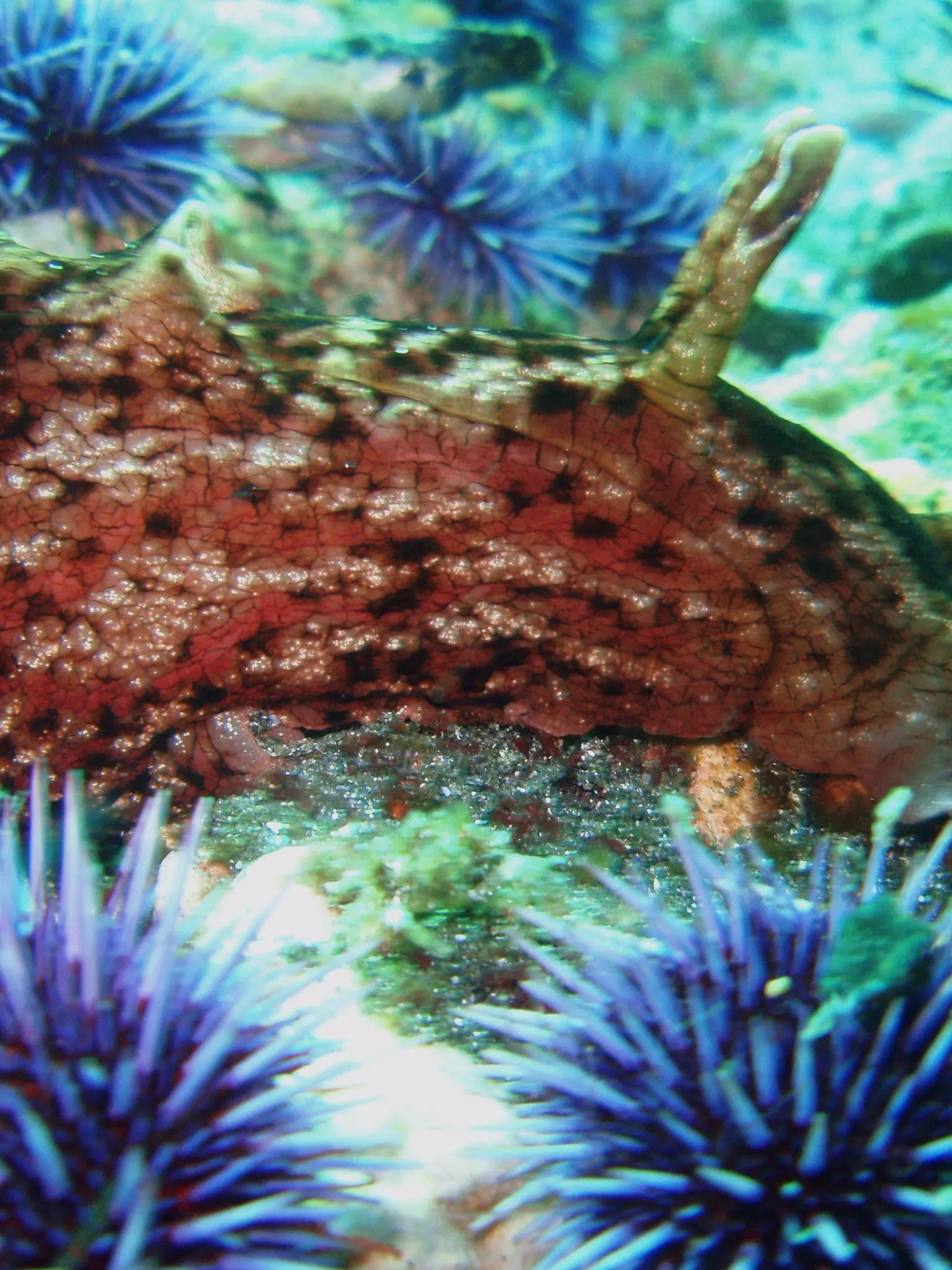
- The name comes from a pair of tentacle-like rhinophores on top of the head that look like a hare's or rabbit's ears.1
- California sea hares can grow to 16 inches long and weigh as much as 5 pounds.1
- Their colour tends to match the algae they eat most, from reddish-brown to greenish-brown, which helps camouflage them.1
Where and when to find it
- The National Park Service also lists California sea hares among residents of the middle intertidal zone.4
- California sea hares are often found among surf grass.5
- Young California sea hares tend to live in deeper water, down to about 60 feet, where they eat mostly red algae.1
- As they grow older, they move into shallower water to eat tougher brown and green algae.1
How it lives
- Sea hares are herbivores. They search out algae and eat it slowly with a toothed radula.1
- When disturbed, a sea hare can release a thick cloud of ink to distract predators, as an octopus does.2
- The California sea hare's ink is purple, and predators find it distasteful and irritating.1
- In the spring and summer mating season, they lay an egg mass that holds about 80 million potential young.1
- On average, a California sea hare lives about one year.1
How to watch without harming it
Range
- The California sea hare is native to the California coast and south into Mexico.1
Where the agencies name them
Spots whose managing agency lists sea hares for that place.
Further reading
For exploring further. These pages are not sources for the facts above; those are listed under Sources.
Sources
- National Park Service, Cabrillo National Monument: Species Spotlight: California Brown Sea Hare (park blog) (opens in a new tab) · page updated 15 February 2017 · accessed 17 November 2026
- National Park Service, Cabrillo National Monument: Intertidal Field Guide (opens in a new tab) · page updated 25 June 2021 · accessed 17 November 2026
- National Park Service: Cabrillo National Monument: The Rocky Intertidal Zone (opens in a new tab) · page updated 31 October 2026 · accessed 17 November 2026
- National Park Service, Cabrillo National Monument: Tidepool Species (opens in a new tab) · page updated 7 January 2018 · accessed 17 November 2026
- National Park Service, Cabrillo National Monument: A Virtual Visit to the Tidepools (opens in a new tab) · page updated 18 December 2020 · accessed 17 November 2026
- NOAA Office of National Marine Sanctuaries: Discover Life Between the Tides (Tidepool Etiquette) (opens in a new tab) · accessed 17 November 2026
Last checked 17 November 2026 against the sources above.