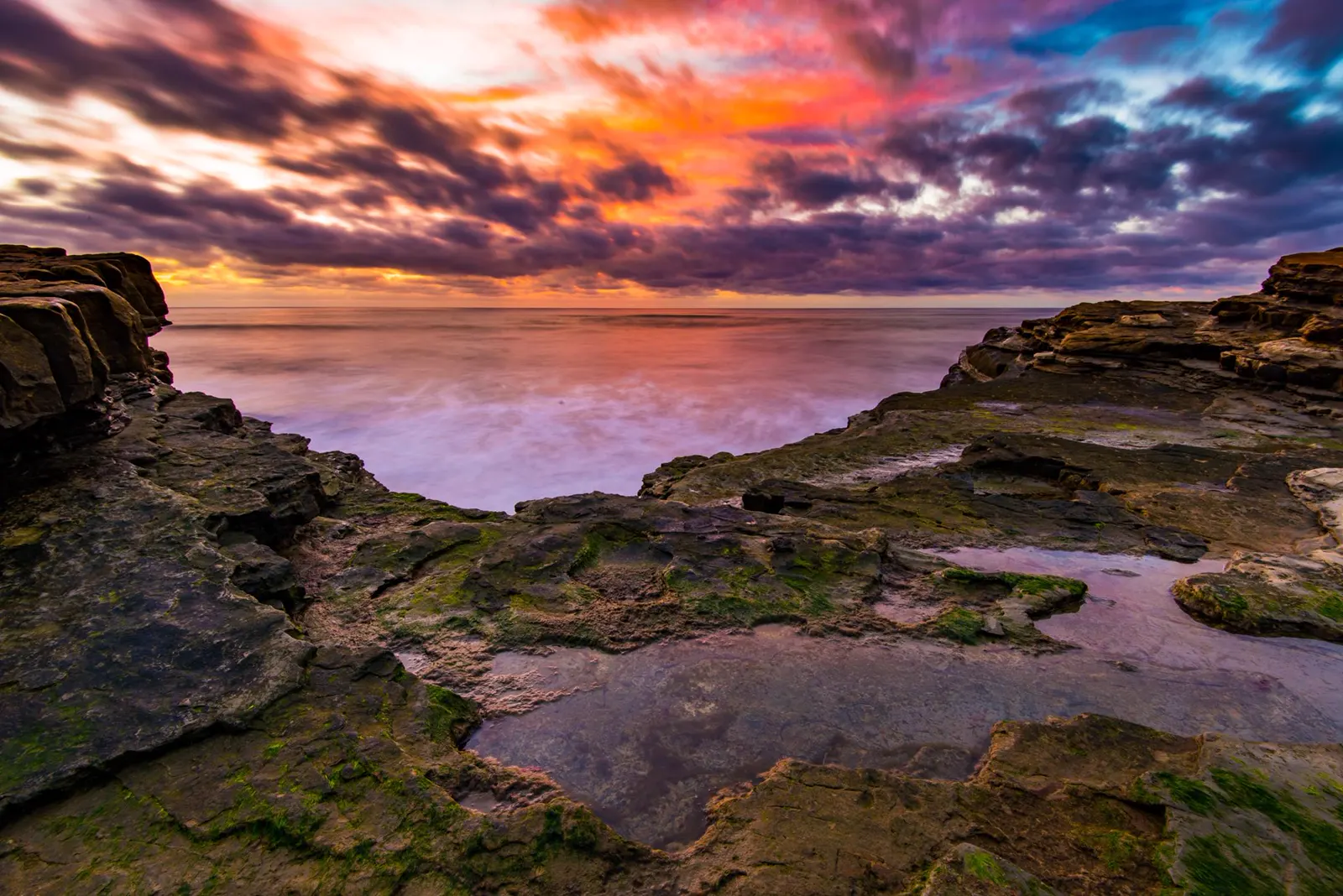
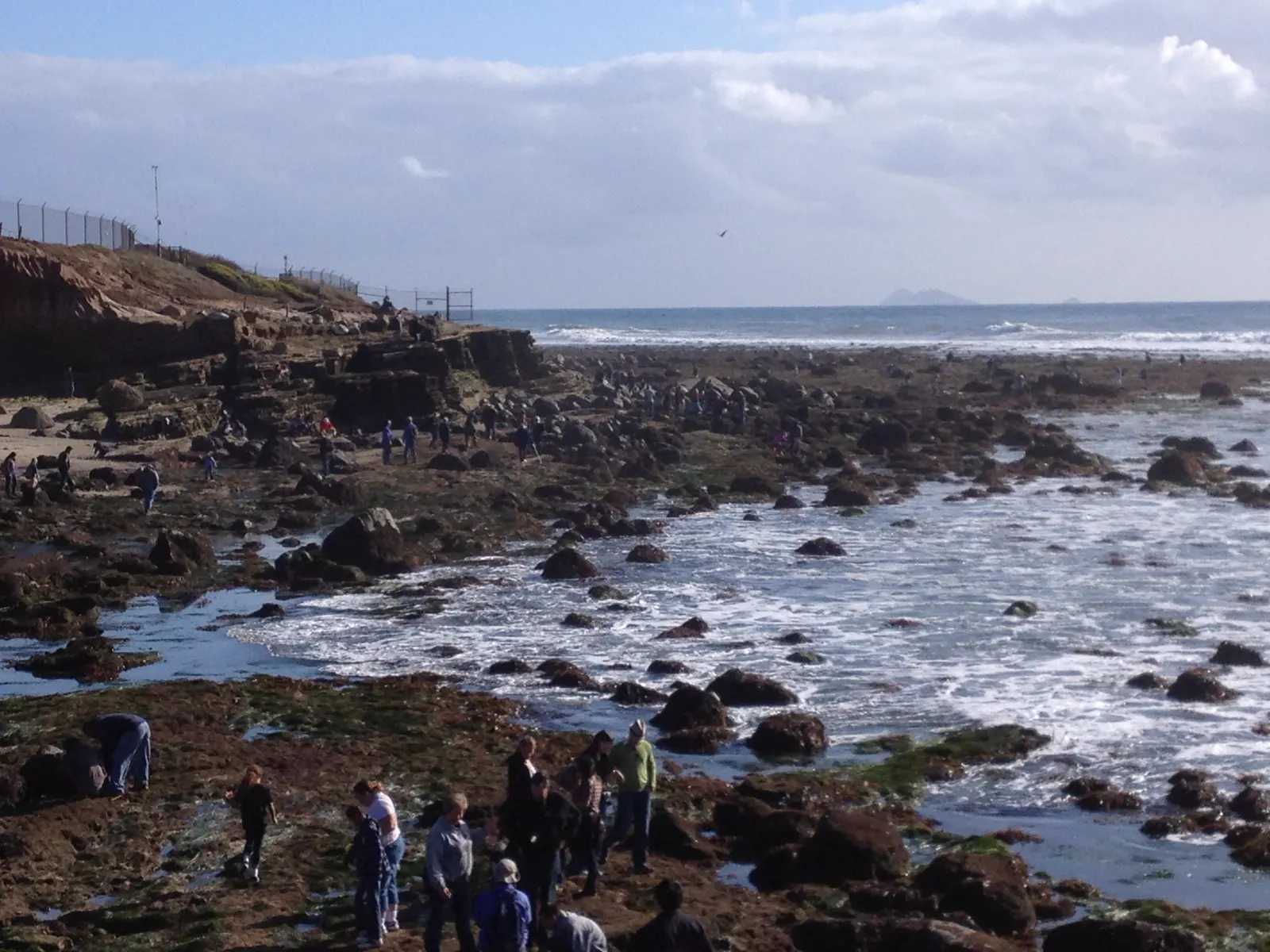
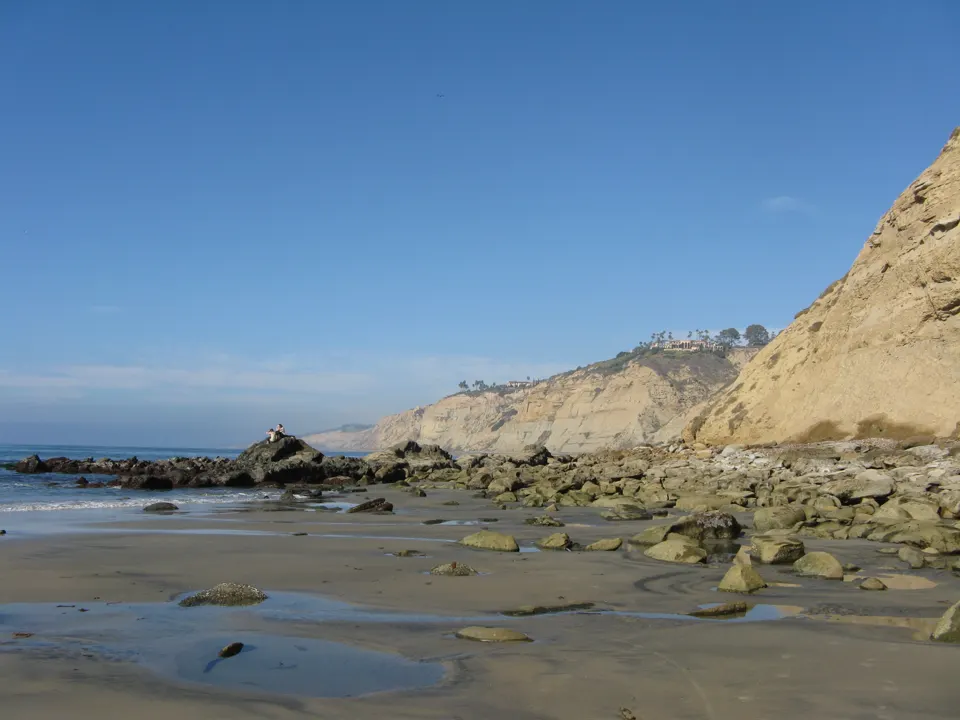
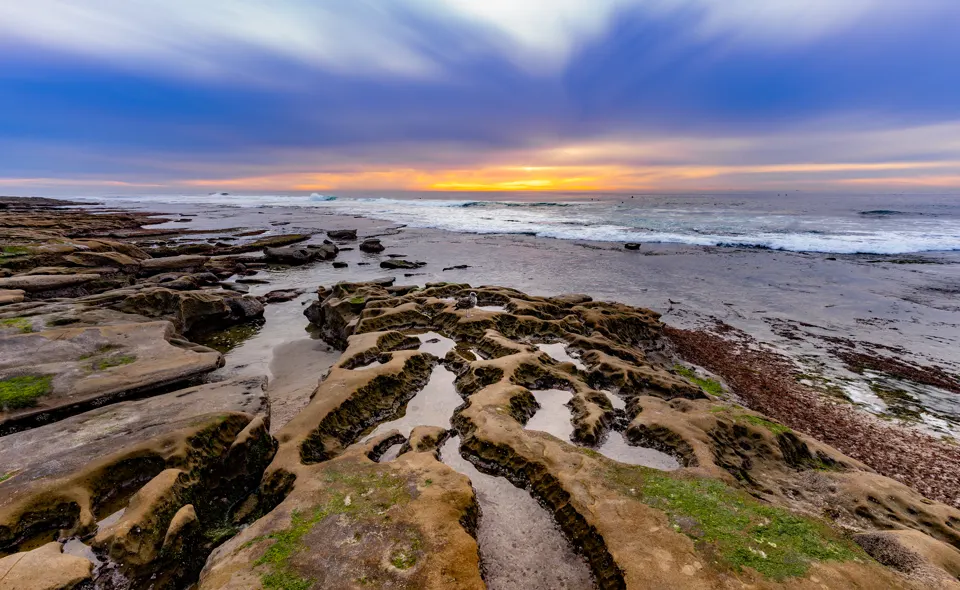
A rocky intertidal area on Point Loma, inside Cabrillo National Monument, managed by the National Park Service.1 The tidepools draw over 350,000 visitors a year.1 The park recommends fall and winter, when low tides fall during park hours. Summer low tides generally come at night.1
In an emergency
Emergency: call 911- Non-emergency Cabrillo National Monument (National Park Service): (619) 523-42851
- Nearest emergency department UC San Diego Health Hillcrest Emergency Department, 200 W. Arbor Drive, San Diego, CA 92103, (619) 543-6222 (hospital main line)3,4
Nearest full-service emergency department by road distance (OpenStreetMap routing, checked 2026-11-18). No drive time is given. Phone from the federal CMS hospital record.
Best times to go
The park suggests visiting about two hours before low tide, while the water is going out. The viewing window is an hour or more either side of the low.1
A tide of 0.7 ft or lower gives the best chance to explore. The tidepool area closes at 4:30 PM, so a late-afternoon low leaves less time.1
| Date | Low tide | Height |
|---|---|---|
| Sat 21 Nov 2026 | 1:00 PM | 0.23 ft |
| Sun 22 Nov 2026 | 1:42 PM | −0.46 ft |
| Mon 23 Nov 2026 | 2:26 PM | −0.99 ft |
| Tue 24 Nov 2026 | 3:11 PM | −1.31 ft |
| Wed 25 Nov 2026 | 3:59 PM | −1.39 ft |
| Fri 4 Dec 2026 | 12:47 PM | 0.35 ft |
| Sat 5 Dec 2026 | 1:29 PM | −0.11 ft |
| Sun 6 Dec 2026 | 2:06 PM | −0.41 ft |
| Mon 7 Dec 2026 | 2:40 PM | −0.57 ft |
| Tue 8 Dec 2026 | 3:13 PM | −0.61 ft |
| Wed 9 Dec 2026 | 3:47 PM | −0.56 ft |
| Thu 10 Dec 2026 | 4:22 PM | −0.44 ft |
Predictions from NOAA CO-OPS. Not for navigation. Station 9410166, San Diego, Quarantine Station. Heights in feet relative to MLLW, local time, rounded to 0.01 ft. We choose which lows to show; times and heights are NOAA's.5
Hours, fees and status
- Park hours
- Daily, 9:00 AM to 5:00 PM2
- Closed
- Thanksgiving Day and Christmas Day2
- Private vehicle
- $20, admits the vehicle and everyone in it; valid 7 days6
- On foot or bike
- $10 per person; groups of up to 4 capped at $20; under 16 free6
- Annual pass
- Cabrillo annual pass $35, valid 12 months6
The main gate closes at 5:00 PM and all visitors must leave by then.2
Rules
The tidepools are inside a national monument, and the waters are also covered by a California Marine Protected Area.1
- Take nothing. Collecting any natural item, living or dead, including shells and rocks, is strictly forbidden.1
- Touch gently, or not at all. Don't poke anemones or squeeze sea hares.1
- Don't pull animals off the rock. Leave attached animals such as limpets, chitons, barnacles, mussels, sea stars and urchins where they are, and don't chase animals that move away.1
- Leave rocks as you found them, the same way up. Never throw rocks.1
- No containers, nets, scrapers or prying tools in the tidepool area, and no fishing anywhere in the monument.1
- Leave marine mammals alone. They are protected by the Marine Mammal Protection Act.1
- The water is also Cabrillo State Marine Reserve: collecting anything, from rocks and shells to fish and algae, is not permitted.7
What you'll see
Animals the managing agency names for this spot.1
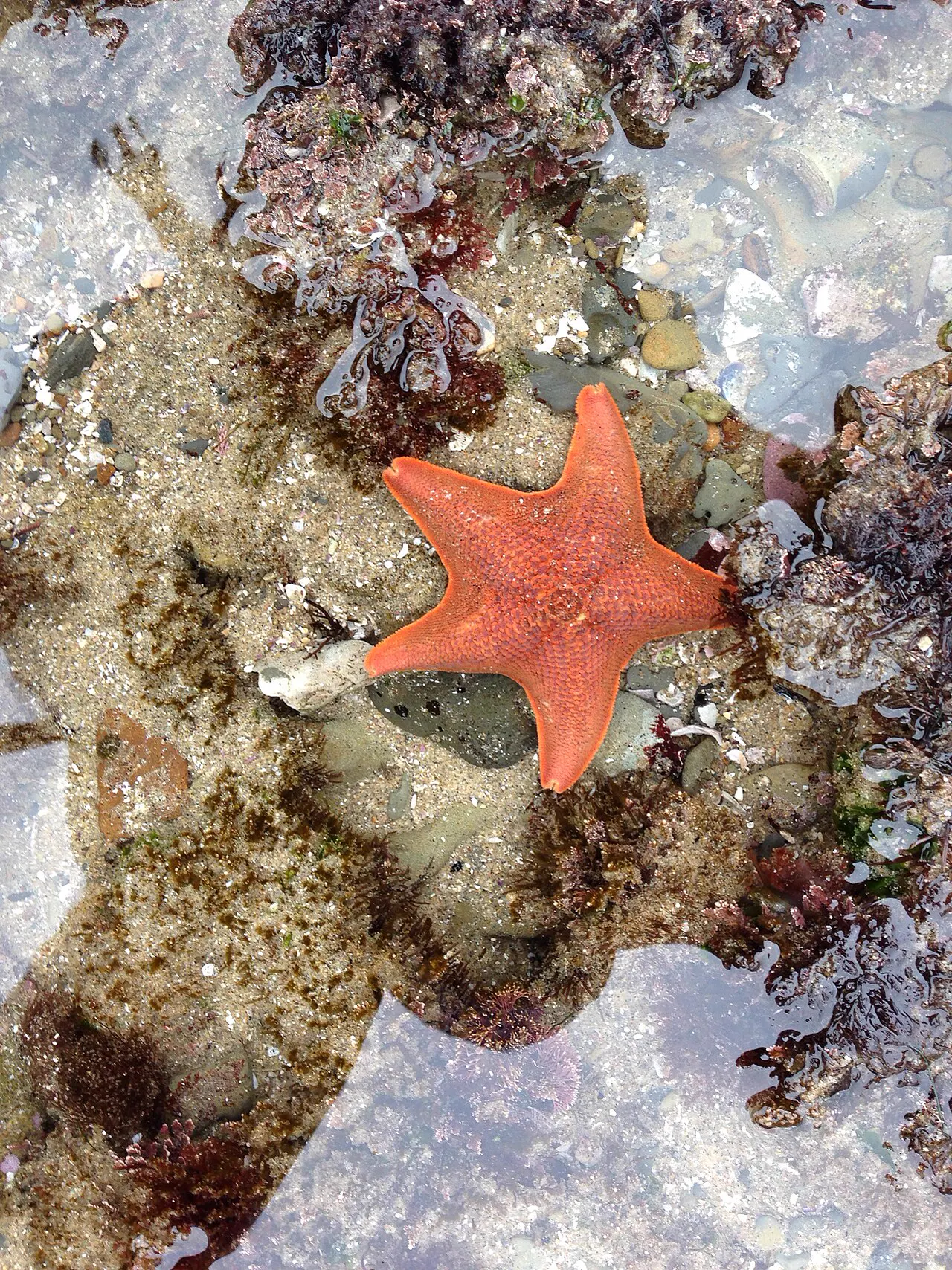
Sea stars are sturdy, flexible predators of the rocky intertidal zone.8 Some species, such as the ochre sea star, play an especially important role in the rocky shore community.9 A wasting disease killed huge numbers of sea stars along the Pacific coast of North America in 2013 and 2014.10
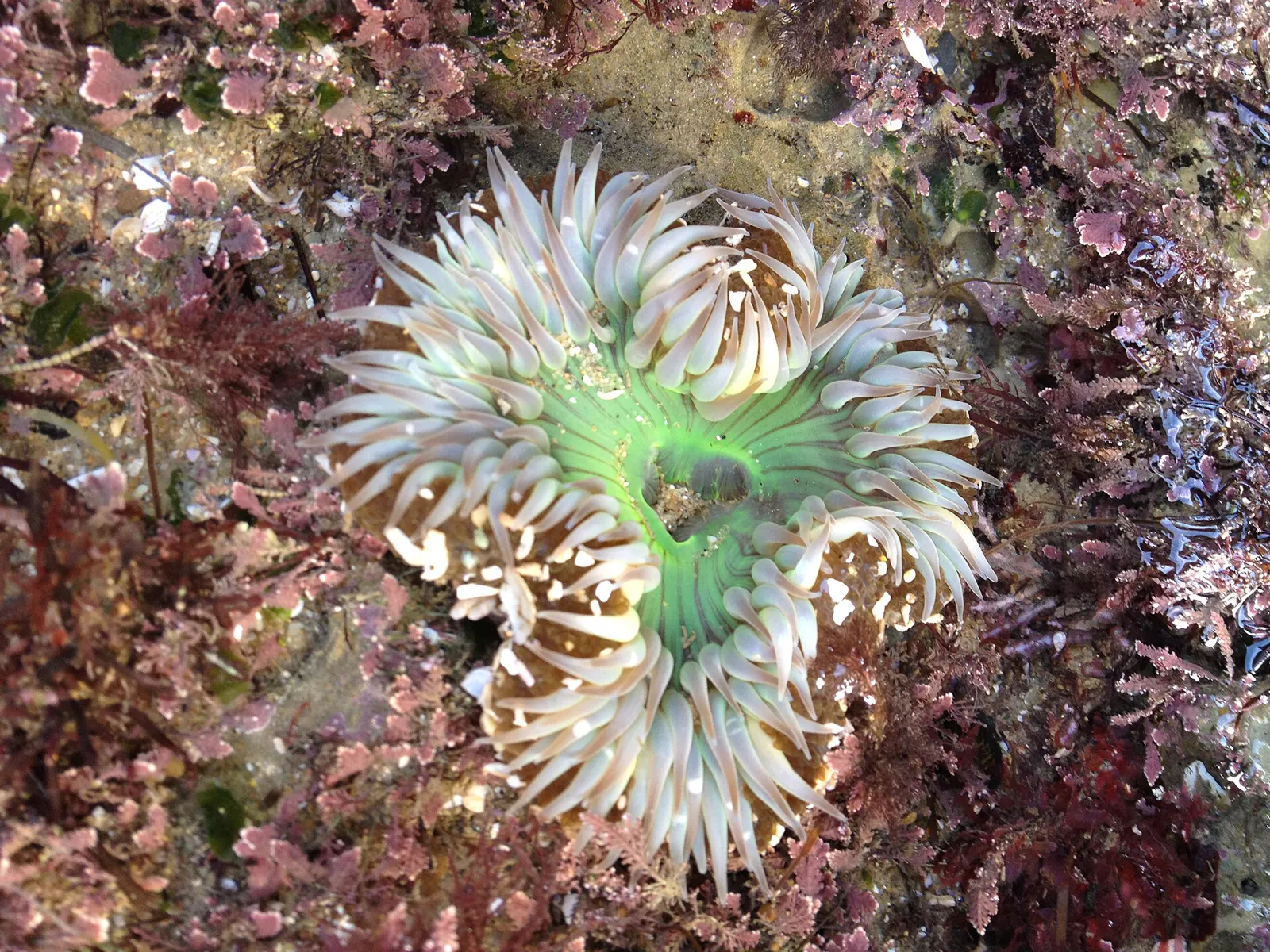
The giant green anemone and the slightly smaller aggregating anemone are both common in tidepools.11 Anemones have no hard shell. Their soft, flexible bodies bend with the moving water.12 They catch prey with stinging cells called nematocysts.13
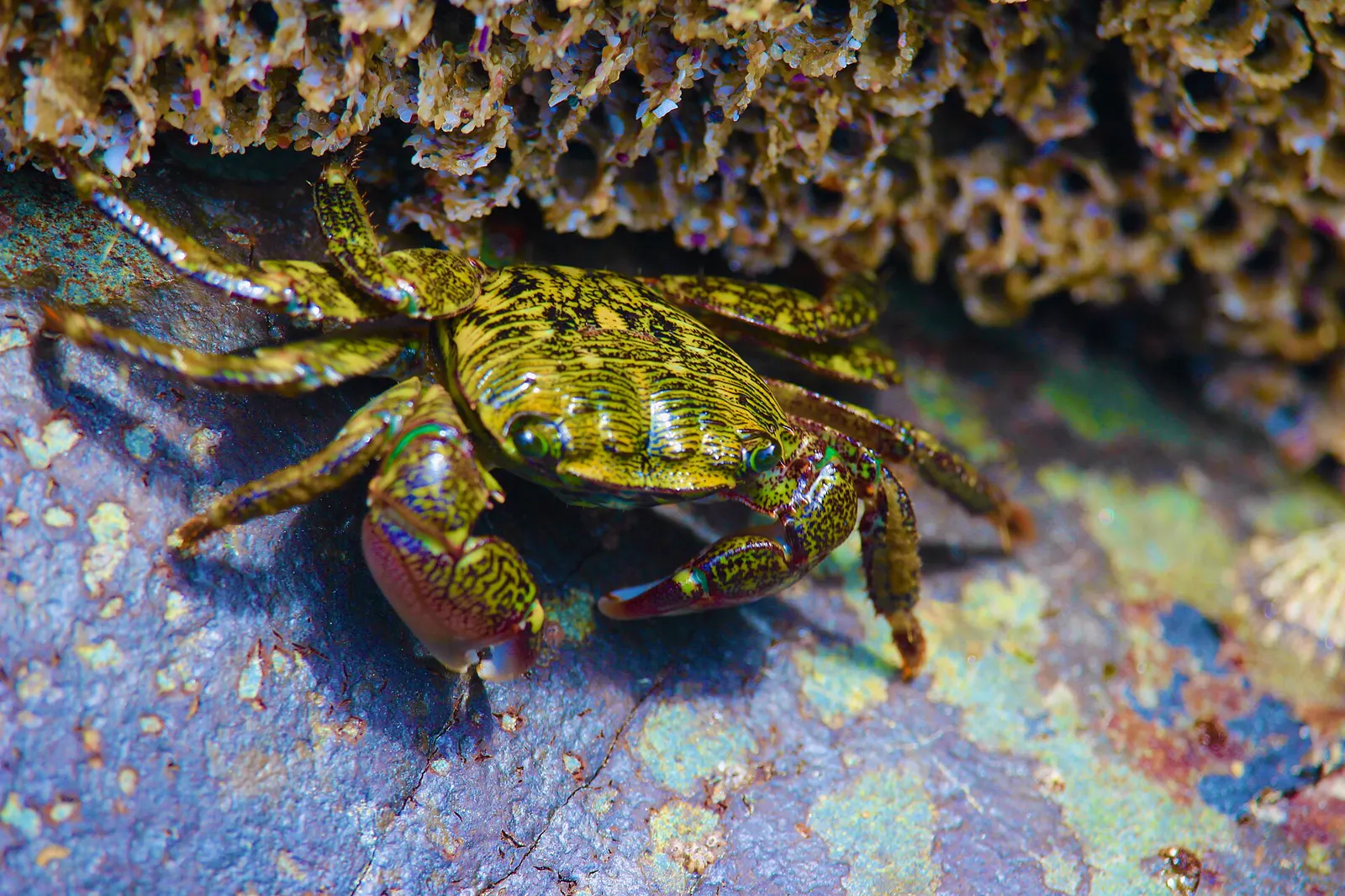
Crabs live even in the high, splash zone of the tidepools, alongside barnacles, limpets, chitons and mussels.1 The shore crab is commonly found in rock crevices in the mid to high intertidal.13
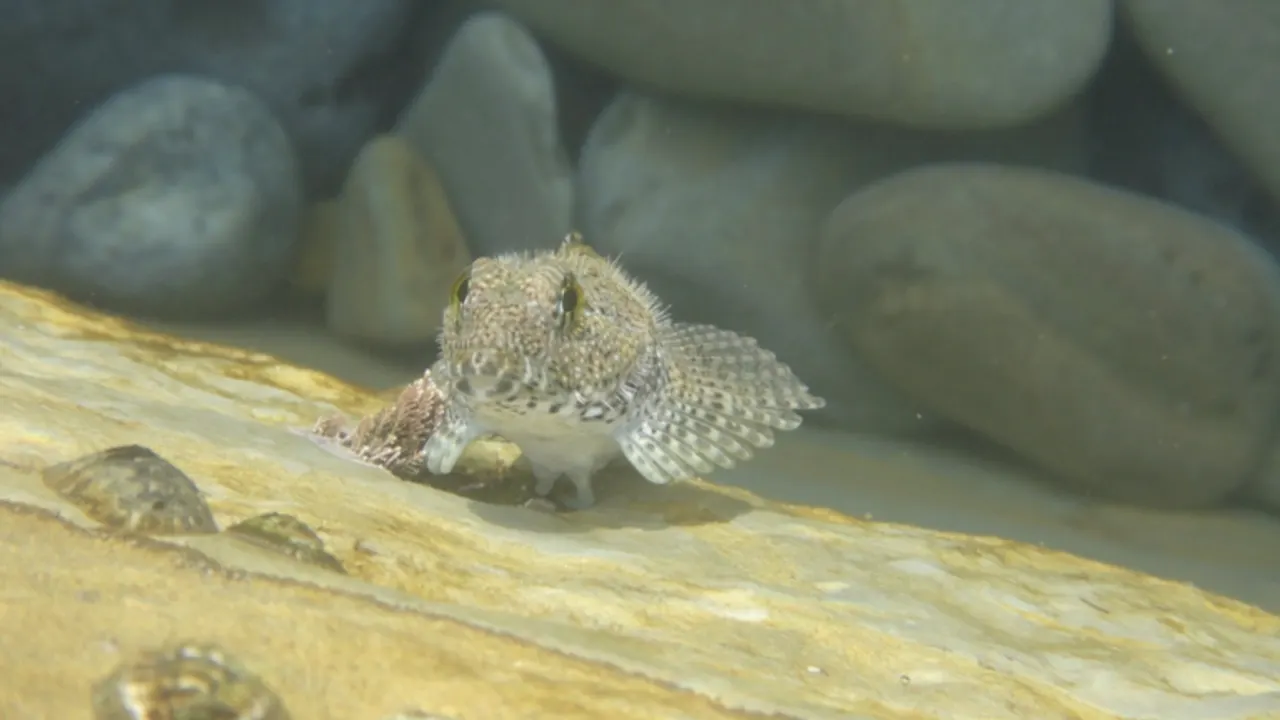
When the tide goes out, small fish are among the animals left behind in isolated tidepools.1 Many fish feed in the intertidal zone at high tide, but most leave as the tide ebbs.14 A few kinds stay behind, hiding in tidepools under rocks or in mussel beds.14
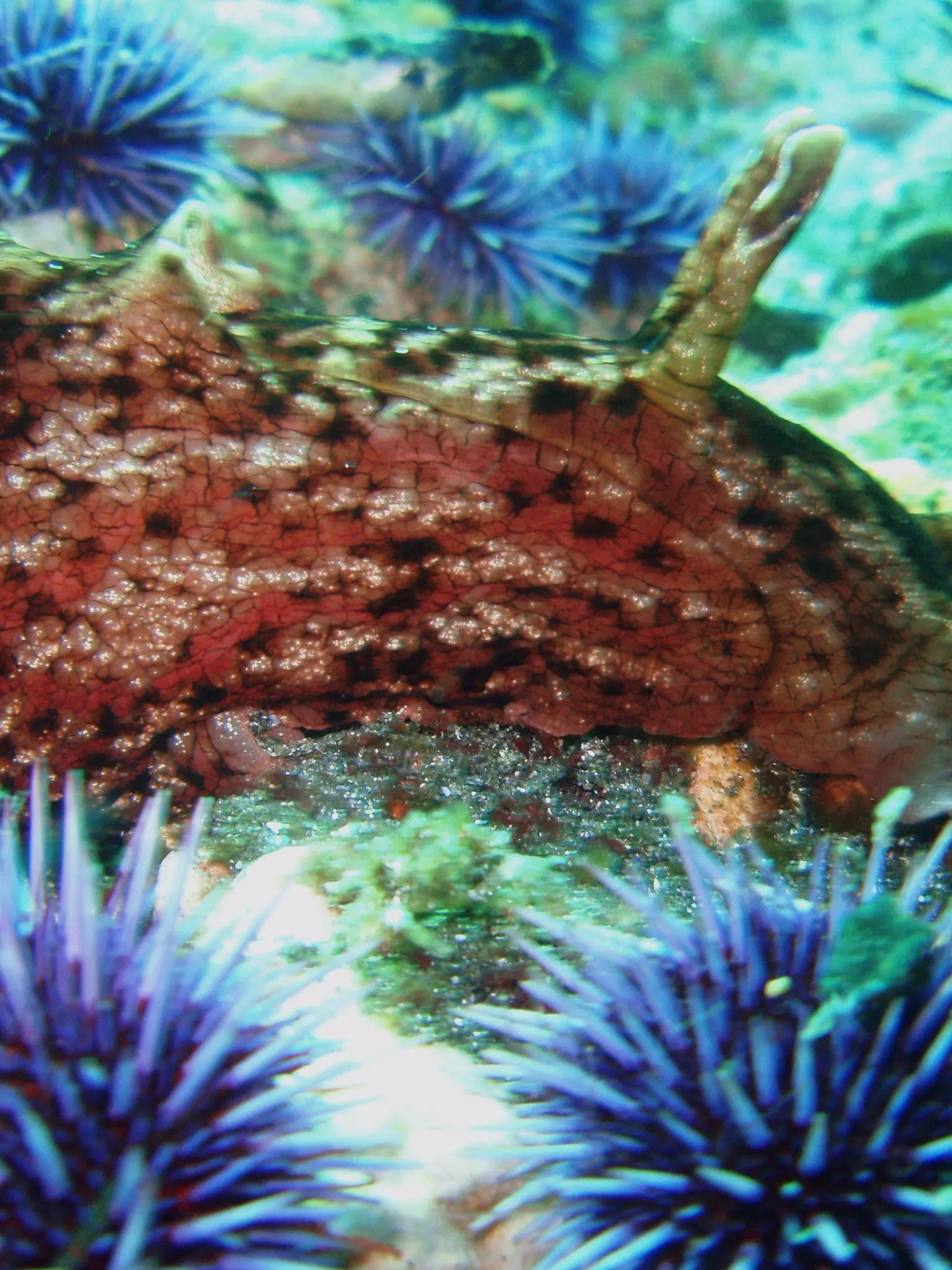
Sea hares are soft-bodied sea slugs. The California sea hare's skin ranges from reddish brown to greenish grey.13 They live in the low intertidal zone, which is uncovered only during the lowest tides.1
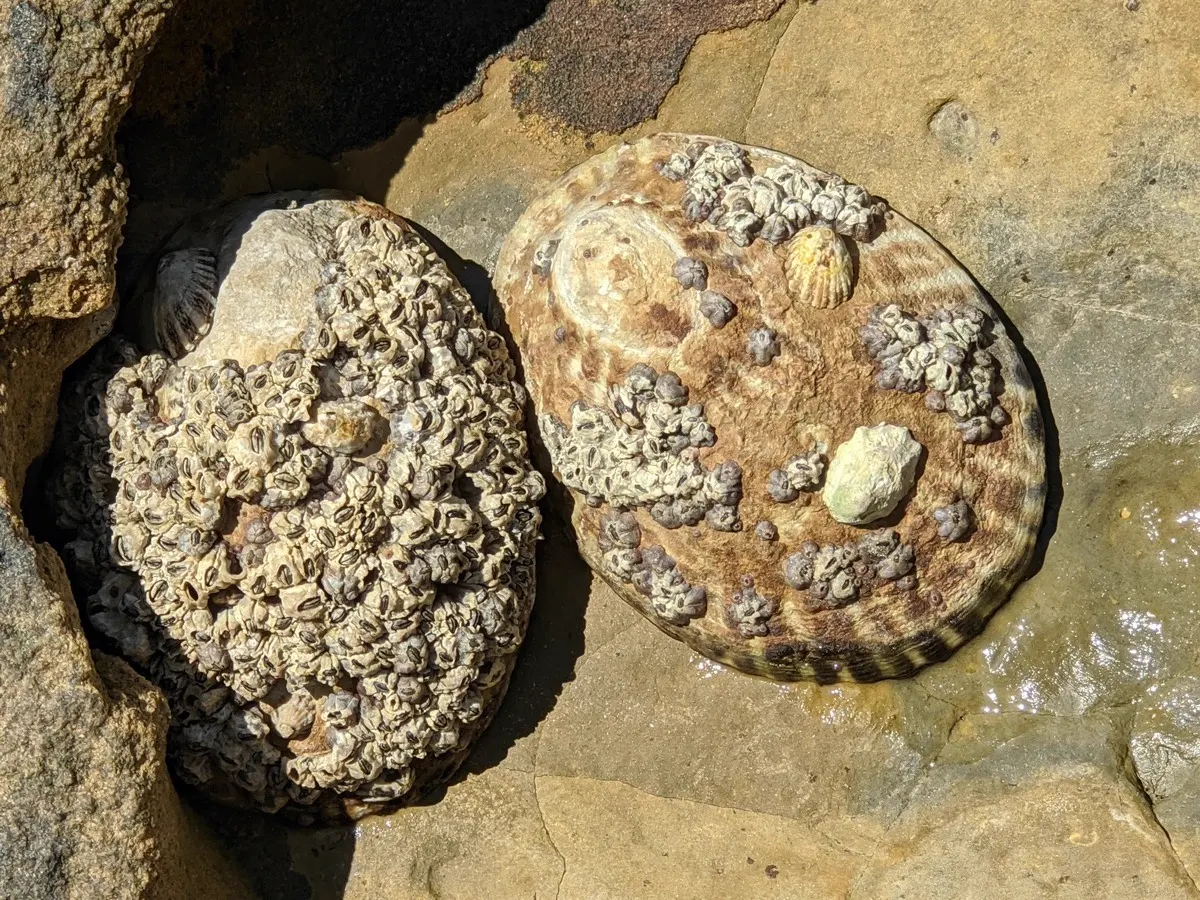
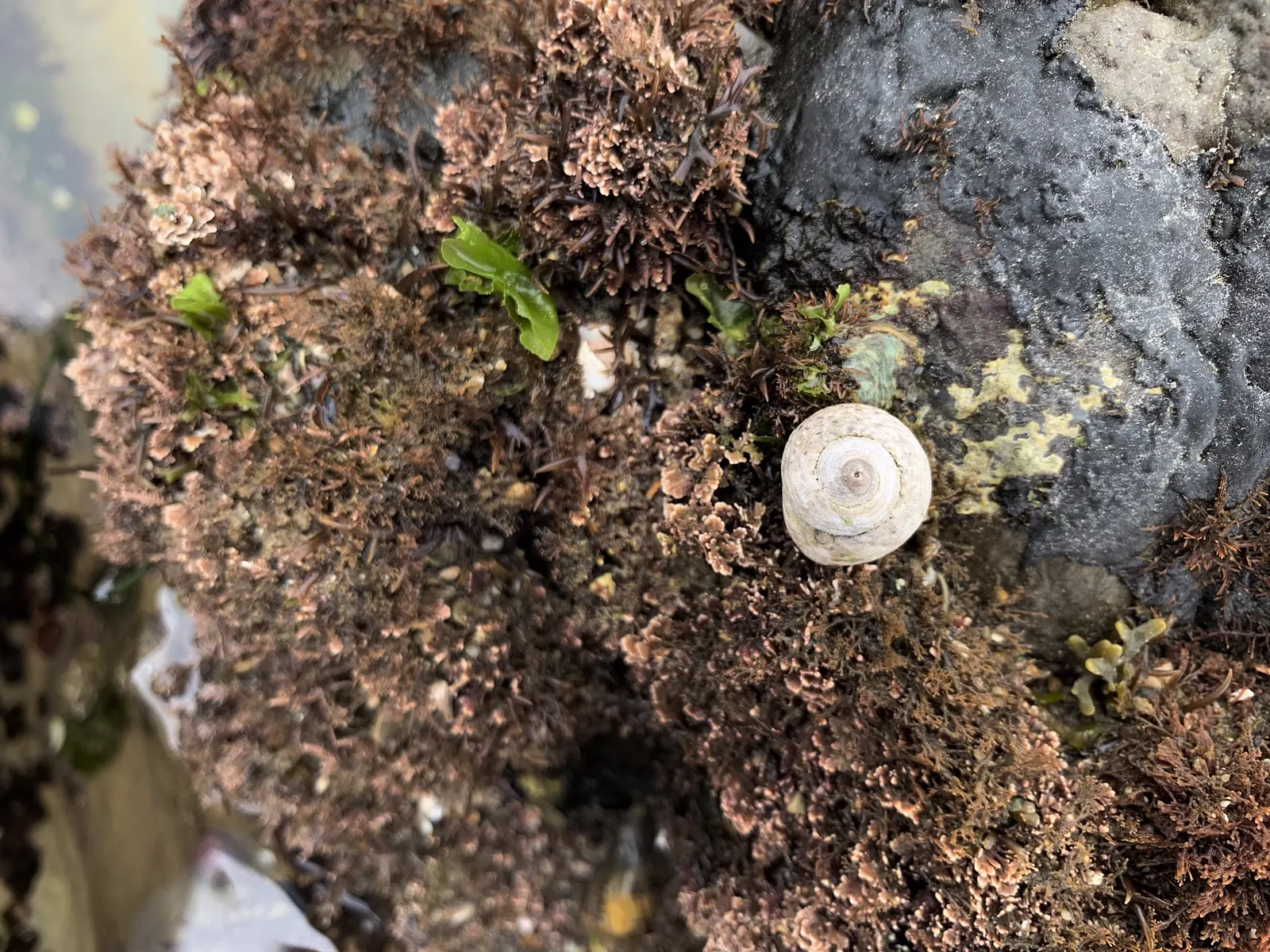
Limpets have small, cone-shaped shells and live on rocks throughout the intertidal zone. Their shells are not coiled, but they are closely related to snails.15 The owl limpet is the largest true limpet on the Pacific coast, growing up to 4 inches.13
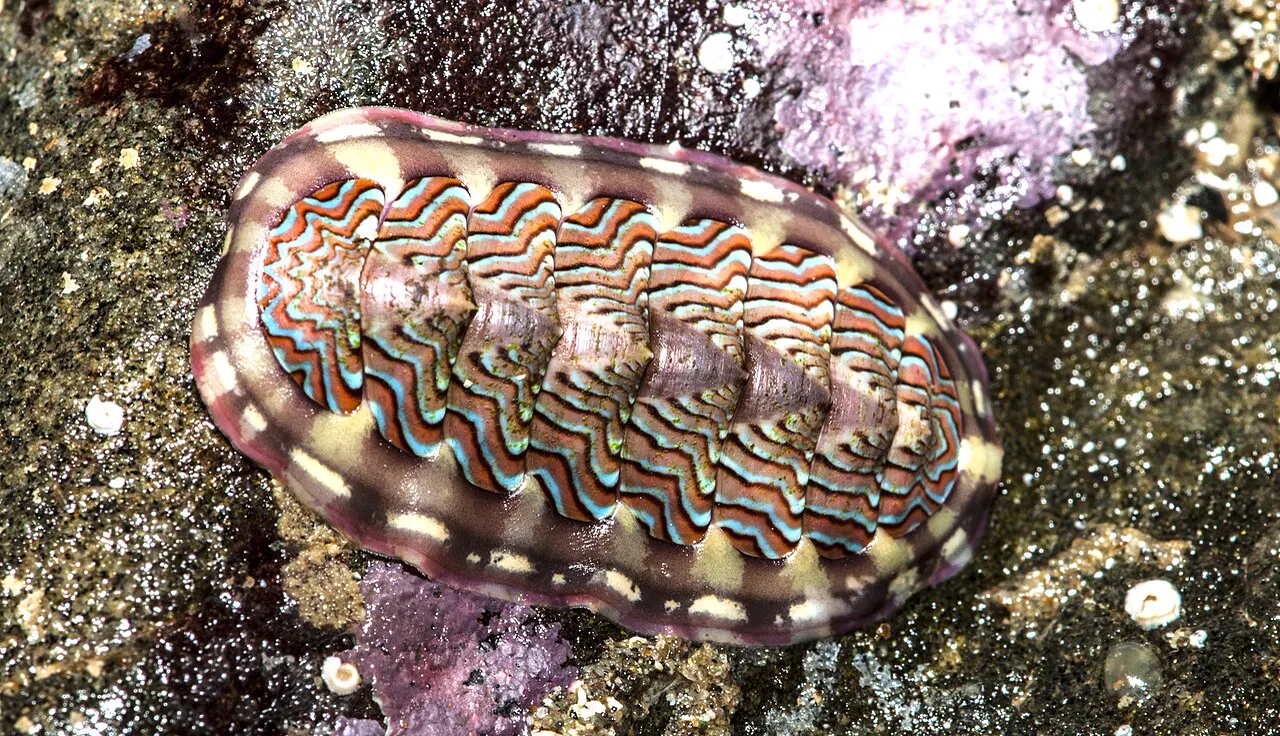
Chitons are oval mollusks with flattened bodies and eight plates along their backs.15 They feed when the tide is high, scraping algae, bacteria and diatoms off the rocks.16
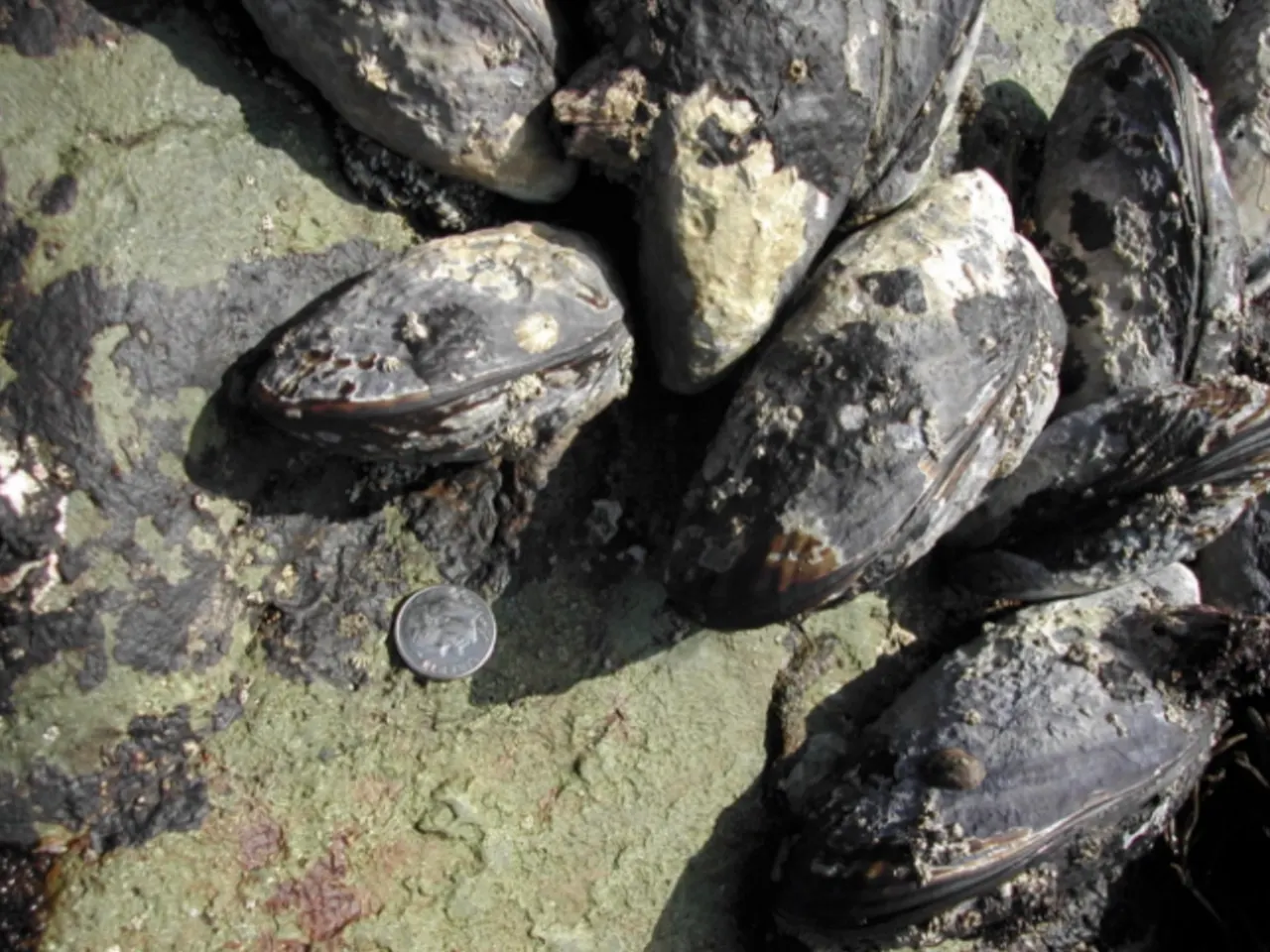
California mussels grow in beds held firmly to the rocks by tough strands. Their shells are tear-shaped and dark blue-black.13 They are commonly 3 to 5 inches long and open at high tide to filter plankton from the water.13
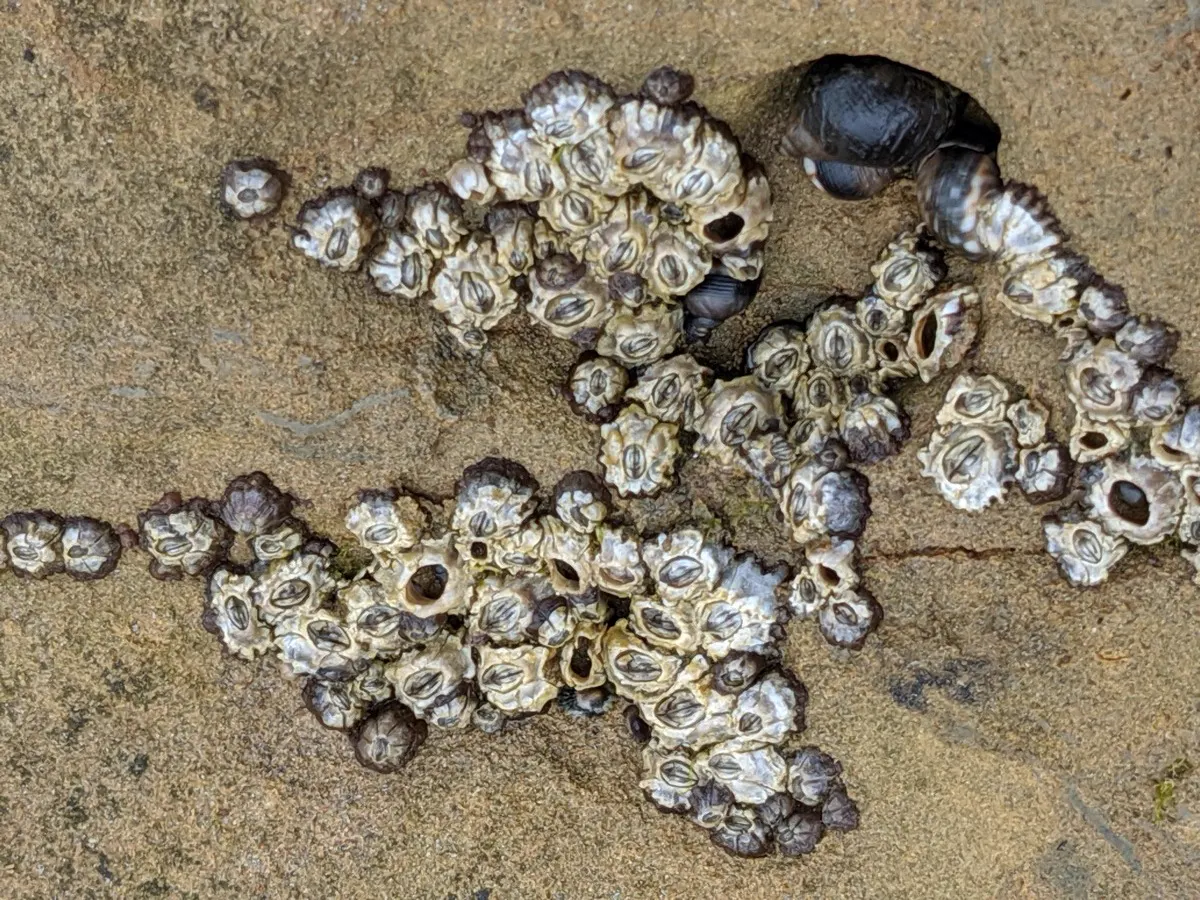
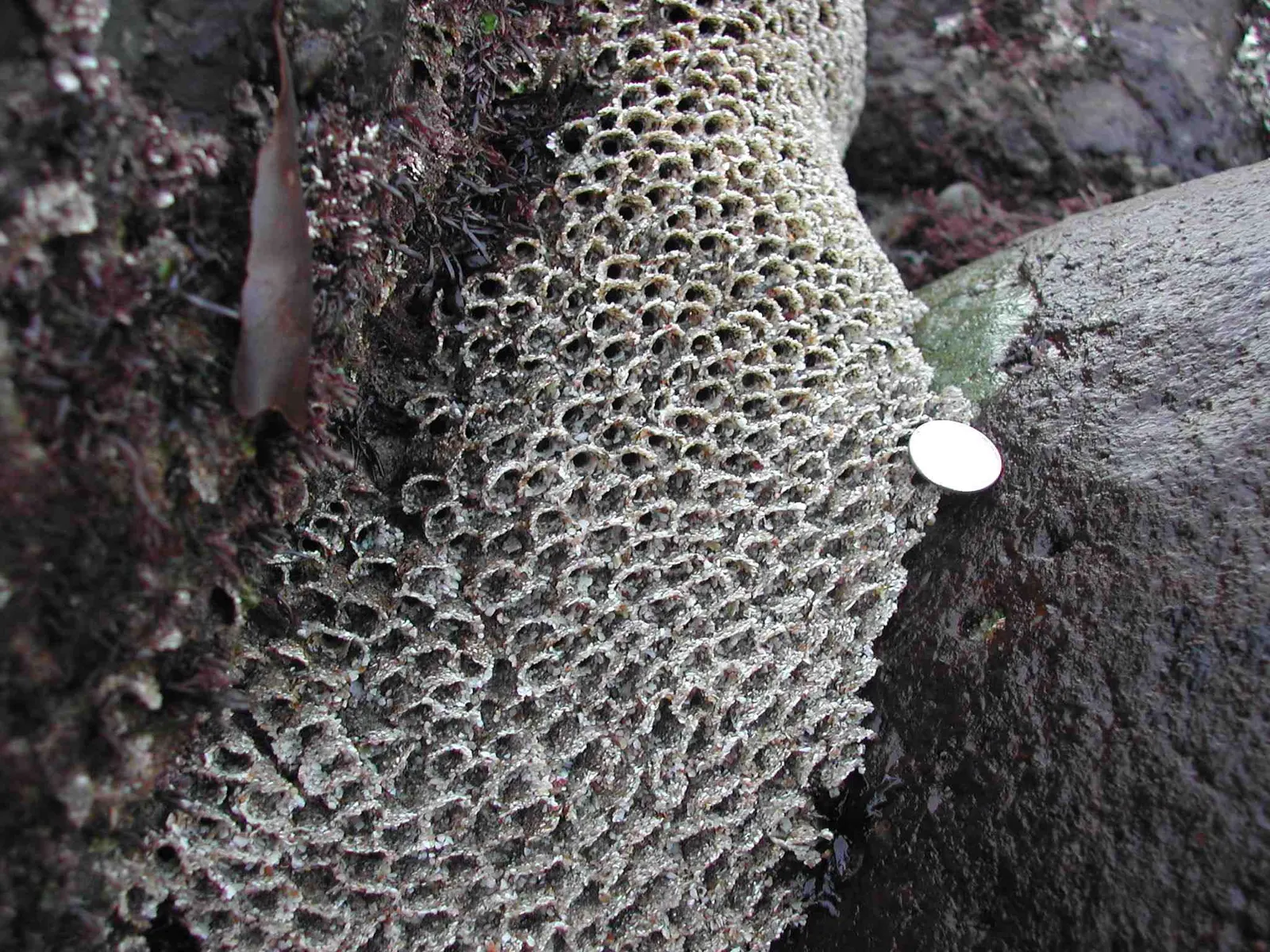
Barnacles are relatives of crabs and shrimp that cluster on surfaces at every level of the intertidal zone.17 They attach head-first and use their feathery legs to take in oxygen and net food floating past.17
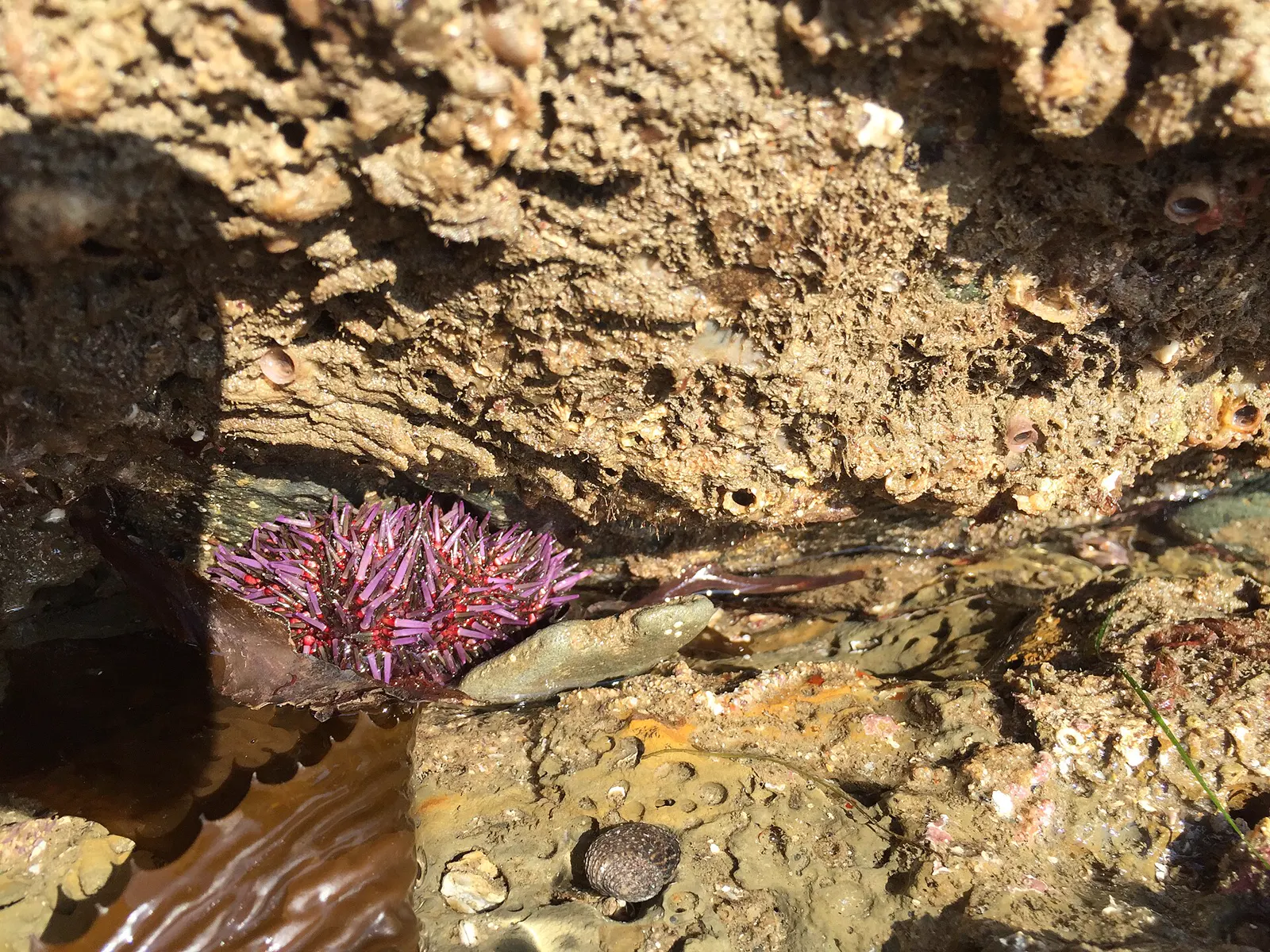
Sea urchins live in tide pools in the lower intertidal zone and are abundant below the tide line.8 Purple sea urchins graze on algae and help control how dense kelp forests become.18
Stay safe
- Wear shoes that grip. Wet rock and algae are slippery. The park strongly discourages sandals and flip-flops.1
- Keep small children close. Excitement can quickly turn into a slip or a tumble.1
- There's no cell service at the tidepools. If you arrive by ride-share, agree your pickup time and place in advance.1
- Never turn your back to the ocean. San Diego's lifeguards warn that waves can sweep people off coastal bluffs or tide pool areas without warning.19
Read more: ocean safety · shore safety · weather · first aid
Getting there
- Address
- 1800 Cabrillo Memorial Drive, San Diego, CA 921062
- Phone
- (619) 523-4285 · Ranger hotline, staffed 10:00 AM to 5:00 PM2
- Driving is the easiest way to reach the tidepool area in the lower park.1
- The park discourages walking down Cabrillo Road for safety reasons. On foot, use the Oceanside Trail.1
- When the tidepool parking fills, the road down is closed, usually for around 30 minutes, until spaces free up. On busy weekends, arrive early (the park opens at 9:00 AM).1
1800 Cabrillo Memorial Drive, San Diego, CA 92106
Directions to Cabrillo National Monument's address (per NPS). The tidepools are in the lower part of the park.2,1 Loads Google Maps when you tap.
Photos of this spot
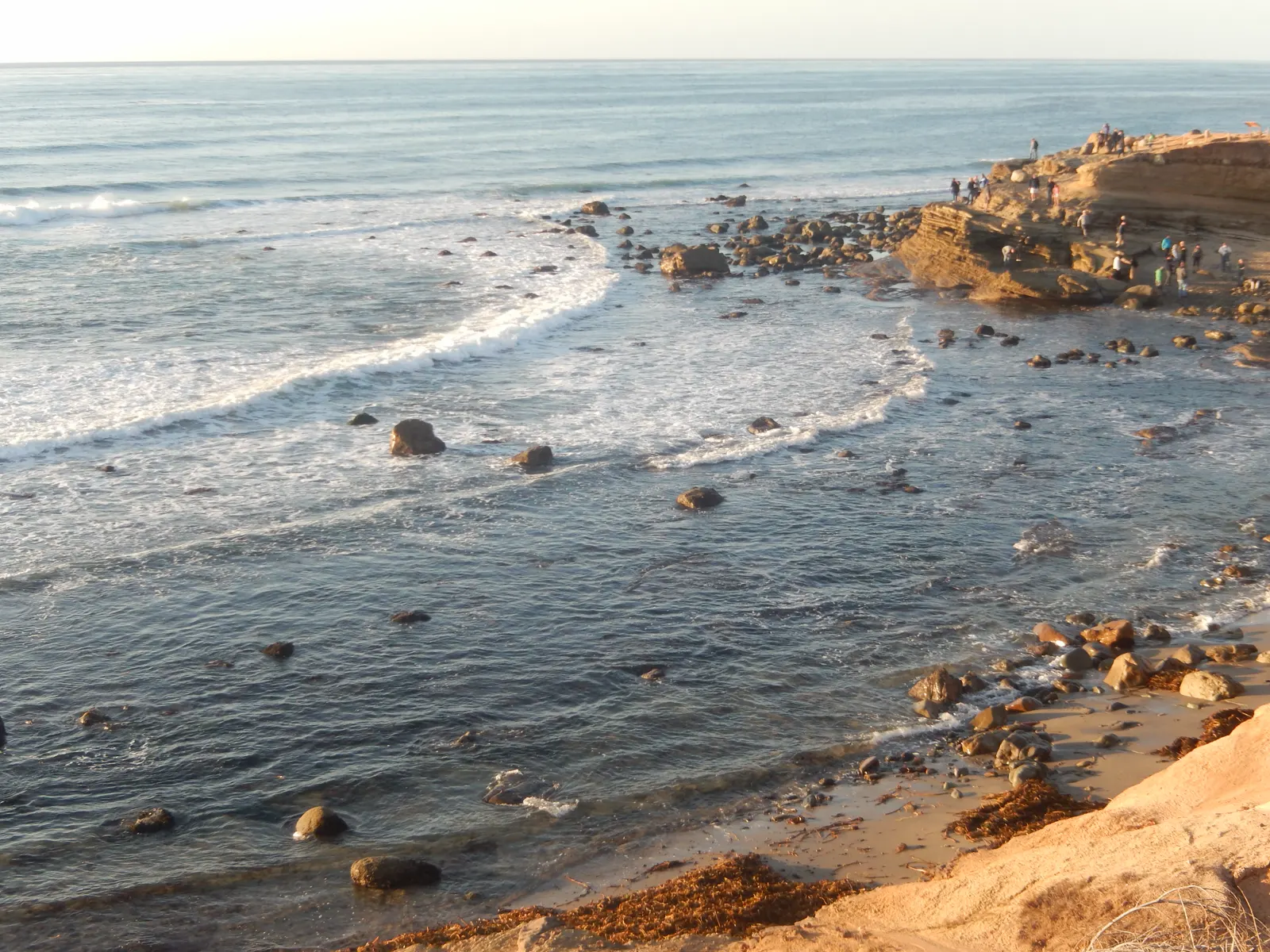
Nearby tide pools
Page history
- : Cabrillo National Monument: emergency contacts updated
- : Cabrillo National Monument: emergency contacts added
- : Cabrillo National Monument added
Sources
- National Park Service: Cabrillo National Monument: The Rocky Intertidal Zone (opens in a new tab) · page updated 31 October 2026 · accessed 17 November 2026
- National Park Service: Cabrillo National Monument: Operating Hours & Seasons (opens in a new tab) · page updated 26 November 2025 · accessed 18 November 2026
- UC San Diego Health: Emergency Departments (opens in a new tab) · accessed 18 November 2026
- Centers for Medicare & Medicaid Services (CMS): Hospital General Information: UC San Diego Health Hillcrest - Hillcrest Med Ctr (facility 050025) (opens in a new tab) · accessed 21 November 2026
- NOAA CO-OPS: Tide predictions (high/low), station 9410166 San Diego, Quarantine Station; MLLW, feet, local time (opens in a new tab) · accessed 17 November 2026
- National Park Service: Cabrillo National Monument: Fees & Passes (opens in a new tab) · page updated 24 March 2026 · accessed 17 November 2026
- California Department of Fish and Wildlife: Cabrillo State Marine Reserve (opens in a new tab) · accessed 17 November 2026
- National Park Service, Point Reyes National Seashore: Echinoderms (opens in a new tab) · page updated 19 September 2022 · accessed 17 November 2026
- National Park Service, Redwood National and State Parks: Sea Stars (opens in a new tab) · page updated 7 December 2020 · accessed 17 November 2026
- MARINe (Multi-Agency Rocky Intertidal Network), UC Santa Cruz: Sea Star Wasting Disease (opens in a new tab) · page updated 6 October 2026 · accessed 17 November 2026
- National Park Service, Channel Islands National Park: Anemone (opens in a new tab) · page updated 21 May 2021 · accessed 17 November 2026
- National Park Service, Klamath Inventory and Monitoring Network: On the Edge: The Curious Lives of Intertidal Organisms and How We Monitor Them (opens in a new tab) · page updated 28 November 2022 · accessed 17 November 2026
- National Park Service, Cabrillo National Monument: Intertidal Field Guide (opens in a new tab) · page updated 25 June 2021 · accessed 17 November 2026
- National Park Service, Glacier Bay National Park & Preserve: Fish in the Intertidal Zone (opens in a new tab) · page updated 16 March 2018 · accessed 17 November 2026
- National Park Service, Glacier Bay National Park & Preserve: Snails, Limpets & Chitons (opens in a new tab) · page updated 16 March 2018 · accessed 17 November 2026
- National Park Service, Channel Islands National Park: Chiton (opens in a new tab) · page updated 21 May 2021 · accessed 17 November 2026
- National Park Service, Channel Islands National Park: Barnacles (opens in a new tab) · page updated 21 May 2021 · accessed 17 November 2026
- MARINe (Multi-Agency Rocky Intertidal Network), UC Santa Cruz: Strongylocentrotus purpuratus (Purple Urchin) (opens in a new tab) · page updated 7 August 2025 · accessed 17 November 2026
- City of San Diego, Lifeguard Services: Beach and water safety (opens in a new tab) · accessed 17 November 2026
Checked against the sources above on 17 November 2026. Hours, fees and rules can change without notice, so check with the National Park Service before you go. Not affiliated with or endorsed by the National Park Service or NOAA.
Report a change
Visited recently and something's different? Reports go to review first. They don't change the page until we check them against the official source.
Send a report How reports work