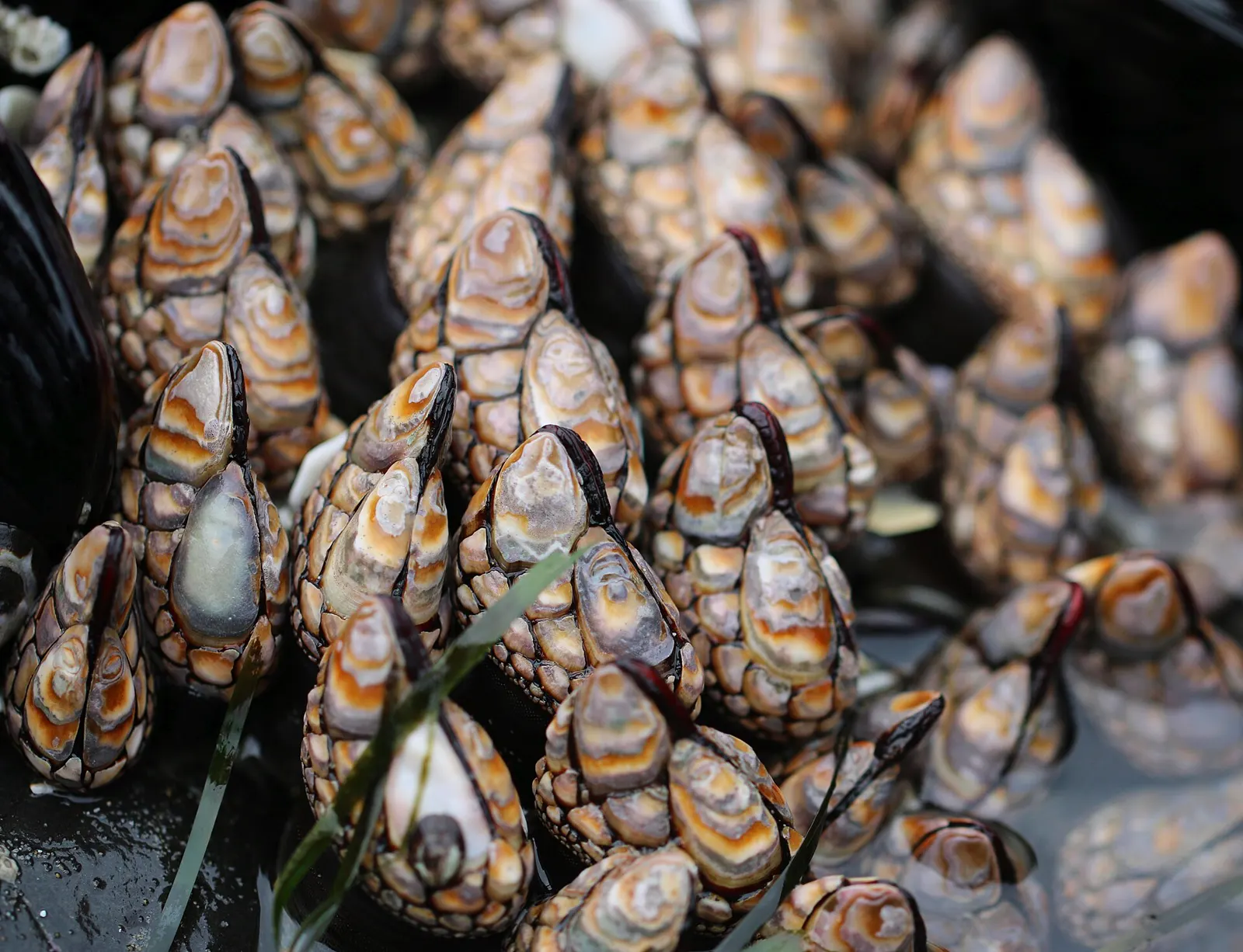
A dense cluster of gooseneck barnacles (Pollicipes polymerus) with striped, scaly stalks

Animal group

Barnacles of the Pacific coast

Barnacles are relatives of crabs and shrimp that cluster on surfaces at every level of the intertidal zone.1 They attach head-first and use their feathery legs to take in oxygen and net food floating past.1

Gooseneck barnacles (Pollicipes polymerus). Location: not stated in the photo record. Photo: Peter Pearsall / U.S. Fish and Wildlife Service (opens in a new tab) · Public domain

Varieties

The main kinds you might see. Each photo is identified as that species in its own record; tap a photo to see it full size.

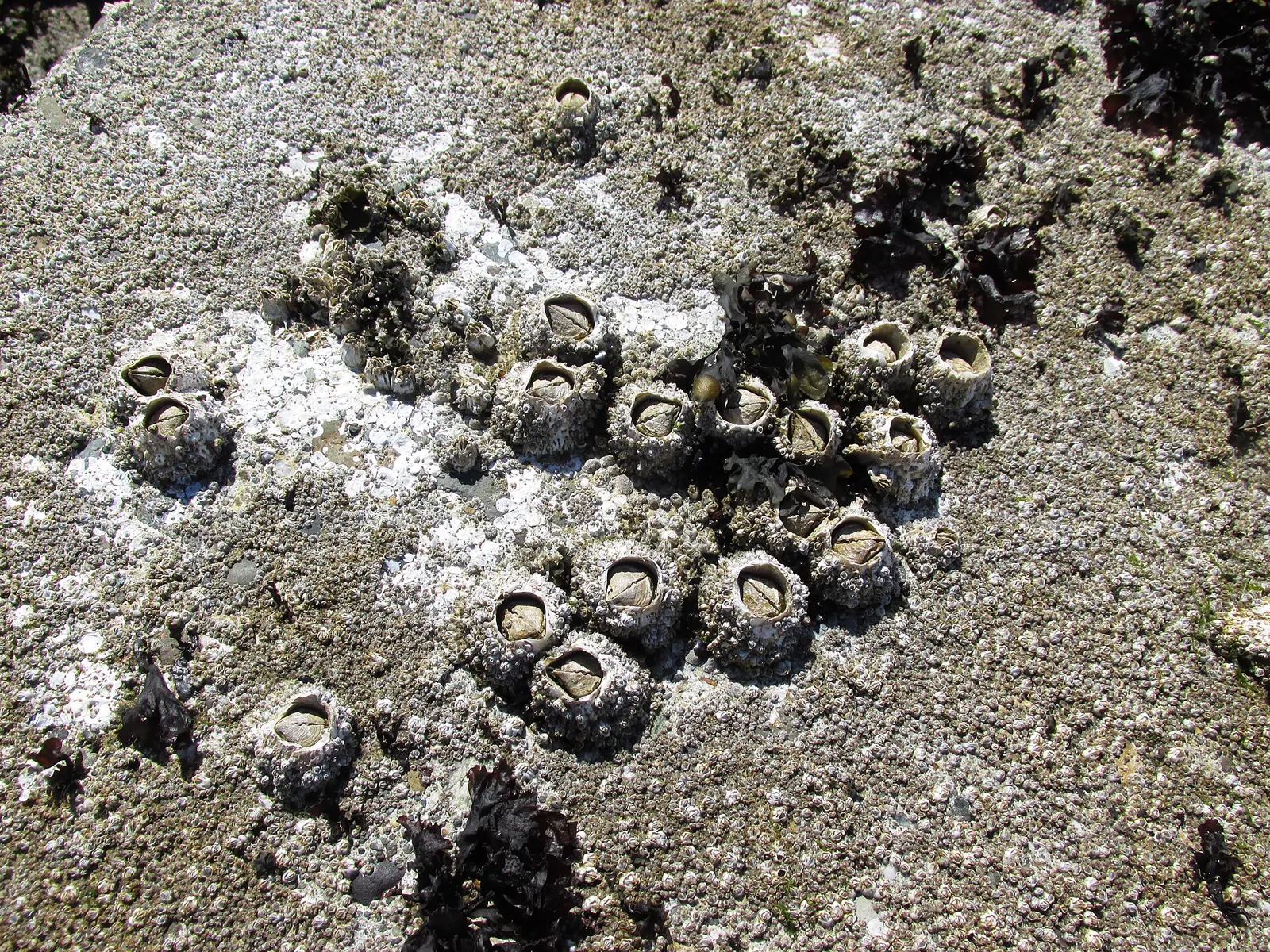
Acorn barnacle (Balanus glandula)

Acorn barnacle

Balanus glandula2

  • Among acorn barnacles, Balanus glandula is larger (up to 22 mm), whiter and has a diamond-shaped opening, unlike the smaller Chthamalus.2
  • Acorn barnacles usually dominate the high intertidal zone along the west coast of North America.2

Learn more: Wikipedia: Balanus glandula (opens in a new tab)

Photo: brewbooks from near Seattle, USA (opens in a new tab) · CC BY-SA 2.0 (opens in a new tab), resized
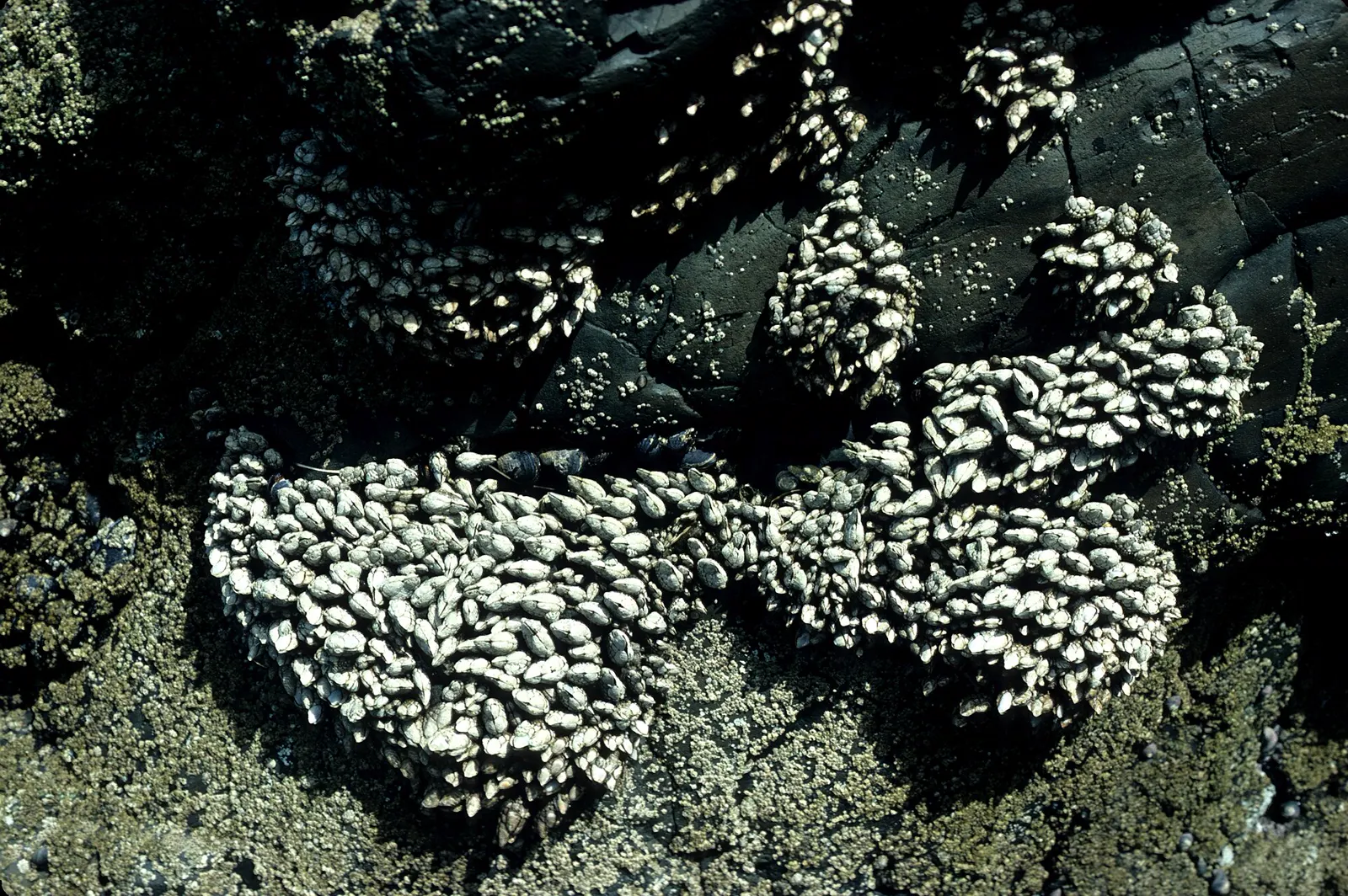
Gooseneck barnacle (Pollicipes polymerus)

Gooseneck barnacle

Pollicipes polymerus3

  • Gooseneck barnacles have white shell plates on top of a tough, black, fleshy stalk.3
  • Gooseneck barnacles form tight clusters on exposed outcrops, ridges and walls, just above or mixed in with mussel beds.3

Learn more: Wikipedia: Pollicipes polymerus (opens in a new tab)

Photo: Dr. Dwayne Meadows, NOAA/NMFS/OPR. (opens in a new tab) · Public domain

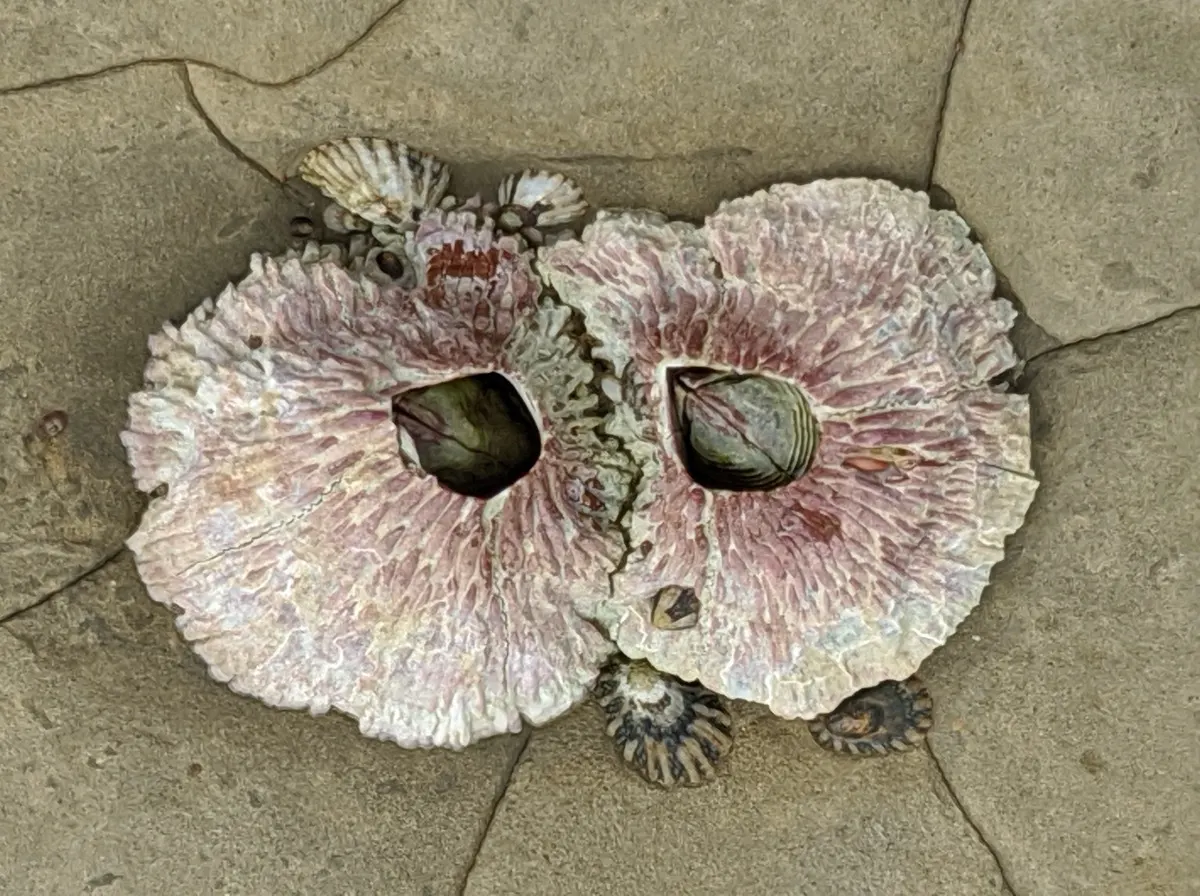
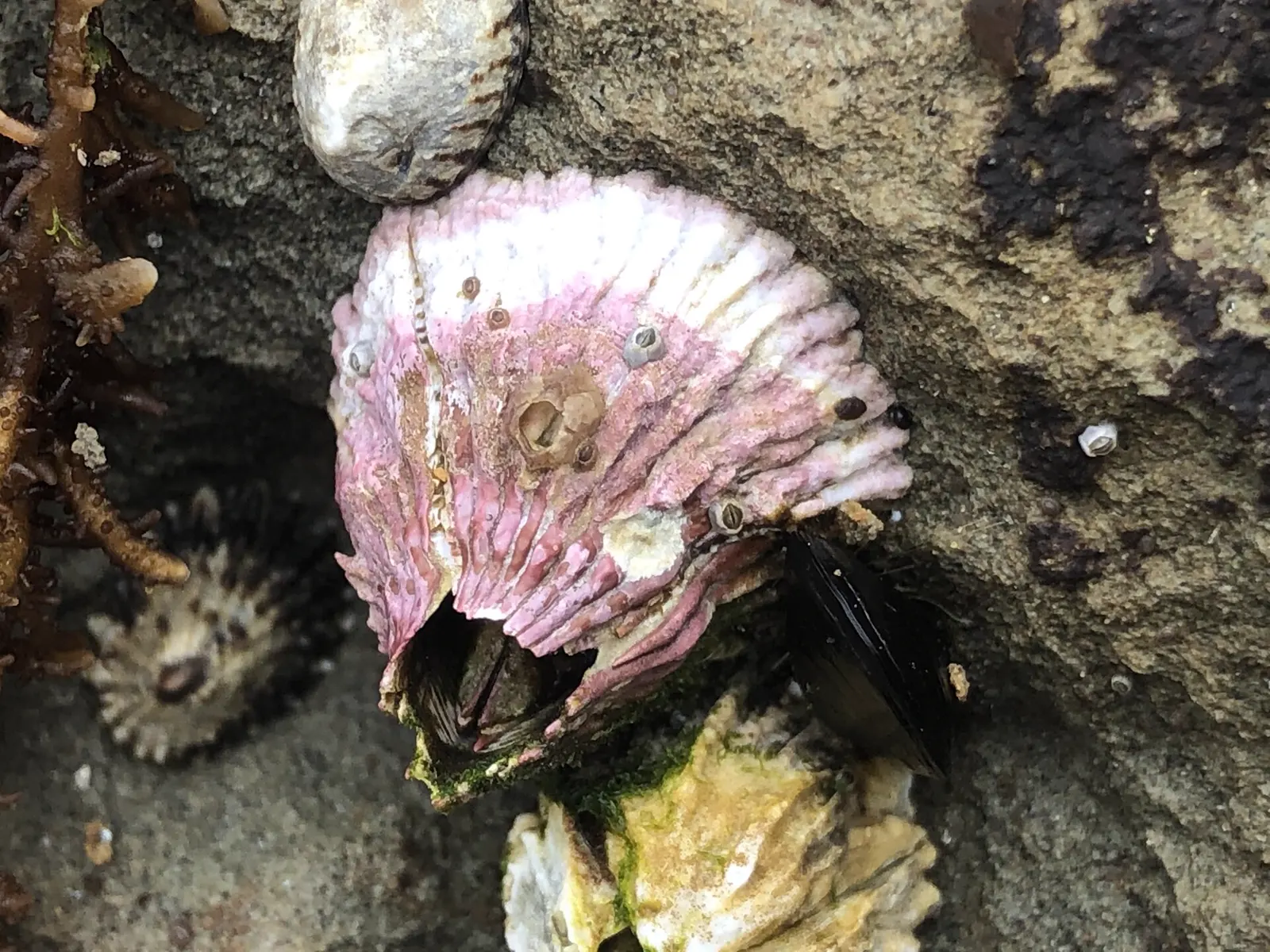
Thatched barnacle (Tetraclita rubescens)

Thatched barnacle

Tetraclita rubescens4

  • Adult thatched barnacles have pink to reddish shells that look thatched; young ones are white.4
  • Thatched barnacles are common in the middle to low intertidal zones, on rocks exposed to strong surf.4

Learn more: Wikipedia: Tetraclita rubescens (opens in a new tab)

Photo: Al Kordesch (opens in a new tab) · CC0 (opens in a new tab)

What it looks like

  • Barnacle shells are made of connected, overlapping plates. Some are volcano-shaped and some are camouflaged to match their surroundings.1

How it lives

  • Once a barnacle larva attaches to a rock, it stays in that spot for the rest of its life.5
  • Barnacles feed at high tide, catching plankton with small, feather-like legs called cirri.5
  • Adult acorn barnacles are hermaphrodites and spawn often, at varying times through the year.2
  • Gooseneck barnacles grow slowly, reaching maturity at around 5 years and living up to 20 years.3

How to watch without harming it

  • Stand and walk only on bare rock or sand, not on barnacles, mussels or seaweed.6
  • Don't force barnacles, or any other animal attached to a rock, off its surface.7
  • Gooseneck barnacle numbers have dropped in easy-to-reach places where they are collected for food.3

Range

  • Gooseneck barnacles range from Sitka, Alaska, south to at least Punta Abreojos, Baja California.3
  • Thatched barnacles range from Cape Mendocino in Northern California to Baja California.4

More photos

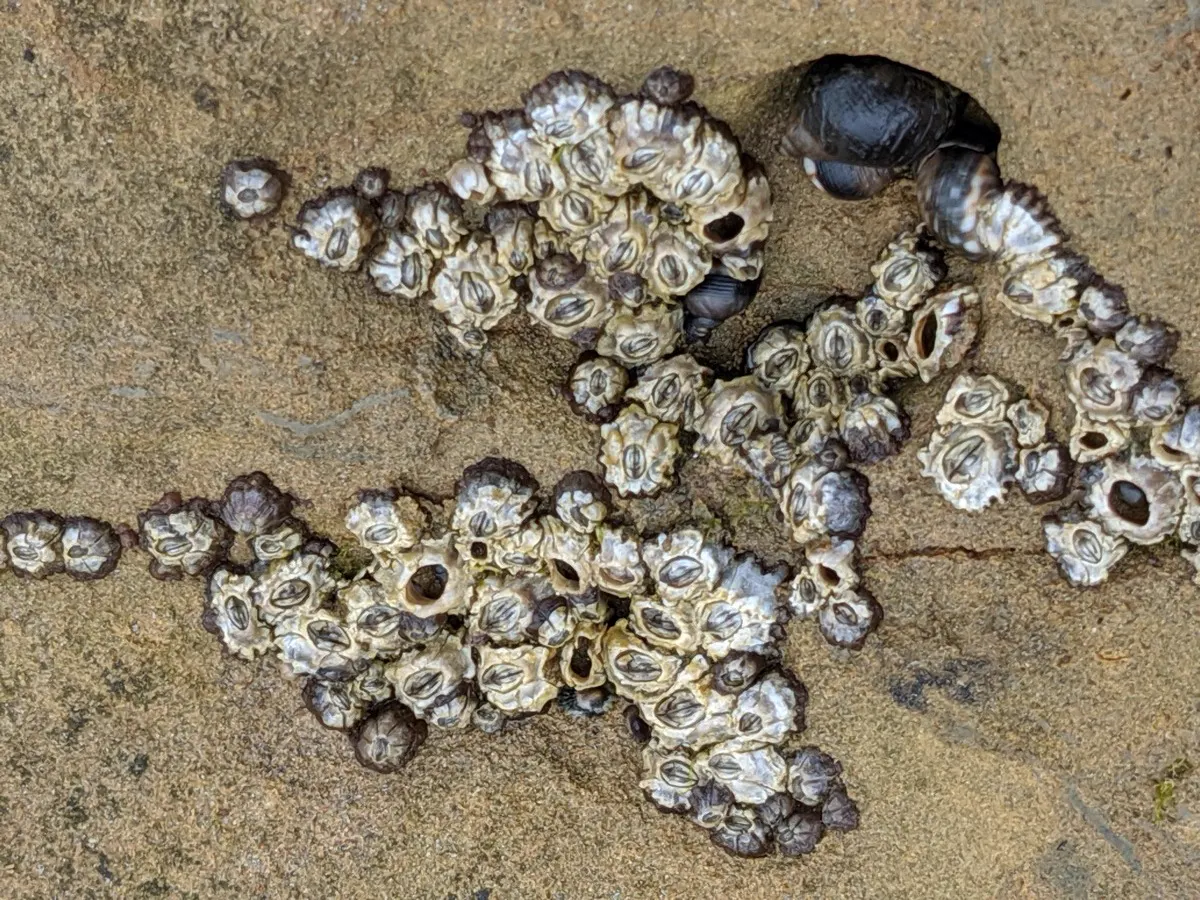
Acorn barnacles grouped together on a rock
Acorn barnacles grouped together on a rock. Location: Cabrillo National Monument, San Diego County, California.Photo: NPS (opens in a new tab) · Public domain
Two pink thatched (volcano) barnacles
Two pink thatched (volcano) barnacles. Location: Cabrillo National Monument, San Diego County, California.Photo: NPS (opens in a new tab) · Public domain

Where the agencies name them

Spots whose managing agency lists barnacles for that place.

Further reading

For exploring further. These pages are not sources for the facts above; those are listed under Sources.

Sources

  1. National Park Service, Channel Islands National Park: Barnacles (opens in a new tab) · page updated 21 May 2021 · accessed 17 November 2026
  2. MARINe (Multi-Agency Rocky Intertidal Network), UC Santa Cruz: Chthamalus/Balanus (Acorn Barnacles) (opens in a new tab) · page updated 20 August 2024 · accessed 17 November 2026
  3. MARINe (Multi-Agency Rocky Intertidal Network), UC Santa Cruz: Pollicipes (Goose Barnacle) (opens in a new tab) · page updated 20 August 2024 · accessed 17 November 2026
  4. MARINe (Multi-Agency Rocky Intertidal Network), UC Santa Cruz: Tetraclita (Pink Barnacle) (opens in a new tab) · page updated 3 September 2025 · accessed 17 November 2026
  5. National Park Service, Cabrillo National Monument: Intertidal Field Guide (opens in a new tab) · page updated 25 June 2021 · accessed 17 November 2026
  6. National Park Service, Point Reyes National Seashore: Tidepooling at Point Reyes National Seashore (opens in a new tab) · page updated 19 March 2023 · accessed 17 November 2026
  7. National Park Service: Cabrillo National Monument: The Rocky Intertidal Zone (opens in a new tab) · page updated 31 October 2026 · accessed 17 November 2026

Last checked 17 November 2026 against the sources above.