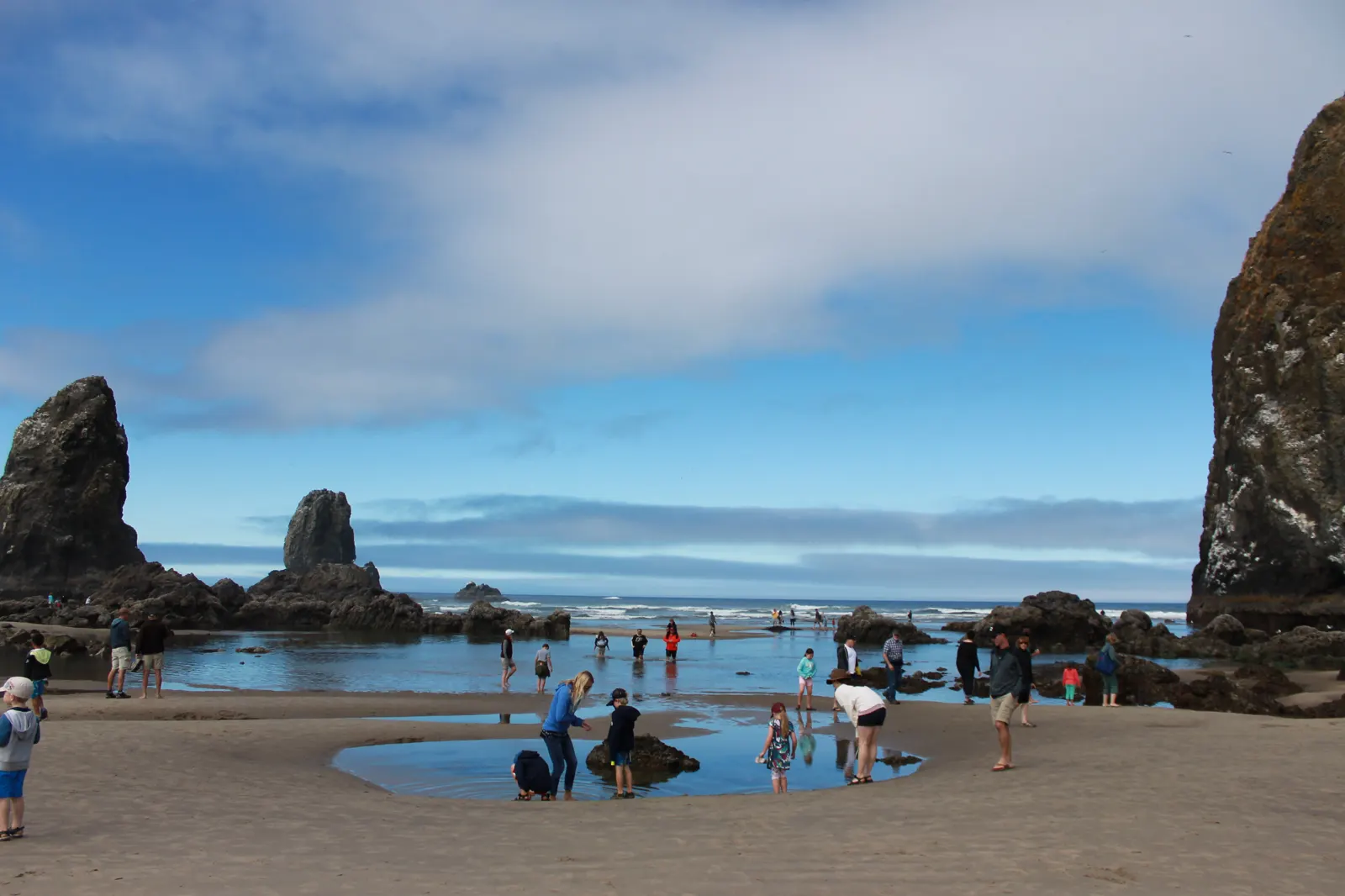
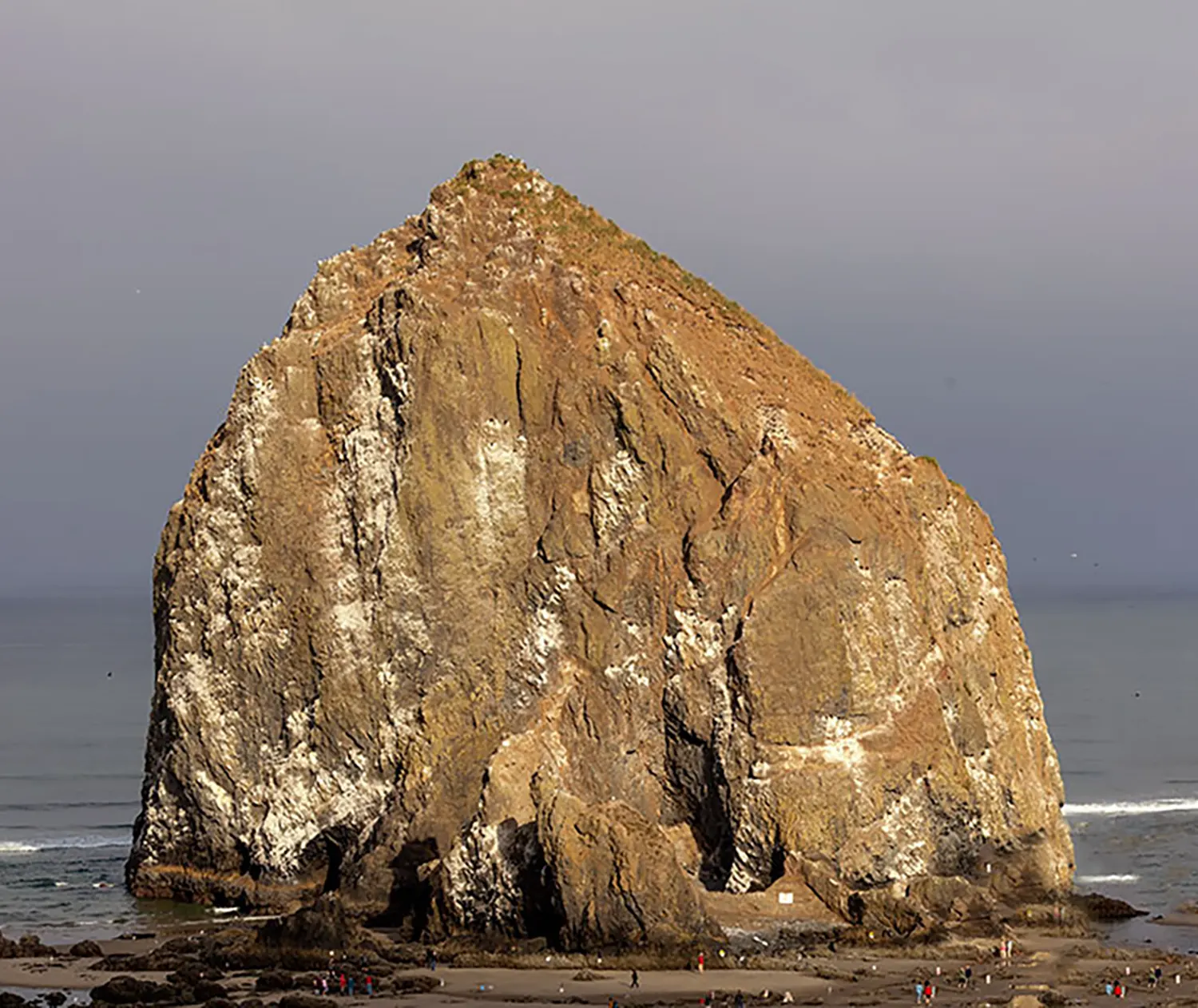
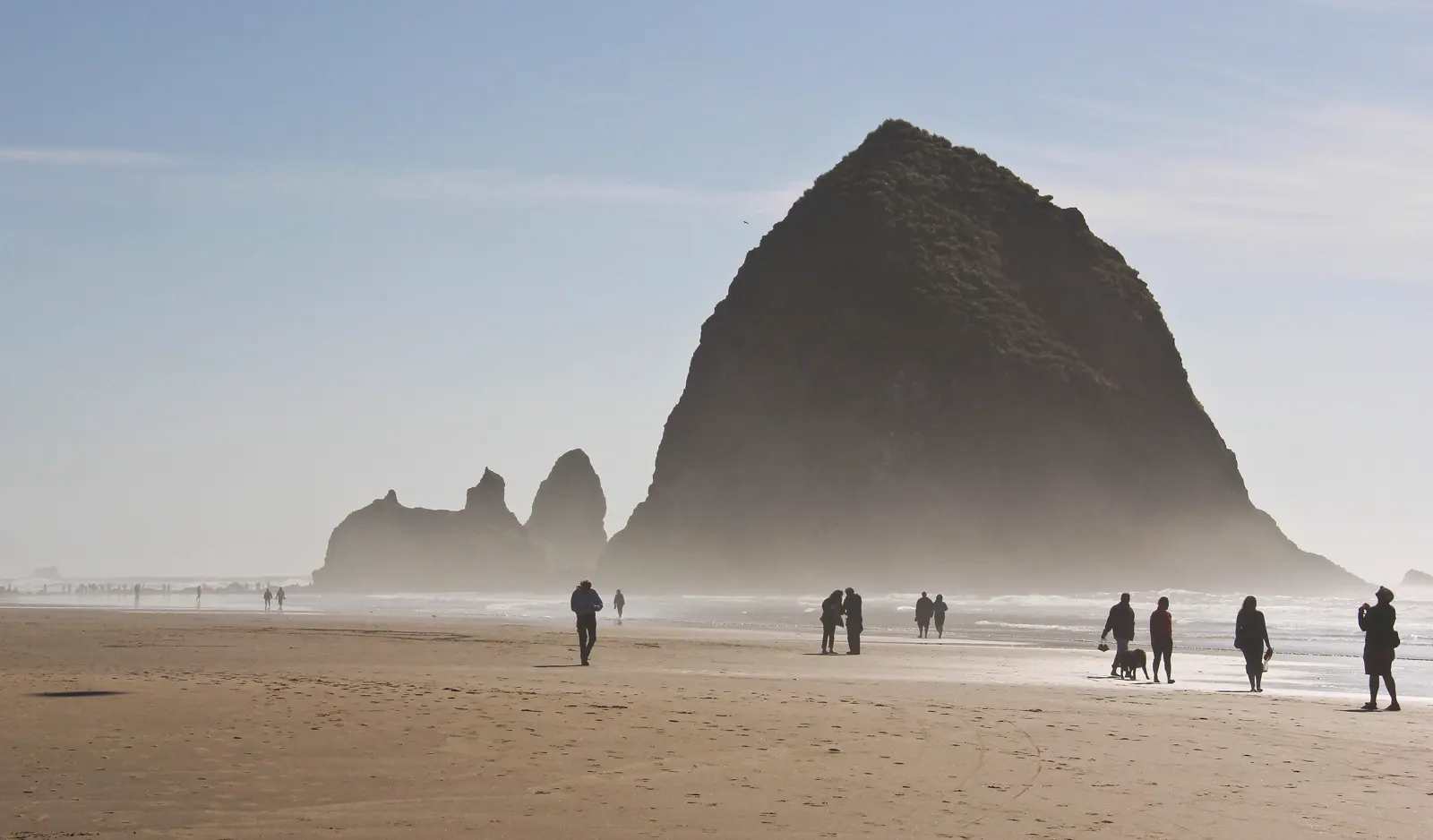
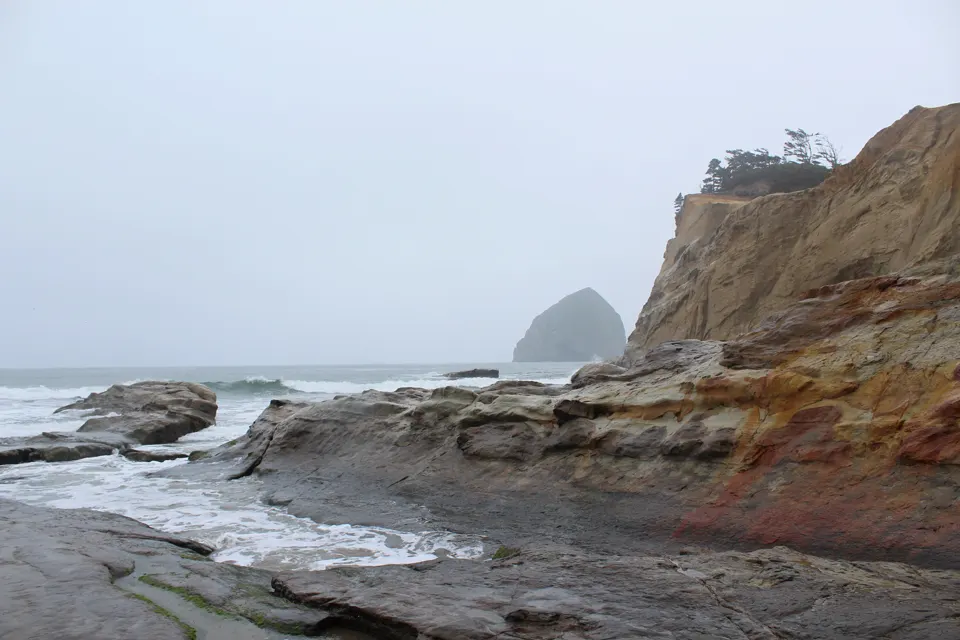
Haystack Rock is protected as an Oregon Marine Garden and is a popular place for tidepooling; at low tide you can walk right up to the rock (National Park Service).3 The state describes very accessible intertidal habitat, with three seabird colonies of over 2,000 birds, including the second-largest tufted puffin nesting colony in Oregon.2
In an emergency
Emergency: call 911- Lifeguards City of Cannon Beach lifeguards cover the main beach areas daily from 11 a.m. to 7:15 p.m., Memorial Day to Labor Day, and on weekends in May and September, weather permitting. To signal a lifeguard, find the nearest semaphore and loosen the rope to the signal arm.4
- Non-emergency Haystack Rock Awareness Program (City of Cannon Beach): (503) 436-80645
- Nearest emergency department Providence Seaside Hospital (emergency services), 725 S Wahanna Road, Seaside, OR 97138, (503) 717-7000 (hospital main line)6
Nearest full-service emergency department by road distance (OpenStreetMap routing, checked 2026-11-18). No drive time is given. Address from the federal CMS hospital record.
Best times to go
The Haystack Rock Awareness Program says you need a low tide of 1 ft or lower to reach the tidepools, and minus tides are best. Arrive an hour to an hour and a half before low tide.7
Summer brings the best minus tides for tidepooling (HRAP).5
Next low tides 1 ft or lower in daylight7
| Date | Low tide | Height |
|---|---|---|
| Sat 21 Nov 2026 | 3:48 PM | 0.38 ft |
| Sun 22 Nov 2026 | 4:32 PM | −0.58 ft |
| Fri 4 Dec 2026 | 3:28 PM | 0.75 ft |
| Sat 5 Dec 2026 | 4:13 PM | 0.17 ft |
| Sun 20 Dec 2026 | 3:20 PM | 0.16 ft |
| Mon 21 Dec 2026 | 4:12 PM | −0.74 ft |
| Sat 2 Jan 2027 | 3:01 PM | 0.91 ft |
| Sun 3 Jan 2027 | 3:53 PM | 0.51 ft |
| Mon 4 Jan 2027 | 4:37 PM | 0.19 ft |
| Sun 17 Jan 2027 | 1:51 PM | 0.91 ft |
| Mon 18 Jan 2027 | 2:57 PM | 0.12 ft |
| Tue 19 Jan 2027 | 3:56 PM | −0.67 ft |
Predictions from NOAA CO-OPS. Not for navigation. Station 9437585, North Jetty, Tillamook Bay. Heights in feet relative to MLLW, local time, rounded to 0.01 ft. We choose which lows to show; times and heights are NOAA's. Sunrise and sunset are our calculation for the tide station's position.89
Rules
Haystack Rock Marine Garden takes in all the rocky areas, tide pools and sand beaches between extreme high and extreme low tide within 300 yards of the base of the rock.2
- No invertebrates. Marine Gardens are closed to the take of marine invertebrates. The one exception here: single mussels may be taken for bait.1
- No seaweed. No marine plants or seaweed may be collected on the ocean shore in Marine Gardens, except under an OPRD scientific research permit.1
- Walk on sand. Step on sand or bare rock: anemones, barnacles, mussels, snails and sea stars live on these rocks (Haystack Rock Awareness Program).10
- Hand-sized rocks only. Only turn over rocks the size of your hand, and put each back exactly as you found it. Look with your eyes and touch gently; no poking, prying or kicking.10
- Give birds space. Shorebirds forage among the rocks at low tide, so give them plenty of room.10
- Leave empty shells. Avoid collecting anything: empty shells are used by other animals, such as hermit crabs.10
- No climbing. Everything above the mean high tide line (the barnacle line) is Oregon Islands National Wildlife Refuge, a Wilderness Sanctuary closed to the public at all times. Tidepooling and viewing around it are encouraged.11,2
- Dogs on a leash here. Dogs may be off leash under voice control on most Oregon beaches, but at and around the Haystack Rock Marine Garden they must be kept on a leash.11
- Don't disturb wildlife. Harassing or disturbing the nesting sea and shorebirds is prohibited, including disturbance by drones or pets.11
Good practice
Tide pool advice from other agencies, credited to each. These aren't rules for this spot.
- Leave things as you found them. Put back any rock or seaweed you look under, to keep animals from drying out in the air and sun (Oregon State Parks).12
What you'll see
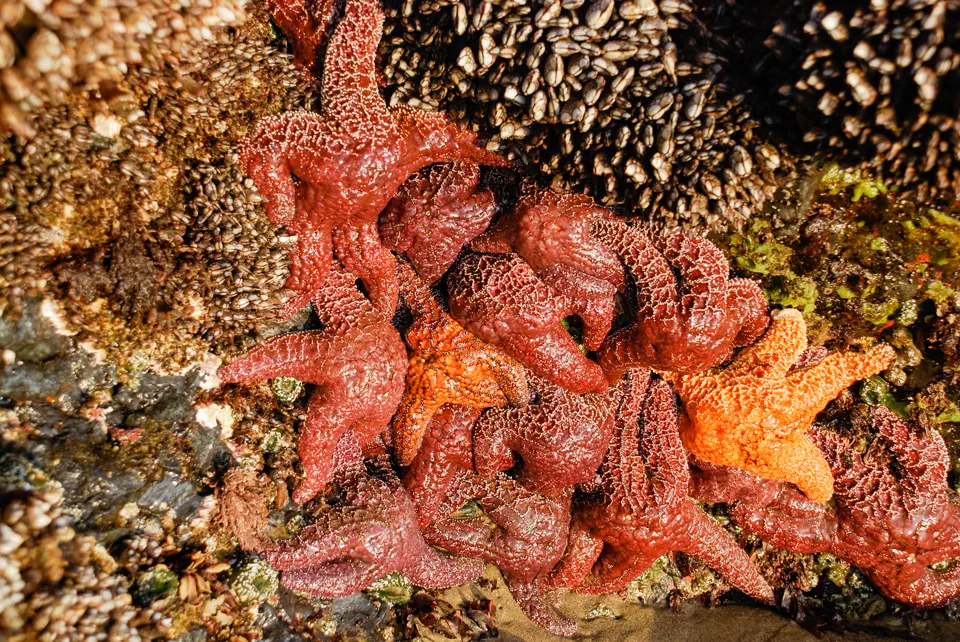
Animals the Haystack Rock Awareness Program (City of Cannon Beach) names on the rocks.10,3
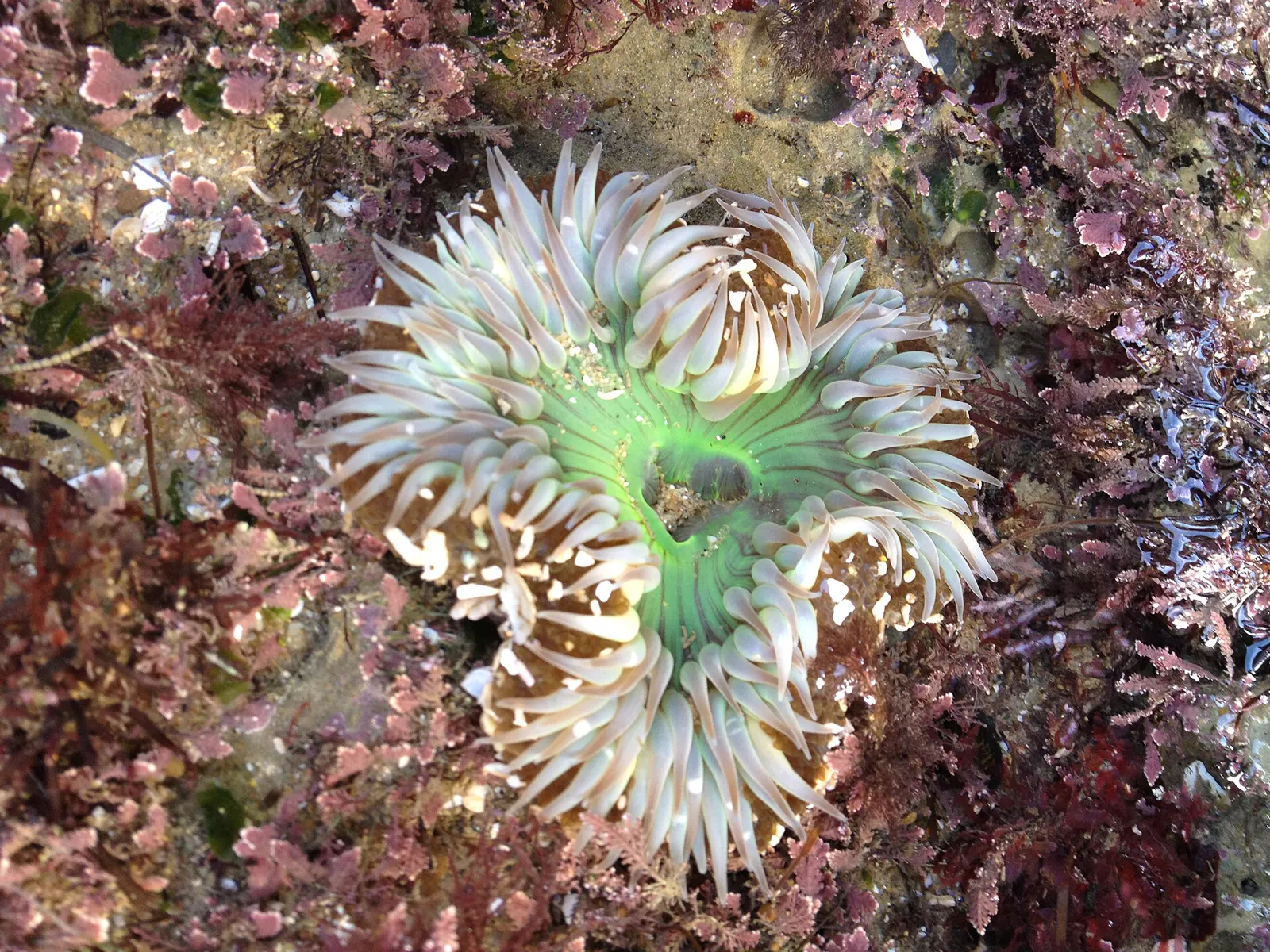
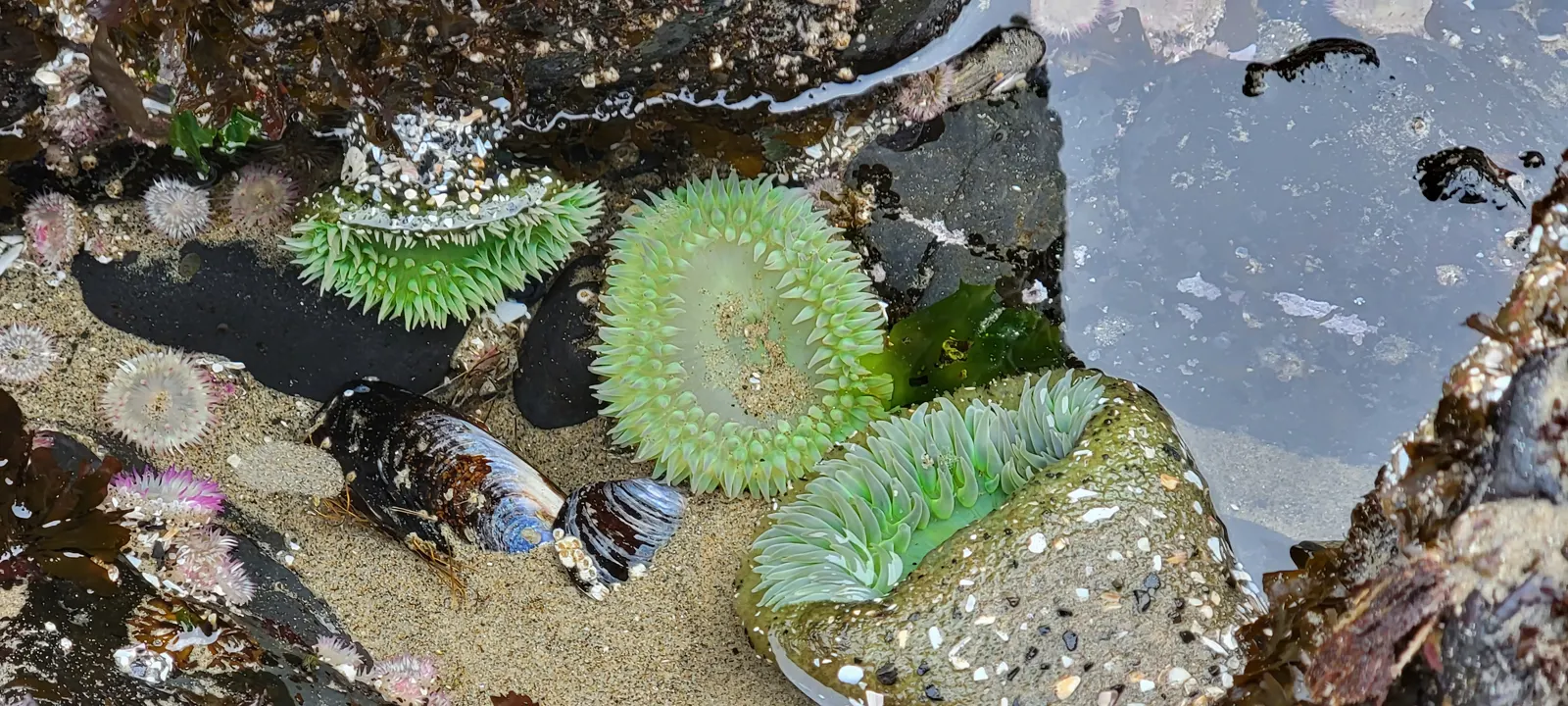
The giant green anemone and the slightly smaller aggregating anemone are both common in tidepools.13 Anemones have no hard shell. Their soft, flexible bodies bend with the moving water.14 They catch prey with stinging cells called nematocysts.15
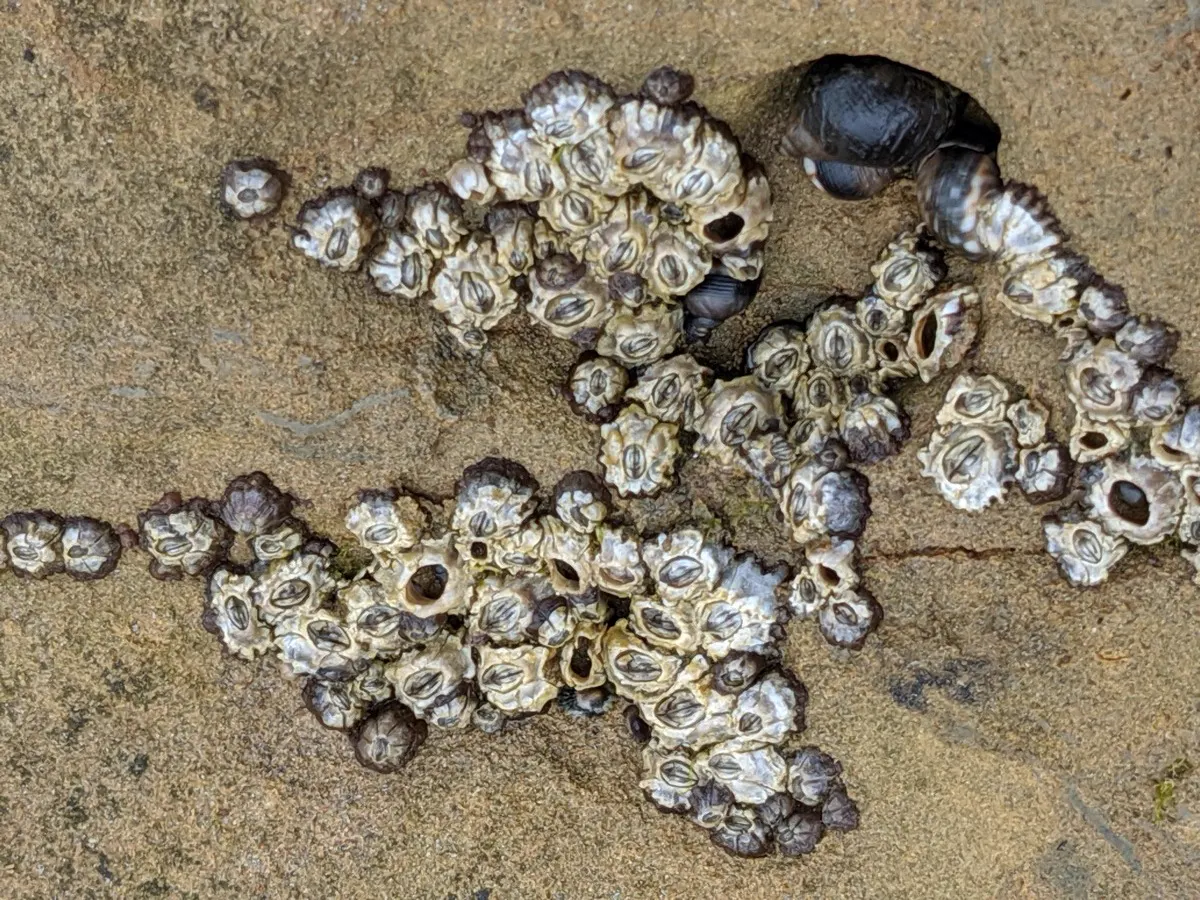
Barnacles are relatives of crabs and shrimp that cluster on surfaces at every level of the intertidal zone.16 They attach head-first and use their feathery legs to take in oxygen and net food floating past.16
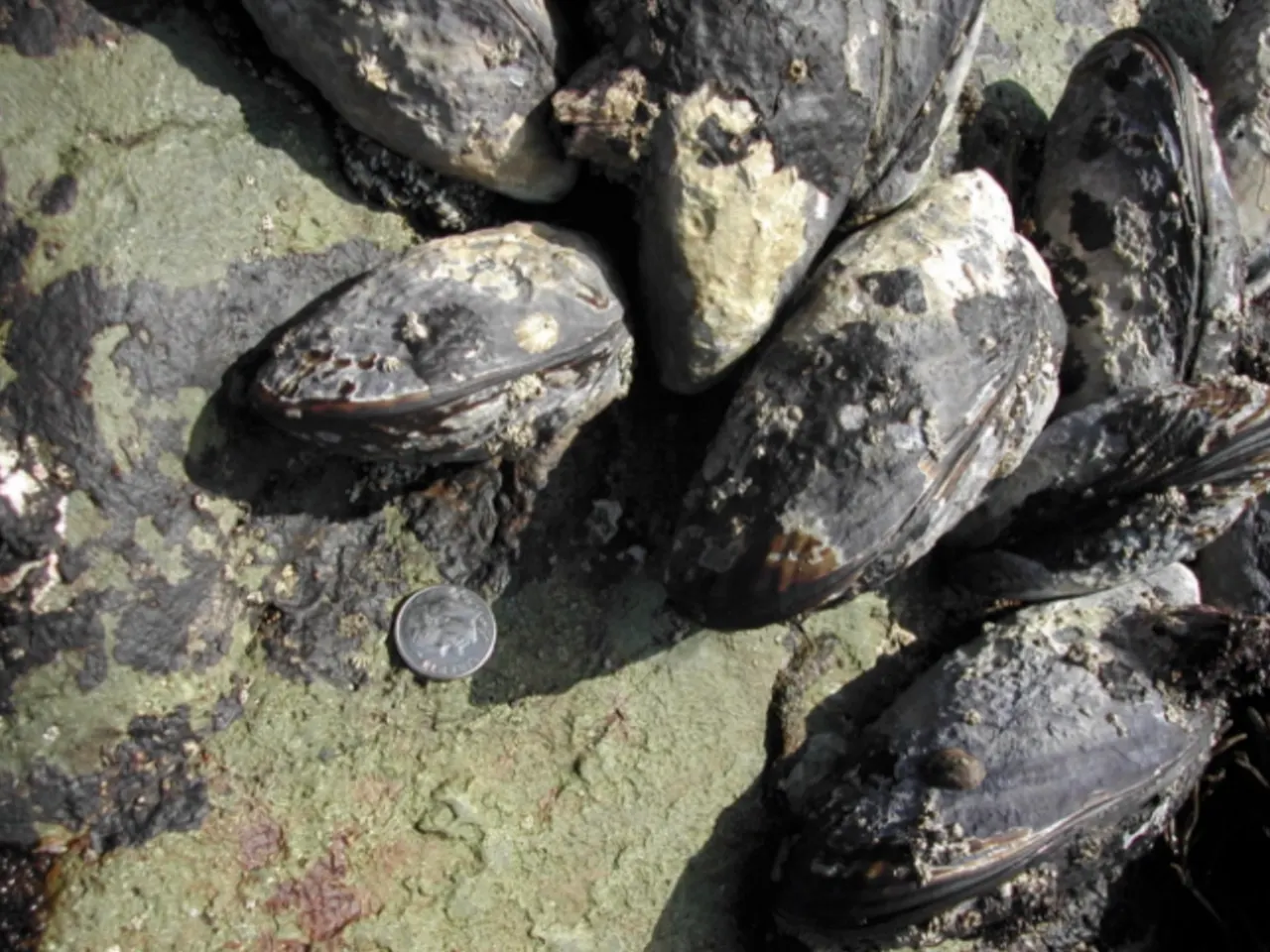
California mussels grow in beds held firmly to the rocks by tough strands. Their shells are tear-shaped and dark blue-black.15 They are commonly 3 to 5 inches long and open at high tide to filter plankton from the water.15
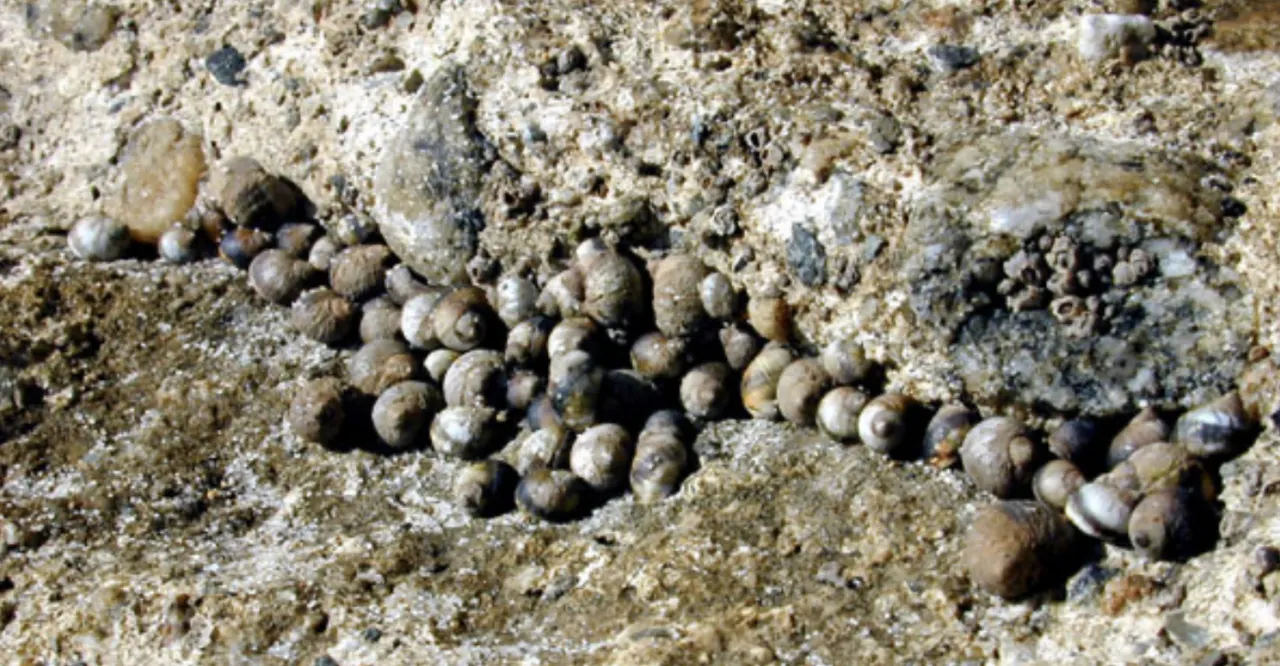
Snails are abundant in the intertidal zone. Common kinds include black and brown turban snails and periwinkles.17 Most graze on algae, scraping it off the rock with a rough, tongue-like radula.17
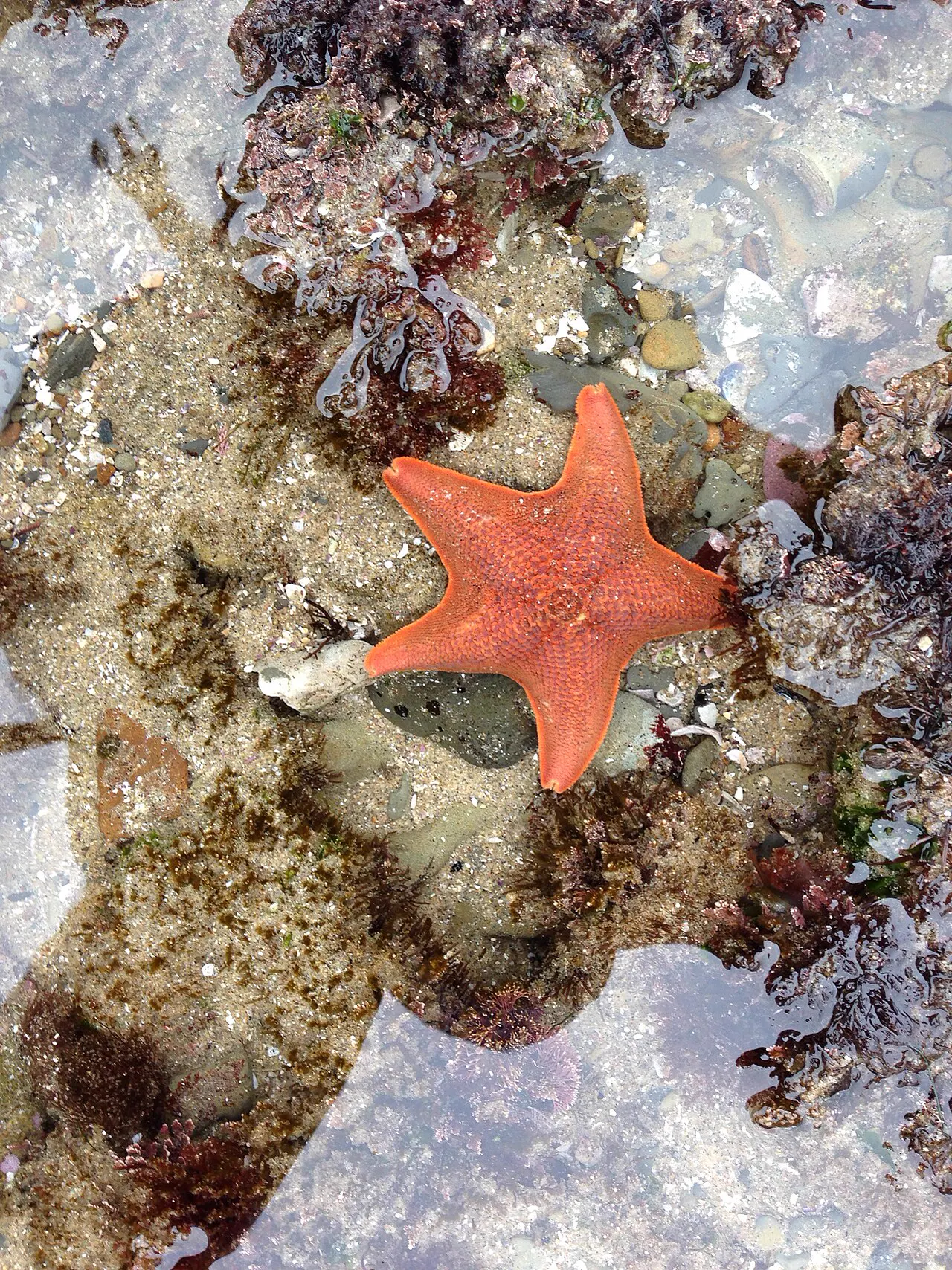
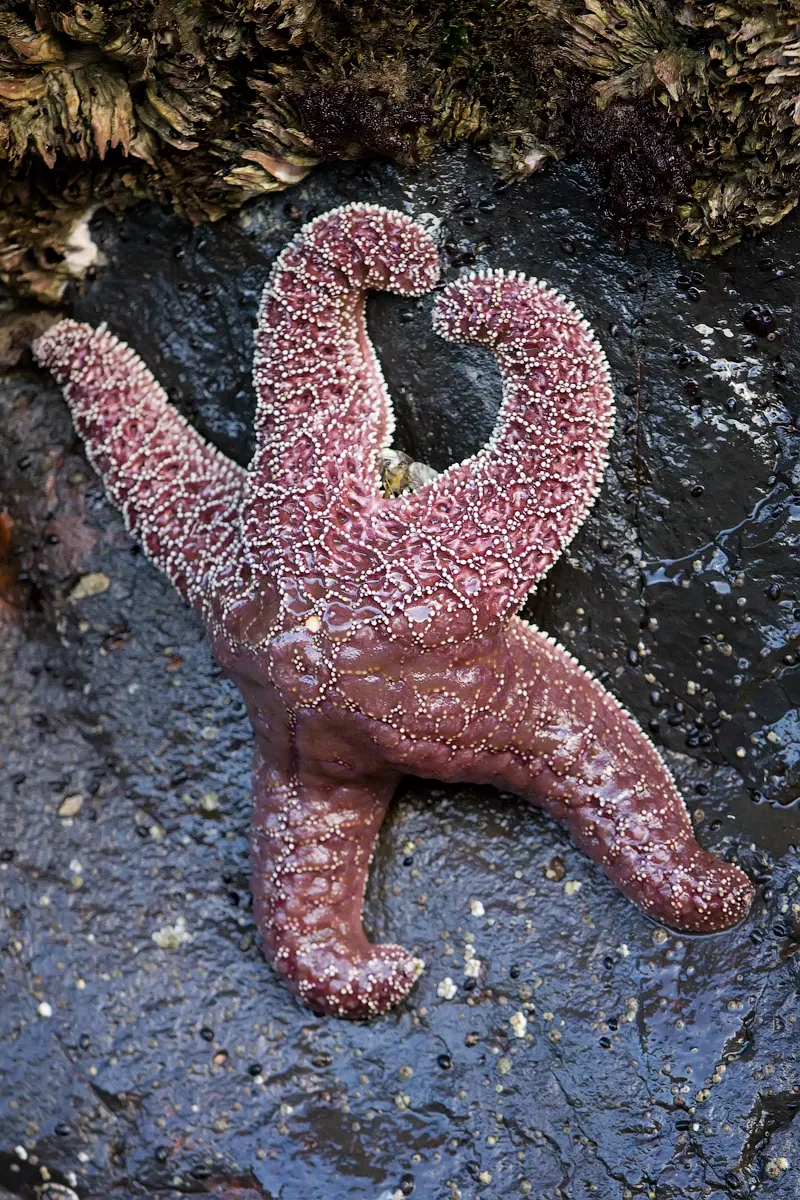
Sea stars are sturdy, flexible predators of the rocky intertidal zone.18 Some species, such as the ochre sea star, play an especially important role in the rocky shore community.19 A wasting disease killed huge numbers of sea stars along the Pacific coast of North America in 2013 and 2014.20
Also seen from here
The National Park Service says gray whales, humpback whales, orcas and sperm whales are often spotted from December to March.10,3
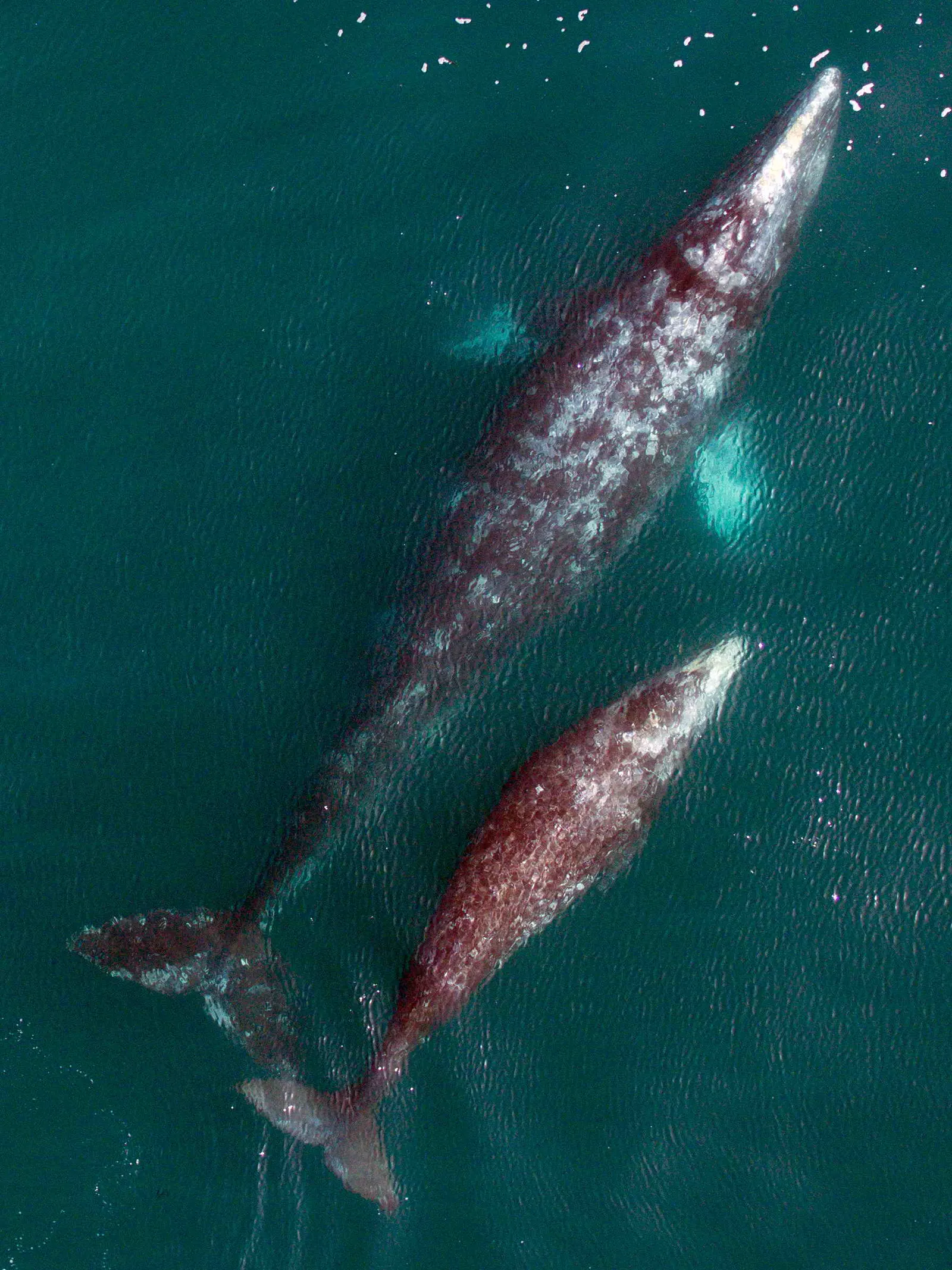
Gray whales (December to March)
Eschrichtius robustus
Gray whales make one of the longest yearly migrations of any mammal, about 10,000 miles round trip.21 They migrate from Alaska to the lagoons of Baja California, Mexico, where they give birth and mate.22 At Cabrillo National Monument, whale-watching season runs from late December to mid-March.22
Stay safe
- Watch the incoming tide. Incoming tides can leave you stranded away from shore; check the tide and weather, and NOAA beach hazard statements, before you go (HRAP).4
- Sneaker waves. Never turn your back to the ocean: sneaker waves are unpredictable and can knock adults off their feet.4
- Stay off logs and rocks. Surf can lift and roll even huge waterlogged logs, and waves can surge over rocks unexpectedly.4
- Rip currents. If caught, stay calm, don't fight the current, and swim parallel to shore to escape. Lifeguards are on duty daily 11 a.m. to 7:15 p.m. from Memorial Day to Labor Day, and on May and September weekends, weather permitting.4
- Cold and wet. Expect to get wet. Evening temperatures can drop quickly on the coast, so dry off soon to avoid hypothermia.12
Read more: ocean safety · shore safety · weather · first aid
Getting there
- From the free public lot at Hemlock and Gower Streets (beside City Hall, 163 E. Gower St.), walk west along Gower Street to the beach access, then look south: the rock is a 12 to 15 minute walk. Arrive early in summer, when parking is hard.5
- There are no restrooms on the beach. The nearest public restroom is across from the lot, next to the American Legion at 1216 S Hemlock St.5
- You can also reach the beach from Tolovana Beach State Recreation Site at the south end of Cannon Beach, a slightly longer walk.2
163 E Gower St, Cannon Beach, OR 97110
Directions to Cannon Beach City Hall; the free public lot is beside it at Hemlock and Gower Streets, and the beach access is west along Gower Street (Haystack Rock Awareness Program).5 Loads Google Maps when you tap.
Photos of this spot
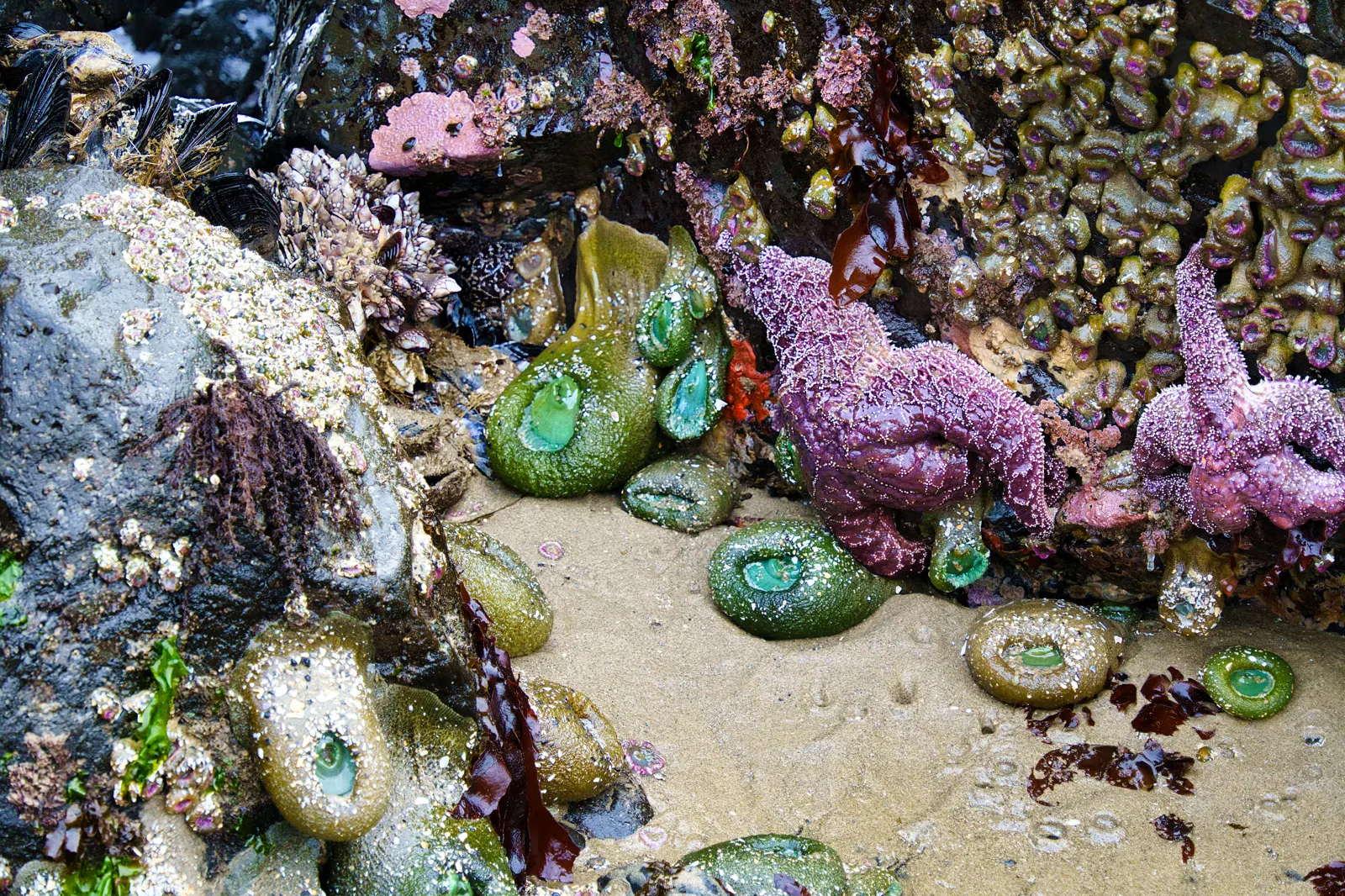
Nearby tide pools
Page history
- : Haystack Rock: rules updated
- : Haystack Rock: good-practice advice added
- : Haystack Rock: Providence Seaside Hospital added as the nearest emergency department
- : Haystack Rock: emergency contacts added
- : Haystack Rock added
Sources
- State of Oregon (Territorial Sea Plan, Rocky Habitat Management Strategy; hosted by the Department of State Lands): Appendix A/E: Rocky Habitat Designations and Map (as of April 2023) (opens in a new tab) · accessed 18 November 2026
- Oregon Department of Land Conservation and Development (Oregon Ocean Information): Haystack Rock Marine Garden (opens in a new tab) · accessed 18 November 2026
- National Park Service (Lewis and Clark National Historic Trail): Haystack Rock at the Oregon Islands National Wildlife Refuge (opens in a new tab) · accessed 18 November 2026
- Haystack Rock Awareness Program (City of Cannon Beach): Beach Safety (opens in a new tab) · accessed 18 November 2026
- Haystack Rock Awareness Program (City of Cannon Beach): Planning Your Visit (opens in a new tab) · accessed 18 November 2026
- Centers for Medicare & Medicaid Services (CMS): Hospital General Information: Providence Seaside Hospital (facility 381303) (opens in a new tab) · accessed 18 November 2026
- Haystack Rock Awareness Program (City of Cannon Beach): Beach Schedule & Tide Table (opens in a new tab) · accessed 18 November 2026
- NOAA CO-OPS: Tide predictions (high/low), station 9437585 North Jetty, Tillamook Bay; MLLW, feet, local time (opens in a new tab) · accessed 18 November 2026
- NOAA CO-OPS: Metadata API: station names and positions (9410166, 9410230, 9410580) (opens in a new tab) · accessed 17 November 2026
- Haystack Rock Awareness Program (City of Cannon Beach): Haystack Rock Awareness Program (opens in a new tab) · accessed 18 November 2026
- Haystack Rock Awareness Program (City of Cannon Beach): Rules and Regulations (opens in a new tab) · accessed 18 November 2026
- Oregon Parks and Recreation Department: Oregon's Rocky Intertidal Areas (brochure 63400-8136, 5/2018) (opens in a new tab) · accessed 18 November 2026
- National Park Service, Channel Islands National Park: Anemone (opens in a new tab) · page updated 21 May 2021 · accessed 17 November 2026
- National Park Service, Klamath Inventory and Monitoring Network: On the Edge: The Curious Lives of Intertidal Organisms and How We Monitor Them (opens in a new tab) · page updated 28 November 2022 · accessed 17 November 2026
- National Park Service, Cabrillo National Monument: Intertidal Field Guide (opens in a new tab) · page updated 25 June 2021 · accessed 17 November 2026
- National Park Service, Channel Islands National Park: Barnacles (opens in a new tab) · page updated 21 May 2021 · accessed 17 November 2026
- National Park Service, Channel Islands National Park: Snails (opens in a new tab) · page updated 21 May 2021 · accessed 17 November 2026
- National Park Service, Point Reyes National Seashore: Echinoderms (opens in a new tab) · page updated 19 September 2022 · accessed 17 November 2026
- National Park Service, Redwood National and State Parks: Sea Stars (opens in a new tab) · page updated 7 December 2020 · accessed 17 November 2026
- MARINe (Multi-Agency Rocky Intertidal Network), UC Santa Cruz: Sea Star Wasting Disease (opens in a new tab) · page updated 6 October 2026 · accessed 17 November 2026
- NOAA Fisheries: Gray Whale (opens in a new tab) · page updated 21 September 2026 · accessed 17 November 2026
- National Park Service, Cabrillo National Monument: Whale Watching (opens in a new tab) · page updated 28 September 2023 · accessed 17 November 2026
Checked against the sources above on 18 November 2026. Hours, fees and rules can change without notice, so check with the Oregon Parks and Recreation Department (beach and intertidal); U.S. Fish and Wildlife Service (the rock) before you go. Not affiliated with or endorsed by the Oregon Parks and Recreation Department (beach and intertidal); U.S. Fish and Wildlife Service (the rock) or NOAA.
Report a change
Visited recently and something's different? Reports go to review first. They don't change the page until we check them against the official source.
Send a report How reports work