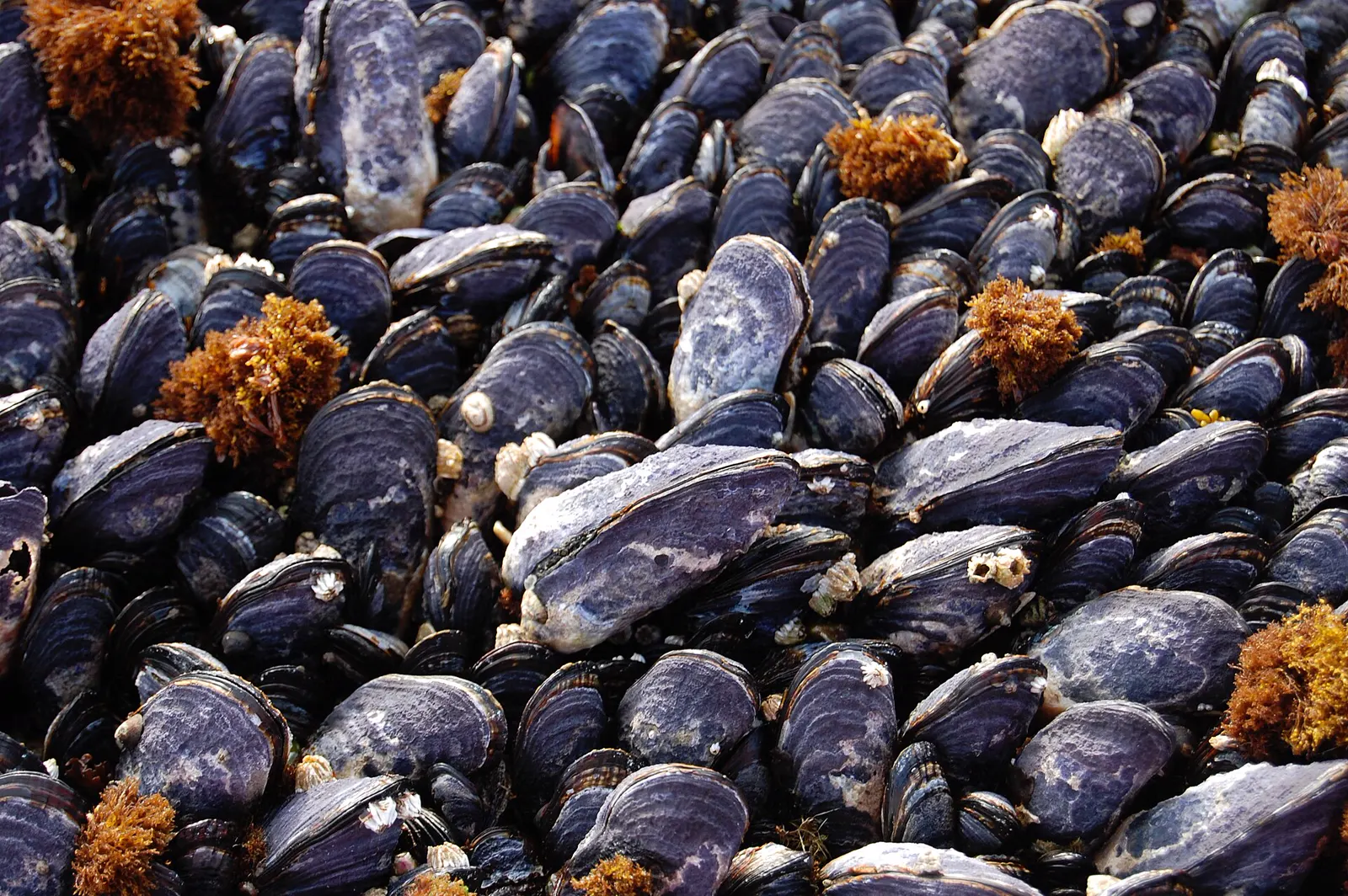
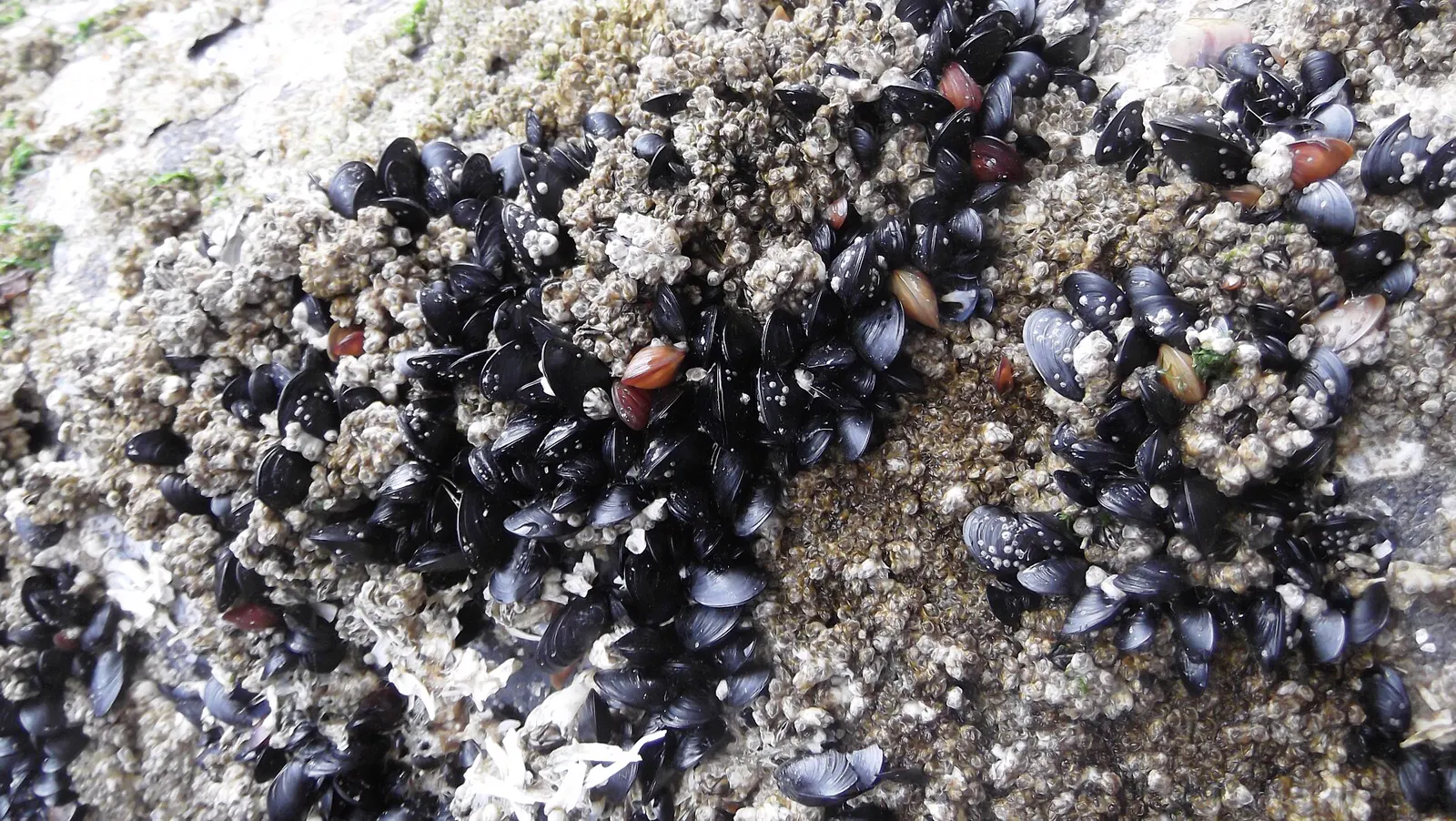
A packed bed of California mussels (Mytilus californianus) with barnacles and red algae

Animal group

Mussels of the Pacific coast

Scientific group: Family Mytilidae1

California mussels grow in beds held firmly to the rocks by tough strands. Their shells are tear-shaped and dark blue-black.2 They are commonly 3 to 5 inches long and open at high tide to filter plankton from the water.2

California mussels (Mytilus californianus). Location: Tatoosh Island, Washington. Photo: Dr. Sophie McCoy, Florida State University (NOAA Photo Library) (opens in a new tab) · Public domain

Varieties

The main kinds you might see. Each photo is identified as that species in its own record; tap a photo to see it full size.

California mussel (Mytilus californianus)

California mussel

Mytilus californianus2

  • The California mussel's shell is bluish-black, often worn white in places and darker at the edges, with a sharply pointed front end.1
  • Bay mussels look different: their shells are smooth, without the radiating ridges, and less worn than California mussels.1

Learn more: Wikipedia: California mussel (opens in a new tab)

Photo: Sharon Mollerus (opens in a new tab) · CC BY 2.0 (opens in a new tab), resized
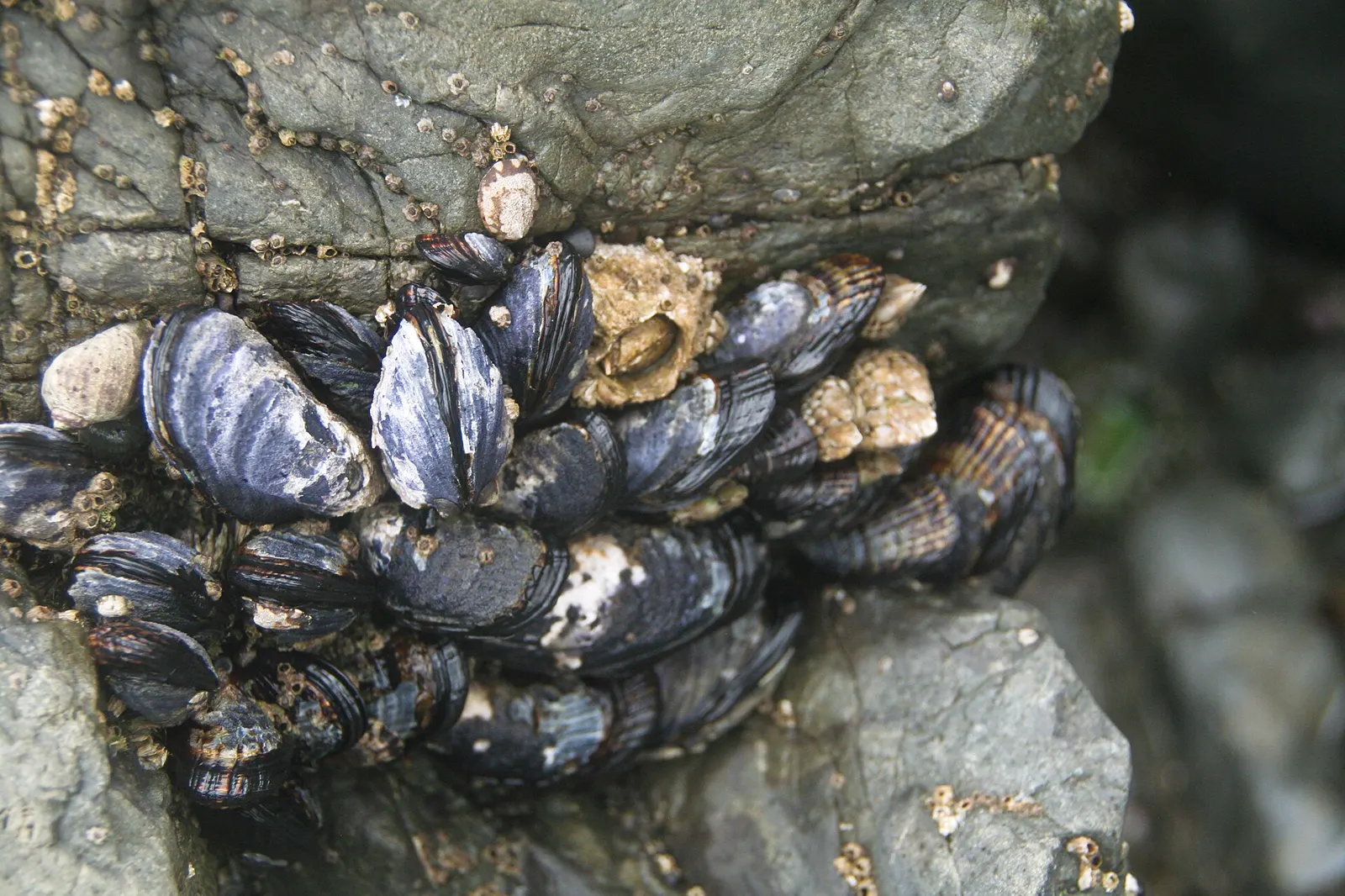
Bay mussel (Mytilus trossulus)

Bay mussel

Mytilus trossulus1

  • Bay mussels look different: their shells are smooth, without the radiating ridges, and less worn than California mussels.1
  • Bay mussels can grow alongside California mussels but are most common in sheltered places, because their attachment threads are weaker.1

Learn more: Wikipedia: Mytilus trossulus (opens in a new tab)

Photo: brewbooks from near Seattle, USA (opens in a new tab) · CC BY-SA 2.0 (opens in a new tab), resized

What it looks like

  • Its shell has strong ribs running out from the hinge, as well as growth lines.1

Where and when to find it

  • California mussels are abundant on surf-exposed rocks and pier pilings, mainly in the upper-middle intertidal zone of the outer coast.1
  • Mussel beds are often mixed with barnacles.2

How it lives

  • Mussels attach to rock by producing byssal threads from the base of the foot.1
  • Thick mussel beds trap water, sediment and detritus, giving food and shelter to a great variety of other plants and animals.1
  • California mussels spawn all year, with peaks in July and December in California.1
  • Storms tear out patches of mussels, and sea stars prey especially on mussels in the lower zone.1

How to watch without harming it

  • Stand and walk only on bare rock or sand, not on mussels, barnacles or seaweed.3
  • Mussel beds already thinned by trampling or collecting are more easily torn apart by waves.1
  • Don't force mussels, or any other animal attached to a rock, off its surface.4

Range

  • California mussels range from the Aleutian Islands, Alaska, to southern Baja California.1

More photos

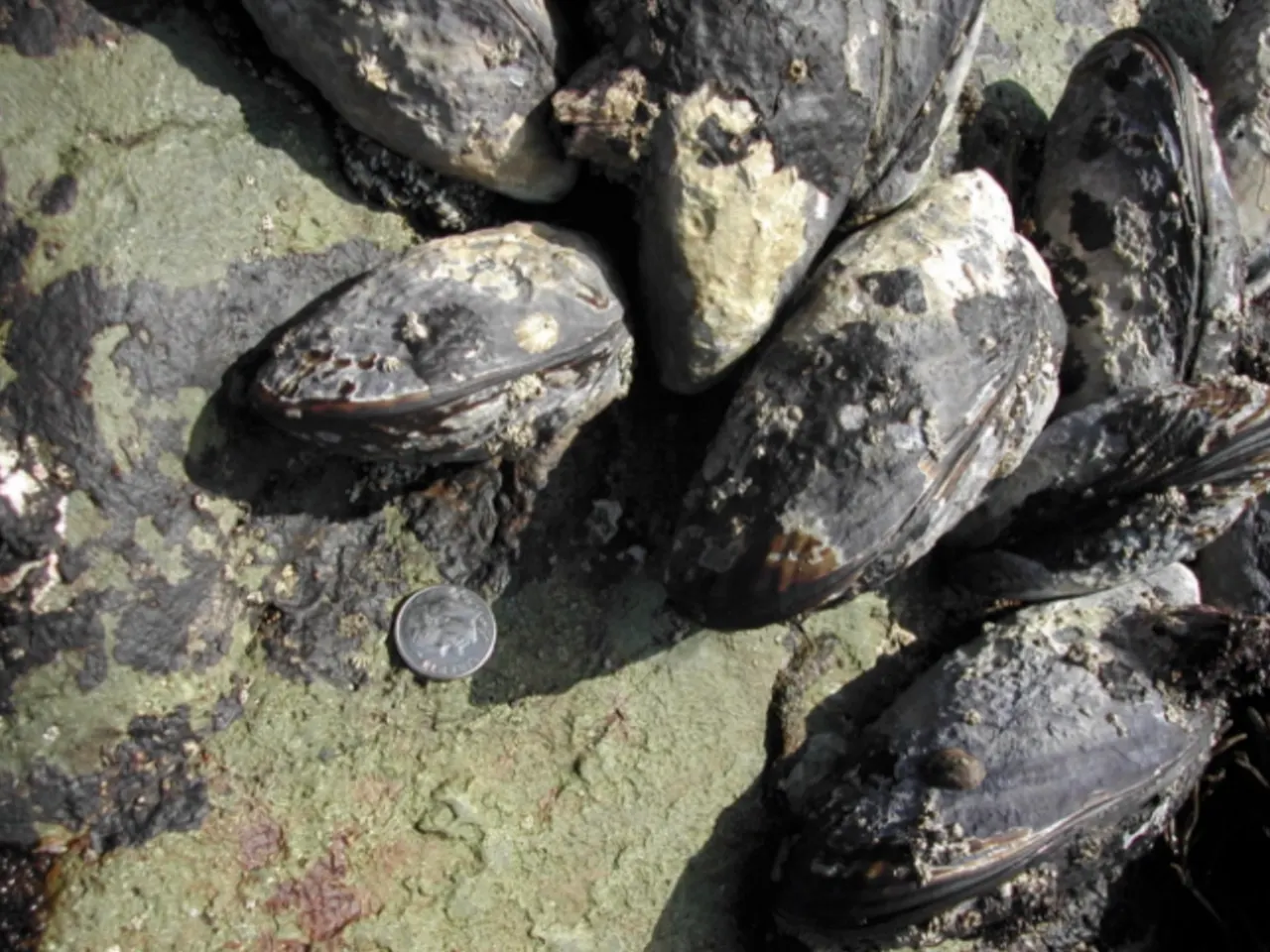
California mussels on a rock, with a dime for scale
California mussels on a rock, with a dime for scale. Location: Cabrillo National Monument, San Diego County, California.Photo: NPS (opens in a new tab) · Public domain
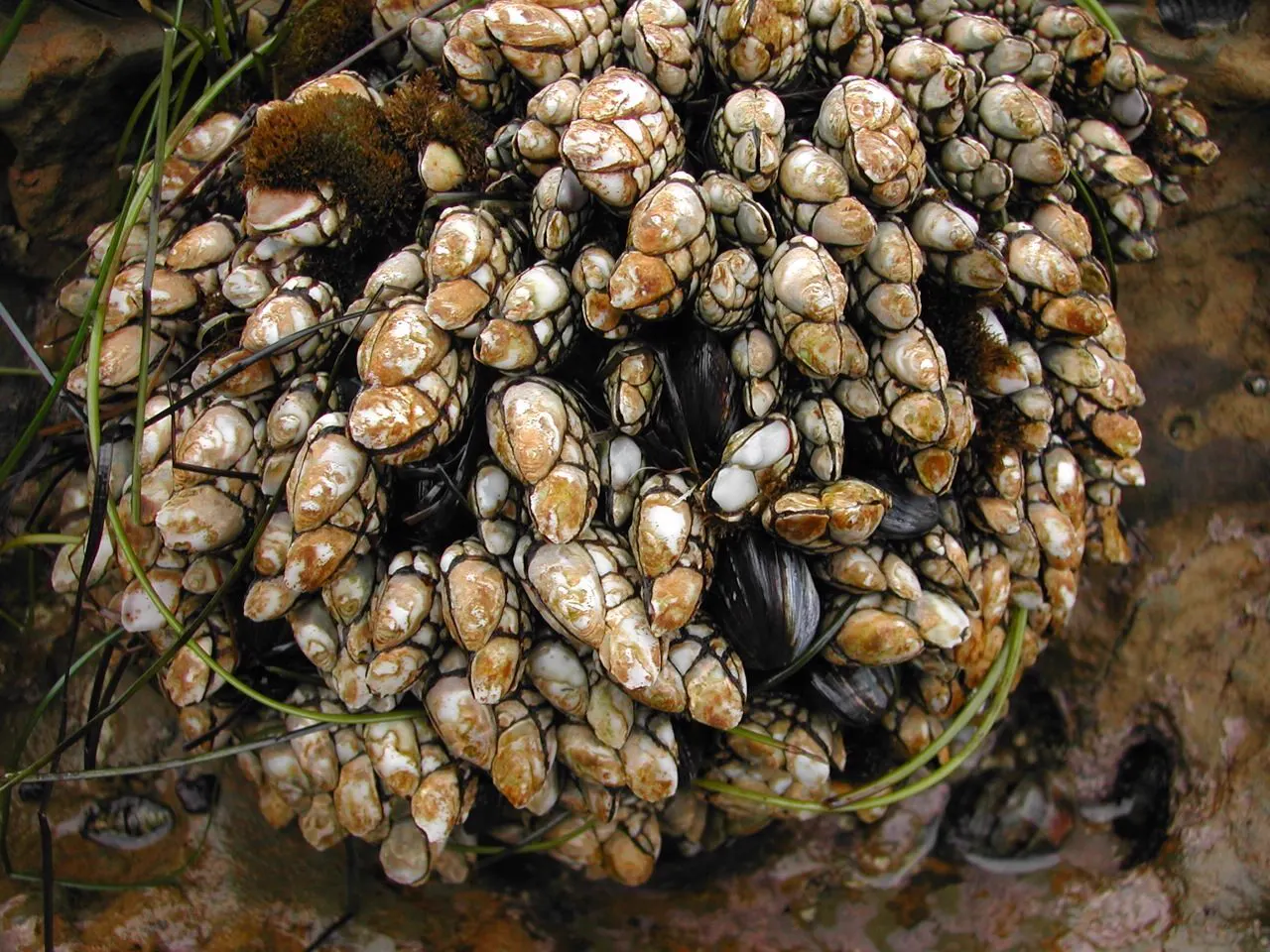
A cluster of gooseneck barnacles intertwined with mussels
A cluster of gooseneck barnacles intertwined with mussels. Location: Cabrillo National Monument, San Diego County, California.Photo: NPS (opens in a new tab) · Public domain

Where the agencies name them

Spots whose managing agency lists mussels for that place.

Further reading

For exploring further. These pages are not sources for the facts above; those are listed under Sources.

Sources

  1. MARINe (Multi-Agency Rocky Intertidal Network), UC Santa Cruz: Mytilus (California mussel) (opens in a new tab) · page updated 20 August 2024 · accessed 17 November 2026
  2. National Park Service, Cabrillo National Monument: Intertidal Field Guide (opens in a new tab) · page updated 25 June 2021 · accessed 17 November 2026
  3. National Park Service, Point Reyes National Seashore: Tidepooling at Point Reyes National Seashore (opens in a new tab) · page updated 19 March 2023 · accessed 17 November 2026
  4. National Park Service: Cabrillo National Monument: The Rocky Intertidal Zone (opens in a new tab) · page updated 31 October 2026 · accessed 17 November 2026

Last checked 17 November 2026 against the sources above.