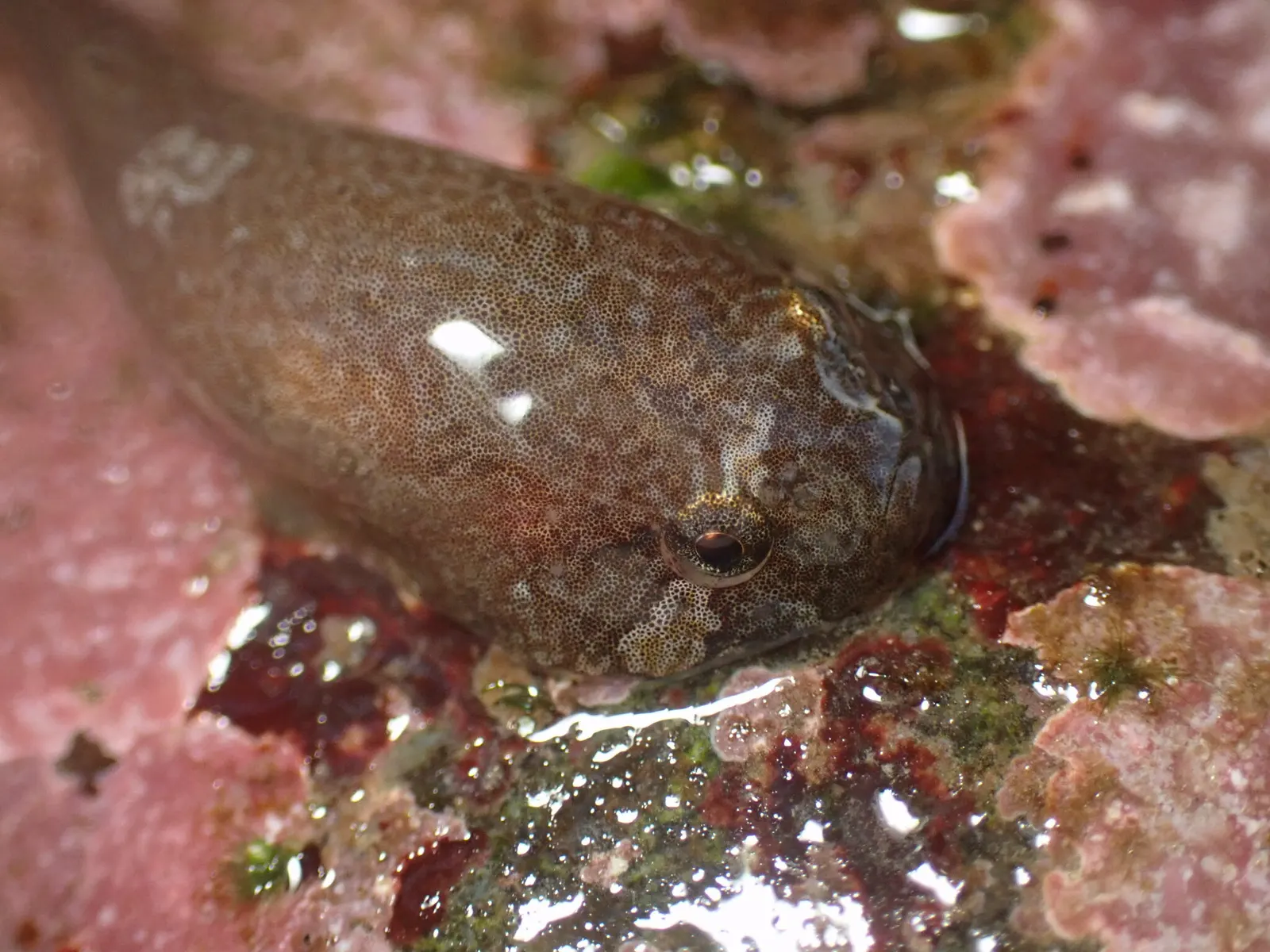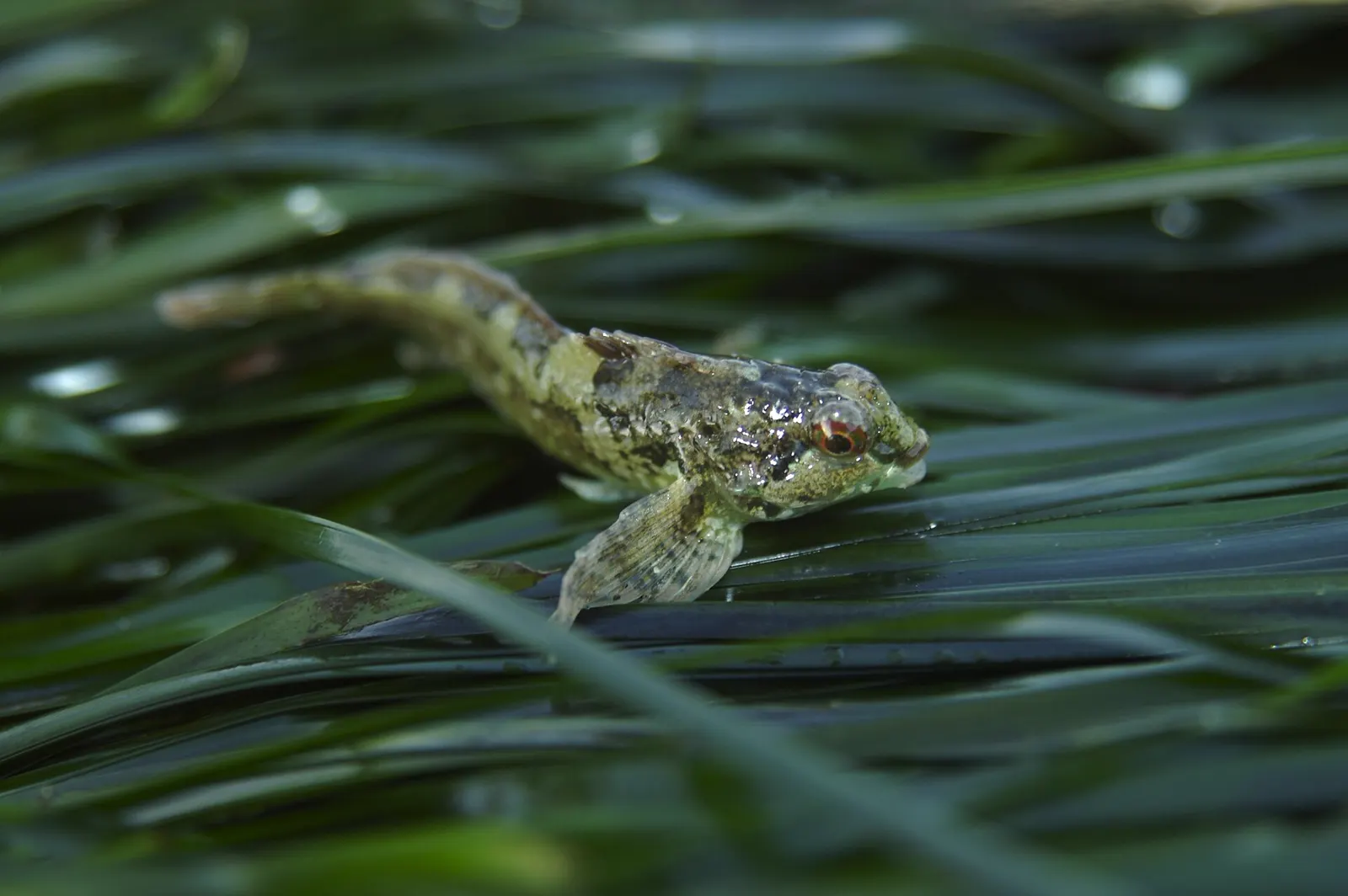
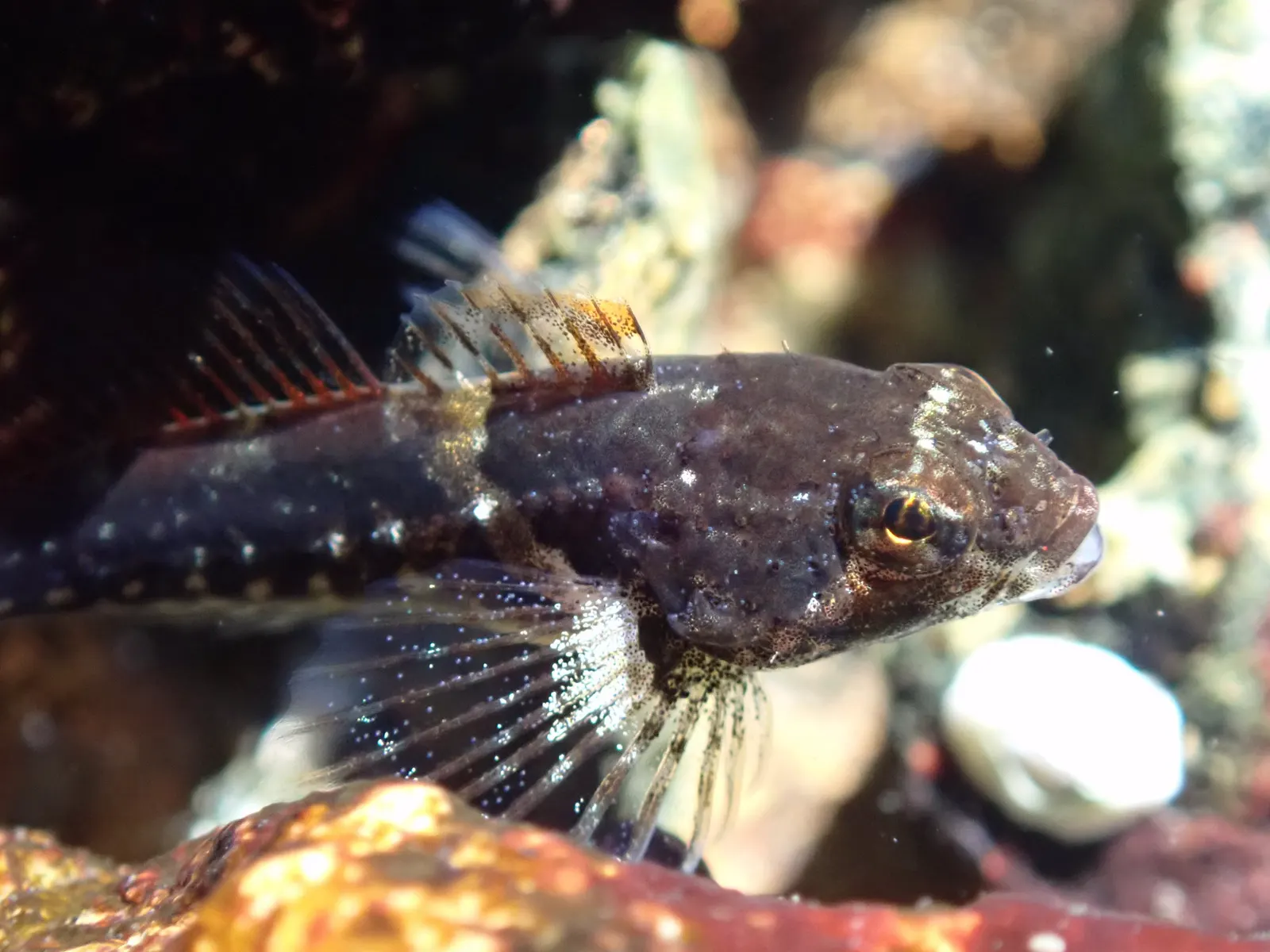
A mottled green tidepool sculpin (Oligocottus maculosus) resting on surfgrass

Animal group

Tidepool fish of the Pacific coast

Scientific group: Several fish families; the best-known tidepool fish are sculpins (family Cottidae)1

When the tide goes out, small fish are among the animals left behind in isolated tidepools.2 Many fish feed in the intertidal zone at high tide, but most leave as the tide ebbs.3 A few kinds stay behind, hiding in tidepools under rocks or in mussel beds.3

A tidepool sculpin (Oligocottus maculosus). Location: Hazard Reef, near Morro Bay, California. Photo: Jerry Kirkhart (opens in a new tab) · CC BY 2.0 (opens in a new tab), resized

Varieties

The main kinds you might see. Each photo is identified as that species in its own record; tap a photo to see it full size.

Residents: fish that live in the pools

Resident intertidal fish spend most or all of their time in the intertidal zone, so they move about very little.8

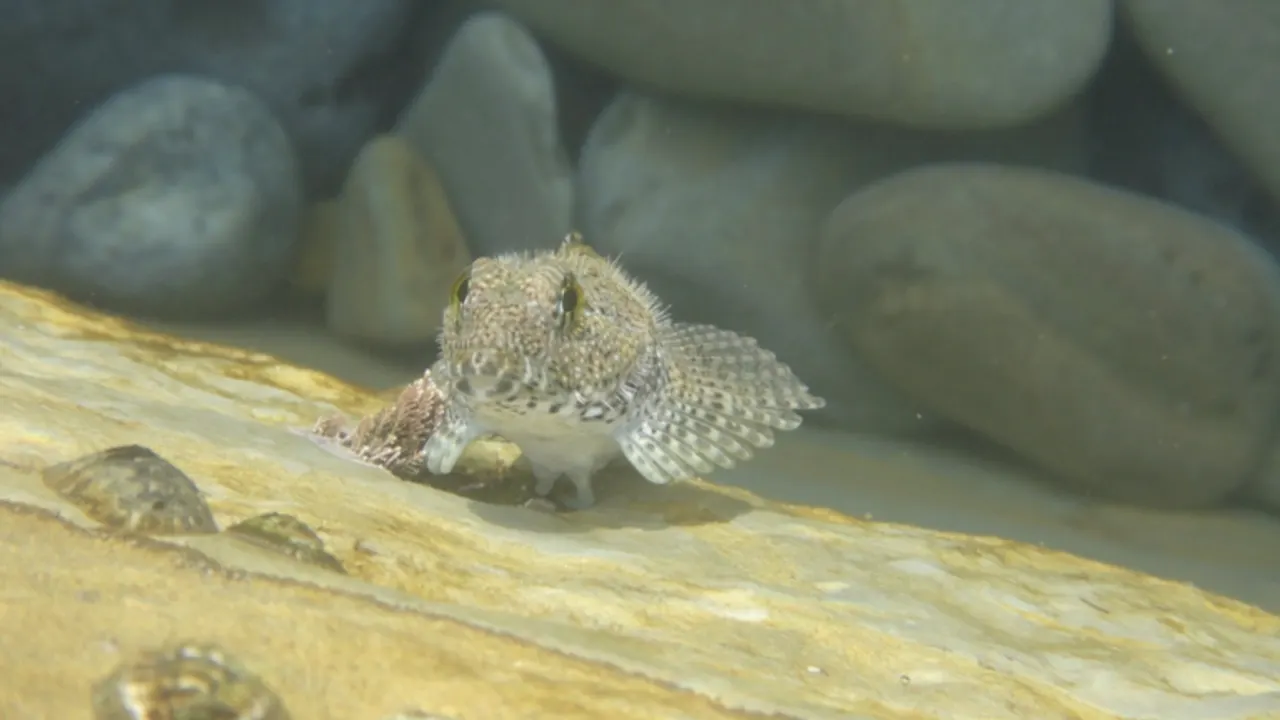
A mottled tidepool sculpin resting on pale gravel

Tidepool sculpin

Oligocottus maculosus1

  • A little fish, up to 9 cm long, with a fairly big head and big dark blotches across its back.4
  • When disturbed, it shoots forward with a flick of its tail and settles on the bottom again, camouflaged wherever it lands.4
  • As the tide goes out, some are stranded under rocks and logs. They can take oxygen straight from the air.4
  • It keeps to a small home range all year. Fish moved by researchers have found their way back from as far as 100 metres.4

Photo: Guerric Haché (iNaturalist) (opens in a new tab) · CC0 (opens in a new tab)
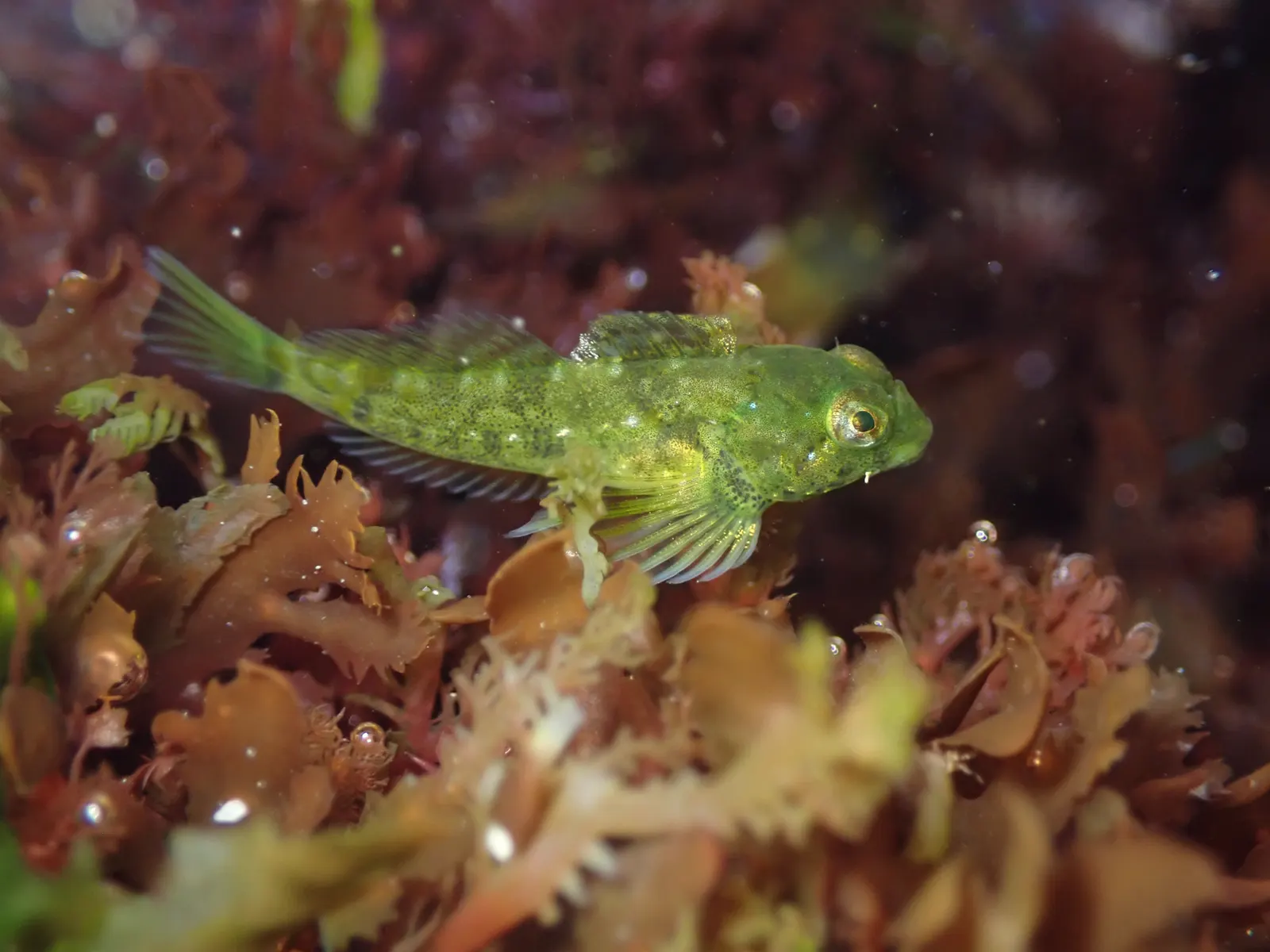
Fluffy sculpin

Oligocottus snyderi5

  • In recent studies of the tide pools at Redwood National and State Parks, the fluffy sculpin was by far the most common fish: almost 65% of all fish recorded.5
A green woolly sculpin among red seaweed in a tide pool

Woolly sculpin

Clinocottus analis6

  • Common in the low and middle intertidal from Northern California to Baja California, and typically 7–12 cm (3–5 inches) long.6
  • Mottled brown, white and black, to blend in with sand and rock.6
  • It's named for the many cirri on its head and along its dorsal fin.7
  • Along much of California's coast, it is the fish most commonly found in high intertidal tide pools.7

Photo: Lisa Biasillo (iNaturalist) (opens in a new tab) · CC BY 4.0 (opens in a new tab), resized

A small brown California clingfish on pink coralline rock

California clingfish

Gobiesox rhessodon6

  • A small intertidal fish of Southern California and Baja California, about 5 cm (2 inches) long.6
  • Usually orange, black or grey, with three lighter bands.6
  • A suction disc on its underside lets it feed on small crustaceans and marine worms.6

Photo: Cricket Raspet (iNaturalist) (opens in a new tab) · CC BY 4.0 (opens in a new tab), resized

Black prickleback

Xiphister atropurpureus8

  • A resident intertidal fish, found in shallow water down to 8 metres from Kodiak Island to northern Baja California.8
  • Pricklebacks are named for the spiny dorsal fin that most species in the family have.8
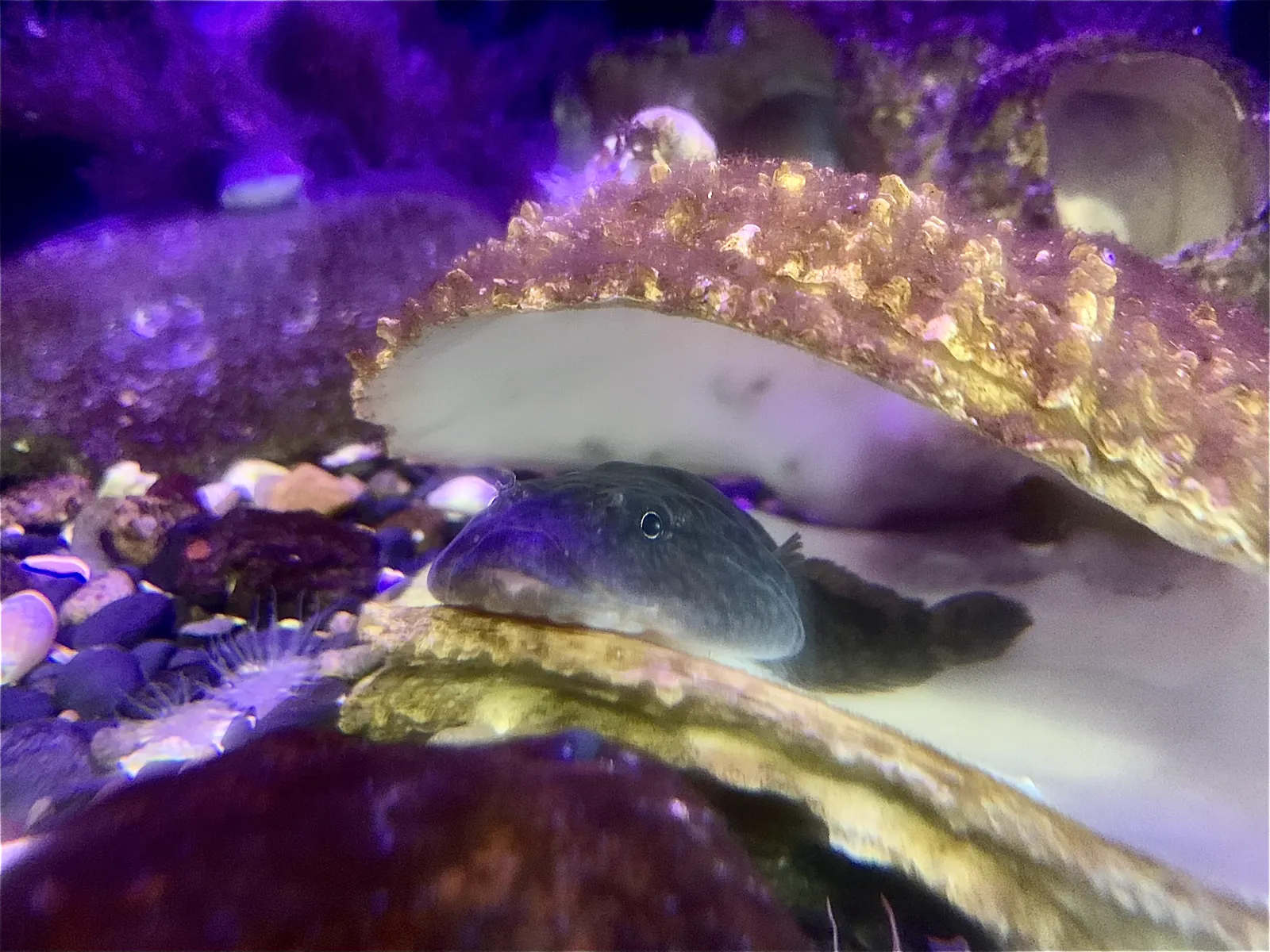
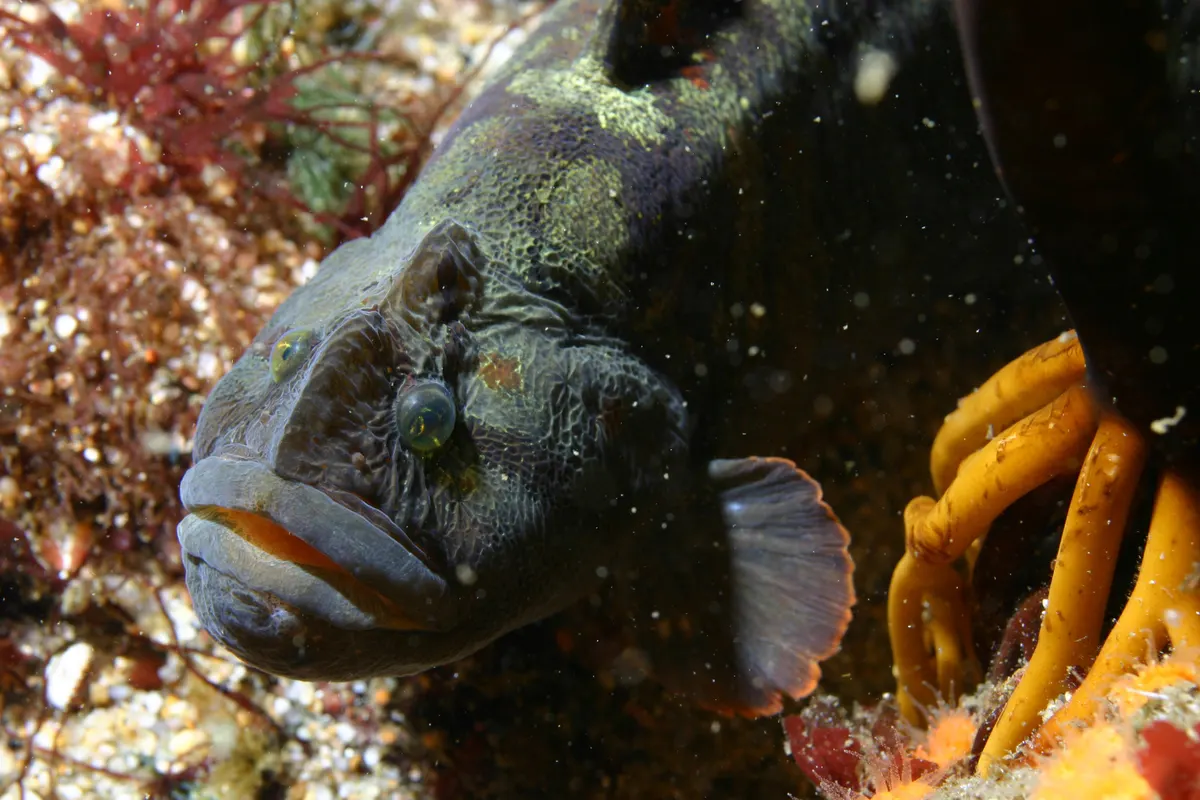
A monkeyface prickleback with its broad, lumpy head among rocks and seaweed

Monkeyface prickleback

Cebidichthys violaceus9

  • An eel-like fish that can grow up to 30 inches long.9
  • It lives in rocky places with plenty of crevices, including high and low intertidal tide pools.9
  • Young ones are especially suited to the high intertidal, and the species can breathe air.9
  • Its genus is one of four prickleback genera with fish that live in the intertidal zone.8

Photo: NOAA / Monterey Bay Aquarium (opens in a new tab) · Public domain

Visitors: fish that come in from deeper water

Visitor intertidal fish come into the intertidal zone and leave it again with the high tides.8

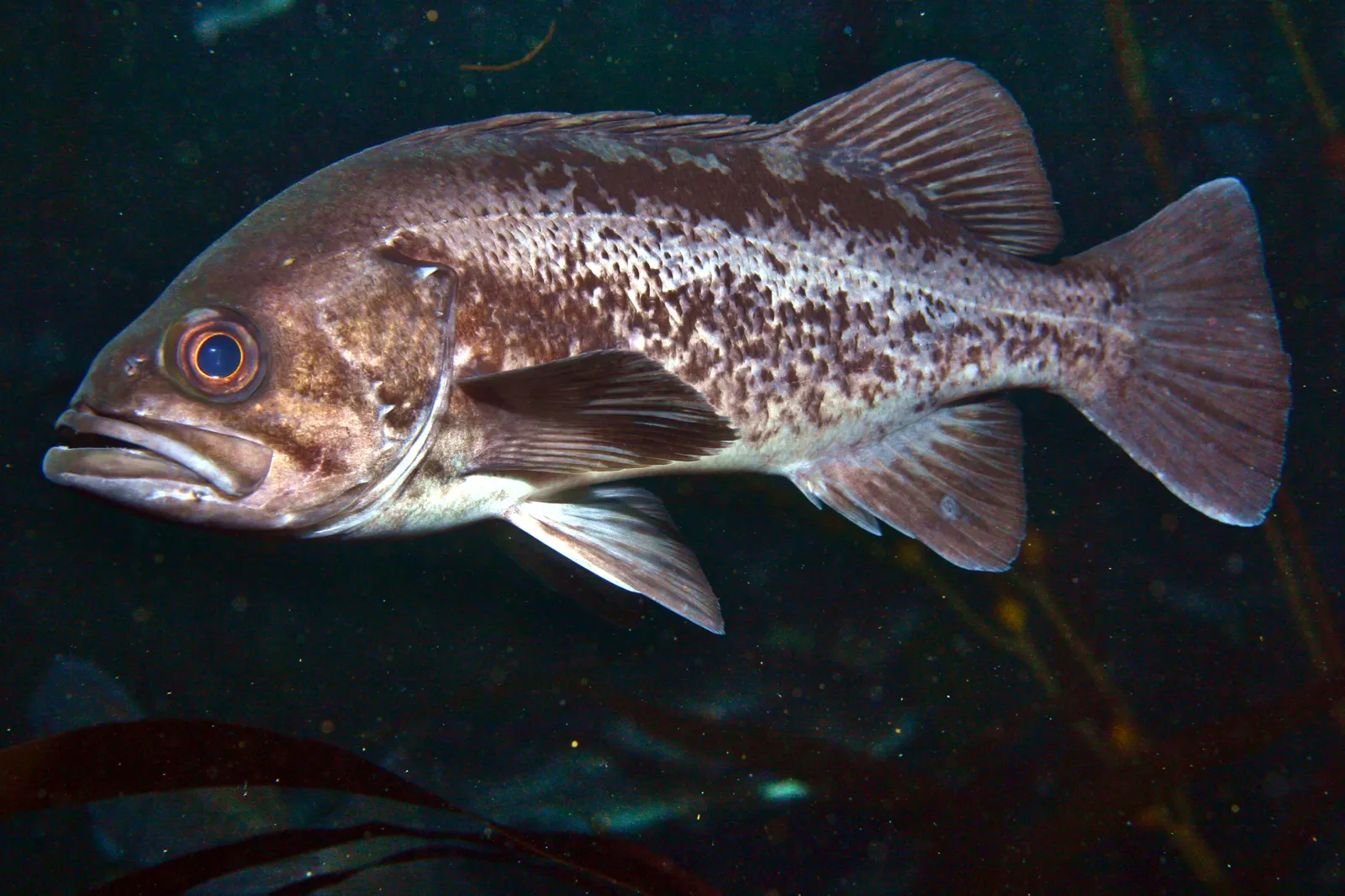
An adult black rockfish swimming over kelp

Black rockfish (young)

Sebastes melanops5

  • Usually an open-ocean fish, yet it was the sixth most common fish in recent studies of Redwood's tide pools.5
  • In the Pacific Northwest, tidepools are an important nursery for young black rockfish.5
  • The crevices and holes give the young fish cover until they're big enough to move out to rocky reefs in the open ocean.5

Photo: Steve Lonhart / NOAA MBNMS (opens in a new tab) · Public domain

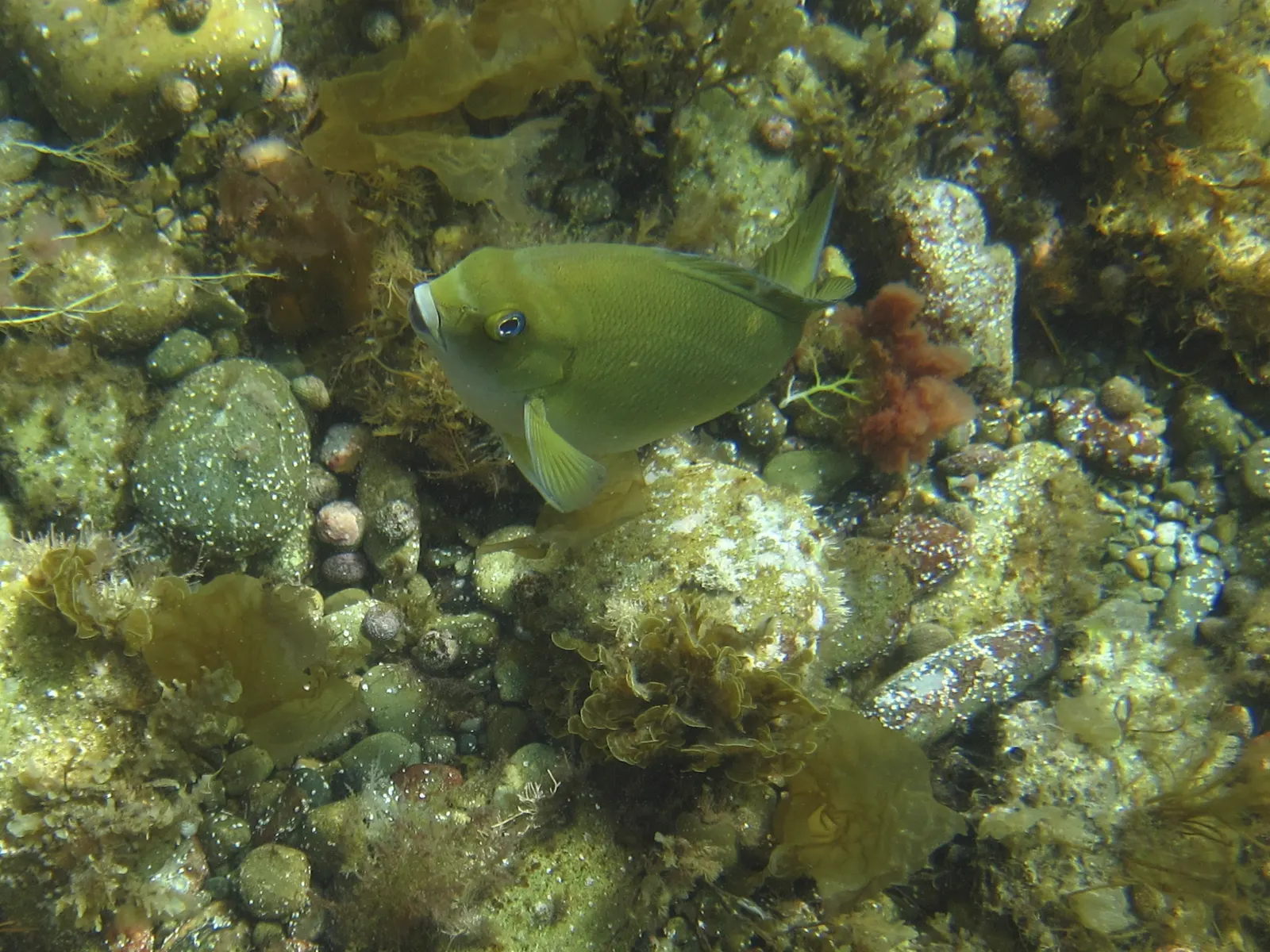
A young green opaleye with a white spot on its back, among rocks and seaweed

Opaleye (young)

Girella nigricans6

  • Young opaleye live in the intertidal until they're 5–10 cm (2–4 inches) long, then move to deeper water as adults.6
  • Look for small white spots on the back and bright blue-green eyes.6
  • Common in shallow water off Southern California and northern Mexico.6

Photo: Roban Kramer (opens in a new tab) · CC BY-SA 2.0 (opens in a new tab), resized

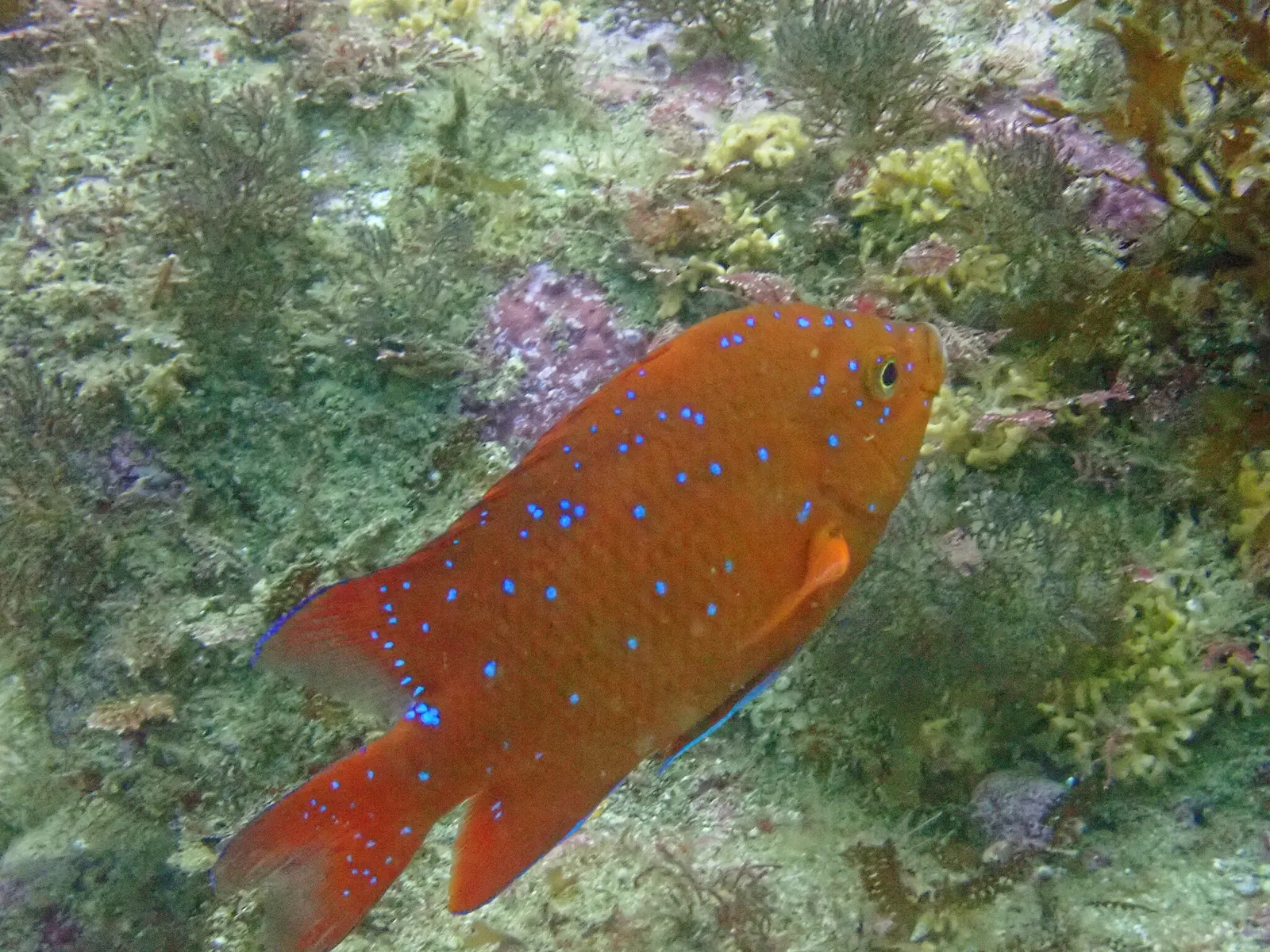
A young orange garibaldi with bright blue spots, over seaweed

Garibaldi (young)

Hypsypops rubicundus6

  • California's state marine fish, common in the low intertidal zone from Monterey Bay to Baja California.6
  • Adults are bright orange. Young ones are bright orange with blue dots on top.6
  • At Point Dume, California's wildlife agency says juvenile garibaldi hide in the shallow tide pools when the tide goes out.10

Photo: Donald Davesne (iNaturalist) (opens in a new tab) · CC BY 4.0 (opens in a new tab), resized

What it looks like

  • Sculpins are small bottom-dwelling fish, usually under 5–6 inches (13–15 cm), with large heads and big fan-like pectoral fins.1
  • They are well camouflaged, with mottled, muted colours that match their surroundings.1

Where and when to find it

  • Tidepool sculpins are only a few inches long and live in the crevices and seaweed of tidepools.5
  • Gunnels and pricklebacks are found under rocks, in mussel beds, or partly buried in coarse sand.3
  • In Southern California, the National Park Service lists fishes among residents of the middle intertidal zone.12
  • The deepest pools, where fish are most likely to be seen, are easiest to look into during the lowest low tides.5

How it lives

  • Some tidepool sculpins can breathe air. This helps when oxygen runs low in a pool at night or when low tide drains it.1
  • Sculpins, gunnels and pricklebacks eat many kinds of food: seaweed, dead animals, small shrimp and small fish.3
  • Sculpins have no swim bladder, unlike many other bony fish.1

How to watch without harming it

  • Leave nets and containers at home. Cabrillo National Monument asks visitors not to bring them into the tidepool area.2
  • Look at the base of rocks, but don't turn any over.13
  • Sculpin spines can pierce unwary hands.1
  • Leave animals where you find them, and remember they breathe underwater.14

Range

  • Sculpins are most abundant in the North Pacific, where they favour shallow water and tidepools.1

More photos

A woolly sculpin (Clinocottus analis) camouflaged on rock
A woolly sculpin (Clinocottus analis) camouflaged on rock. Location: not recorded.Photo: NPS Photo (opens in a new tab) · Public domain

Where the agencies name them

Spots whose managing agency lists tidepool fish for that place.

Further reading

For exploring further. These pages are not sources for the facts above; those are listed under Sources.

Sources

  1. National Park Service, Klamath Inventory & Monitoring Network: Sculpins (Featured Creature article) (opens in a new tab) · page updated 26 February 2021 · accessed 17 November 2026
  2. National Park Service: Cabrillo National Monument: The Rocky Intertidal Zone (opens in a new tab) · page updated 31 October 2026 · accessed 17 November 2026
  3. National Park Service, Glacier Bay National Park & Preserve: Fish in the Intertidal Zone (opens in a new tab) · page updated 16 March 2018 · accessed 17 November 2026
  4. University of Puget Sound, Slater Museum of Natural History: Tidepool Sculpin (Puget Sound Museum of Natural History, marine panel) (opens in a new tab) · accessed 19 November 2026
  5. National Park Service, Redwood National and State Parks: Marine Fish (opens in a new tab) · page updated 21 November 2017 · accessed 17 November 2026
  6. National Park Service, Cabrillo National Monument: Biomodel Library (opens in a new tab) · page updated 22 December 2023 · accessed 17 November 2026
  7. California Conservation Genomics Project (UCLA La Kretz Center; University of California): Clinocottus analis (Woolly Sculpin) (opens in a new tab) · accessed 19 November 2026
  8. University of Oregon, Department of Biology and Clark Honors College: Site Fidelity and Homing Behavior of the Intertidal Stichaeidae, Xiphister atropurpureus (Black Prickleback), honors thesis, 2013 (opens in a new tab) · page updated NaN undefined NaN · accessed 19 November 2026
  9. University of California, Irvine: Natural History of Orange County: Monkeyface Prickleback, Cebidichthys violaceus (Fish of Orange County, California) (opens in a new tab) · accessed 19 November 2026
  10. California Department of Fish and Wildlife: Point Dume State Marine Reserve/State Marine Conservation Area (opens in a new tab) · accessed 18 November 2026
  11. National Park Service, Cabrillo National Monument: Intertidal Field Guide (opens in a new tab) · page updated 25 June 2021 · accessed 17 November 2026
  12. National Park Service, Cabrillo National Monument: Tidepool Species (opens in a new tab) · page updated 7 January 2018 · accessed 17 November 2026
  13. National Park Service, Cabrillo National Monument: A Virtual Visit to the Tidepools (opens in a new tab) · page updated 18 December 2020 · accessed 17 November 2026
  14. NOAA Office of National Marine Sanctuaries: Discover Life Between the Tides (Tidepool Etiquette) (opens in a new tab) · accessed 17 November 2026

Last checked 19 November 2026 against the sources above.