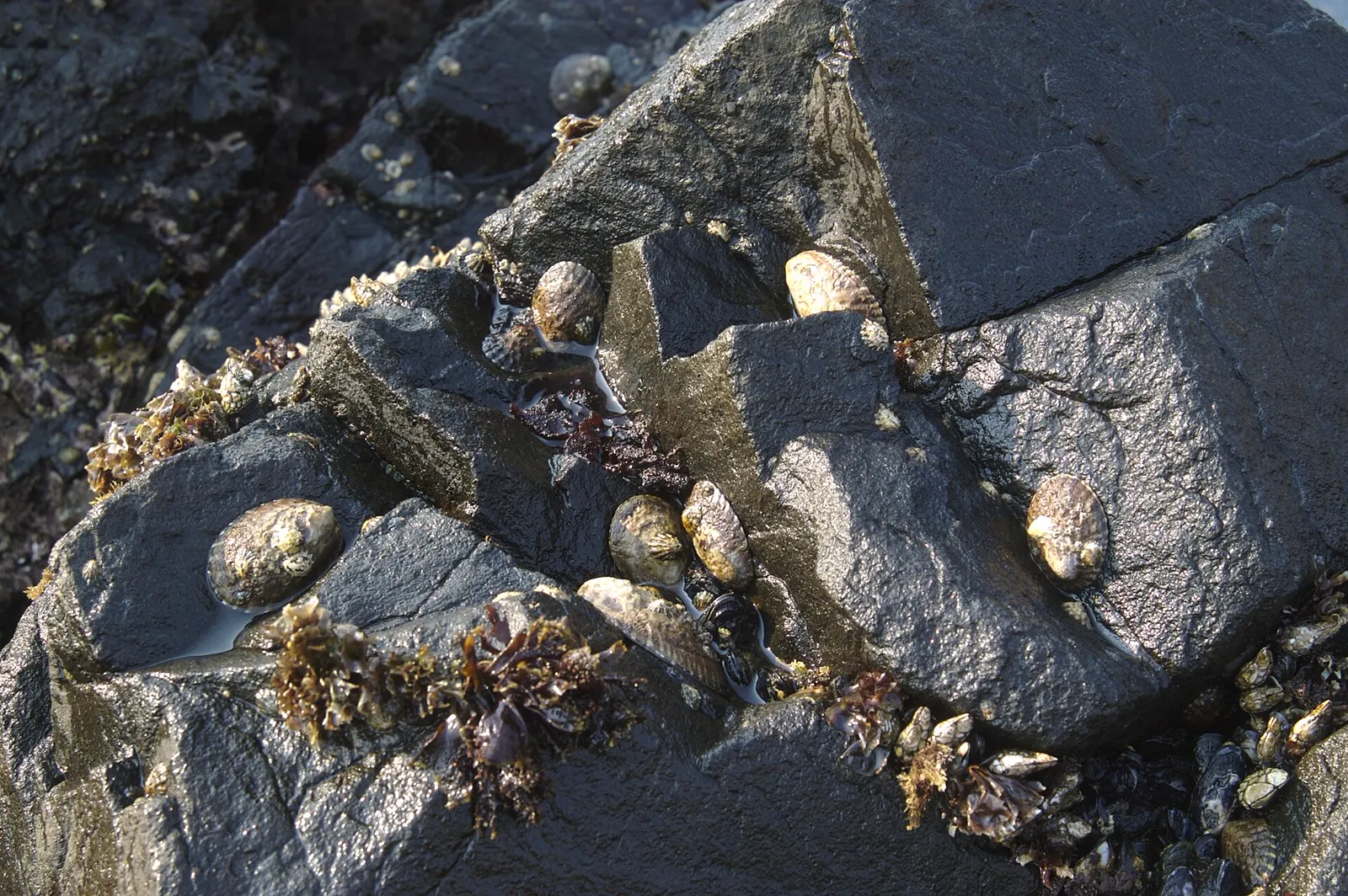
Owl limpets (Lottia gigantea) on dark shoreline rocks

Animal group

Limpets of the Pacific coast

Scientific group: Class Gastropoda (limpets are snails with uncoiled shells)1

Limpets have small, cone-shaped shells and live on rocks throughout the intertidal zone. Their shells are not coiled, but they are closely related to snails.2 The owl limpet is the largest true limpet on the Pacific coast, growing up to 4 inches.3

Owl limpets (Lottia gigantea) on shoreline rocks, in an area the photographer says is usually closed to the public. Location: not stated in the photo record. Photo: Jerry Kirkhart (opens in a new tab) · CC BY 2.0 (opens in a new tab), resized

Varieties

The main kinds you might see. Each photo is identified as that species in its own record; tap a photo to see it full size.

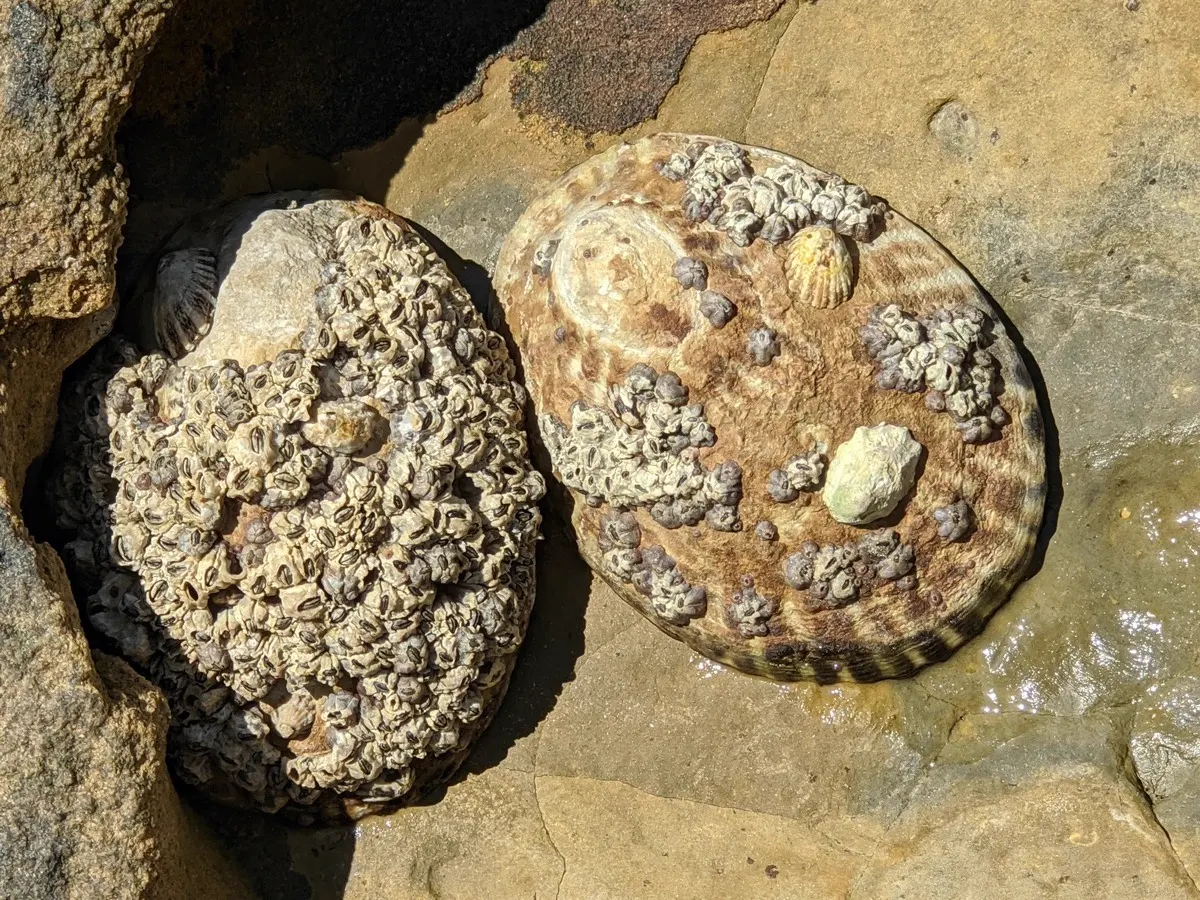
Two owl limpets on a rock, with acorn barnacles on their shells

Owl limpet

Lottia gigantea3

  • Most owl limpets are about 2 inches long, with a lumpy, low shell mottled white, brown and black.3
  • Owl limpets are common on cliff faces and rocks on wave-exposed shores, in the high and middle intertidal zones.4

Learn more: Wikipedia: Lottia gigantea (opens in a new tab)

Photo: NPS (opens in a new tab) · Public domain
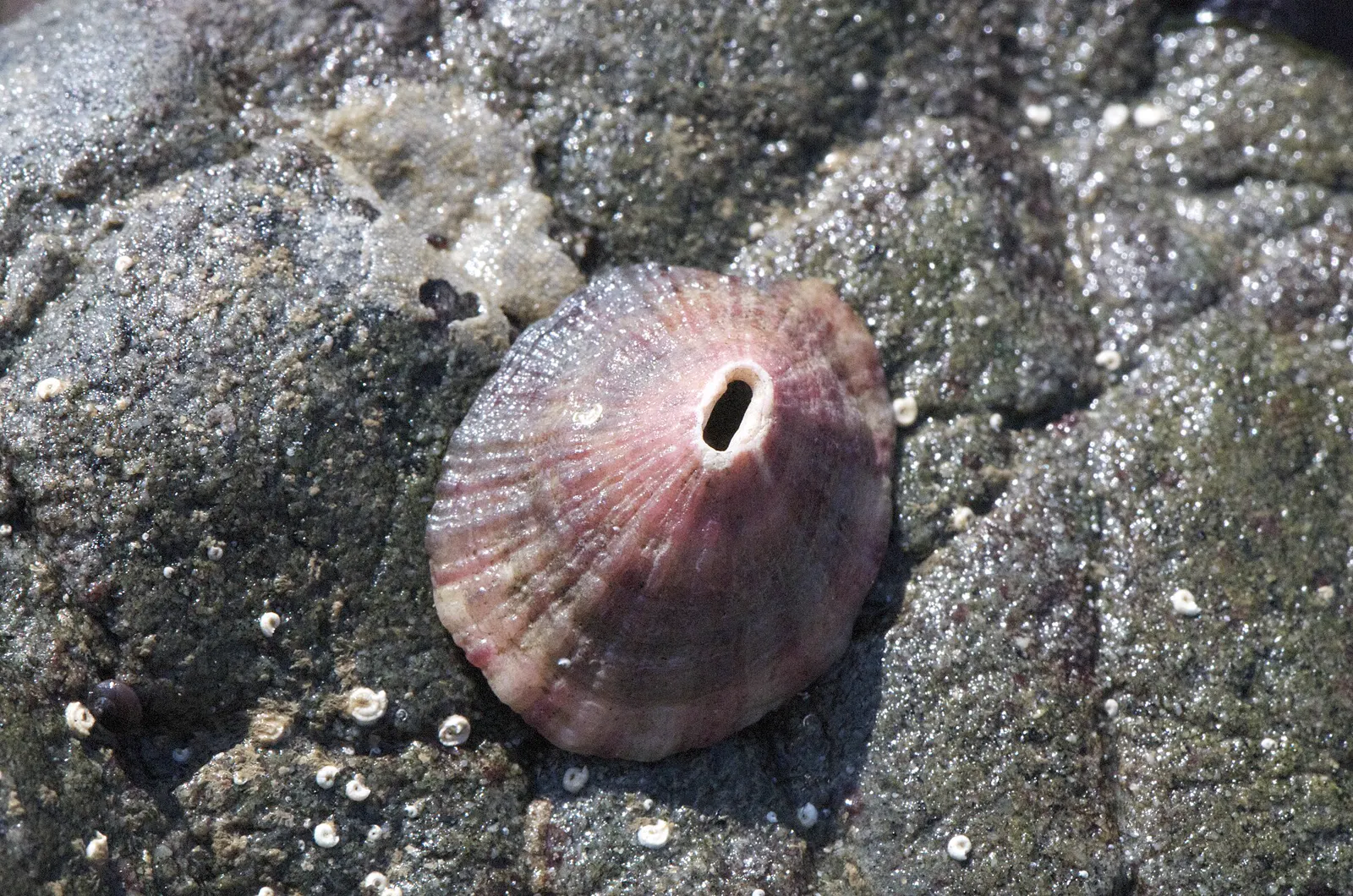
Volcano limpet (Fissurella volcano)

Volcano limpet

Fissurella volcano5

  • Volcano limpets are named for their volcano-shaped shells. They grow to about 1 inch long and have red, pink and purple markings.5
  • Volcano limpets are common under rocks and in small openings in the middle and low intertidal zones.5

Learn more: Wikipedia: Fissurella volcano (opens in a new tab)

Photo: Jerry Kirkhart (opens in a new tab) · CC BY 2.0 (opens in a new tab), resized

A giant keyhole limpet: mottled mantle around a pink shell with an oval opening on top

Giant keyhole limpet

Megathura crenulata5

  • The keyhole limpet's fleshy mantle comes in many colours, including black and tan, deep blue and purple, or magenta.5
  • Keyhole limpets are commonly found in the low intertidal zone and can grow to about 5 inches long.5

Learn more: Wikipedia: Megathura crenulata (opens in a new tab)

Photo: NPS Photo (opens in a new tab) · Public domain

How it lives

  • Limpets, like periwinkles and chitons, feed by scraping small algae and diatoms off the rocks.2
  • Limpets survive in the high zone by trapping water under their shells.2
  • Owl limpets graze on sea lettuce (Ulva) and return to the exact same spot after feeding.3
  • Owl limpets start out male and generally become female as they grow larger.4

How to watch without harming it

  • Don't force limpets, or any other animal attached to a rock, off its surface.6
  • Limpets grip very tightly. Unless taken by surprise, they are very difficult to remove from a rock.2
  • Leave containers, nets, scrapers and prying tools at home.6
  • Illegal taking is among the biggest threats to owl limpet populations.4

Range

  • Owl limpets range from Washington to Baja California and are scarce north of San Francisco.4

More photos

Two owl limpets on a rock, with acorn barnacles on their shells
Two owl limpets on a rock, with acorn barnacles on their shells. Location: Cabrillo National Monument, San Diego County, California.Photo: NPS (opens in a new tab) · Public domain
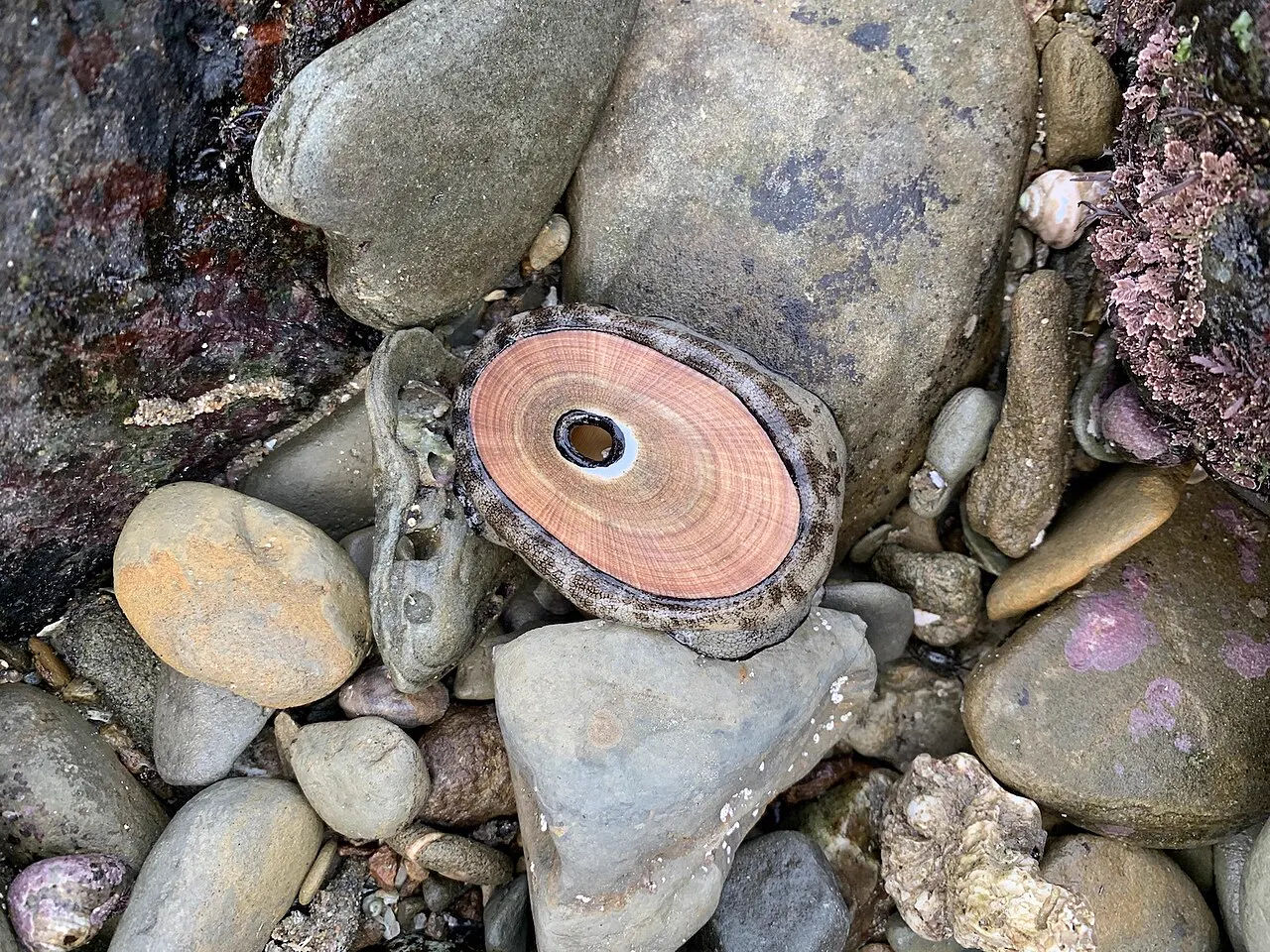
A giant keyhole limpet: mottled mantle around a pink shell with an oval opening on top
A giant keyhole limpet: mottled mantle around a pink shell with an oval opening on top. Location: Cabrillo National Monument, San Diego County, California.Photo: NPS Photo (opens in a new tab) · Public domain

Where the agencies name them

Spots whose managing agency lists limpets for that place.

Further reading

For exploring further. These pages are not sources for the facts above; those are listed under Sources.

Sources

  1. National Park Service, Point Reyes National Seashore: Mollusks (opens in a new tab) · page updated 14 January 2026 · accessed 17 November 2026
  2. National Park Service, Glacier Bay National Park & Preserve: Snails, Limpets & Chitons (opens in a new tab) · page updated 16 March 2018 · accessed 17 November 2026
  3. National Park Service, Cabrillo National Monument: Intertidal Field Guide (opens in a new tab) · page updated 25 June 2021 · accessed 17 November 2026
  4. MARINe (Multi-Agency Rocky Intertidal Network), UC Santa Cruz: Lottia gigantea (Owl Limpet) (opens in a new tab) · page updated 9 June 2025 · accessed 17 November 2026
  5. National Park Service, Cabrillo National Monument: Biomodel Library (opens in a new tab) · page updated 22 December 2023 · accessed 17 November 2026
  6. National Park Service: Cabrillo National Monument: The Rocky Intertidal Zone (opens in a new tab) · page updated 31 October 2026 · accessed 17 November 2026

Last checked 17 November 2026 against the sources above.