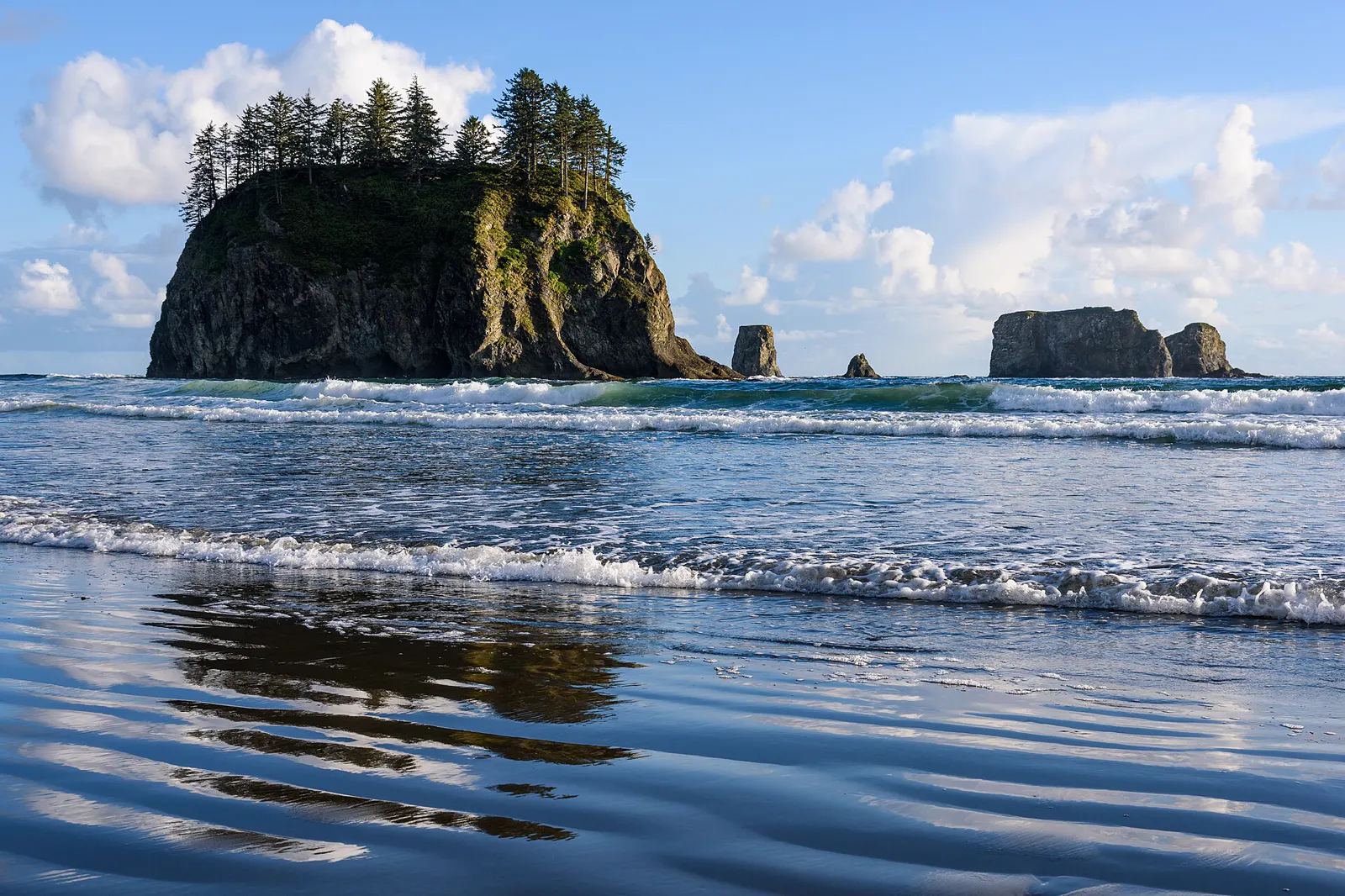
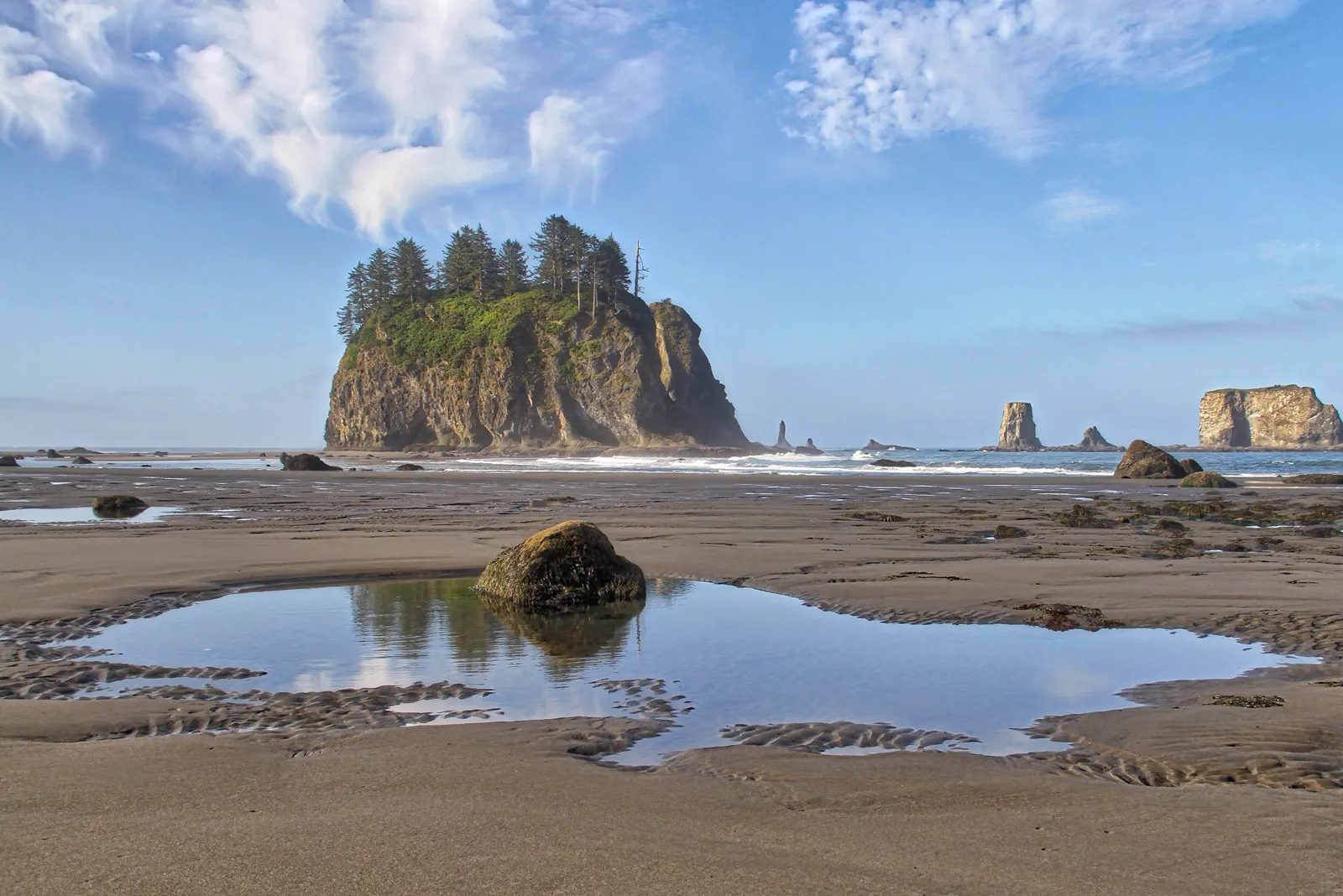
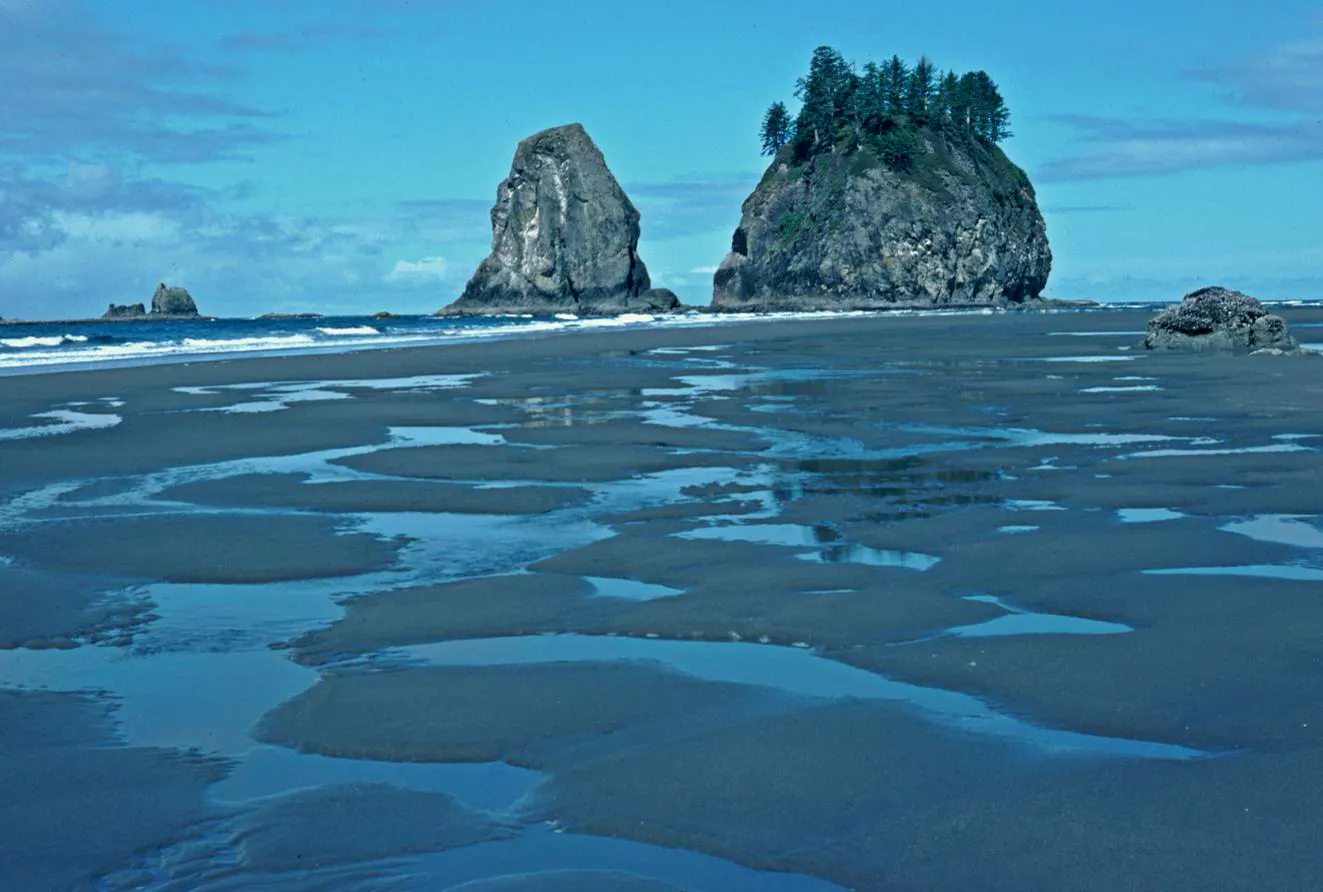
From a trailhead on the Quileute Indian Reservation, a 0.7-mile trail winds through forest and drops 200 feet to a sandy beach with sea stacks and tidepools (NPS).1 NOAA's Olympic Coast National Marine Sanctuary lists Second Beach among the places for world-class tidepooling.2
In an emergency
Emergency: call 911Cell service: the National Park Service says cell service is spotty throughout Olympic.5
- Non-emergency Olympic National Park (visitor information): (360) 565-31303
- Nearest emergency department Forks Community Hospital (emergency department), 530 Bogachiel Way, Forks, WA 98331, 360-374-6271 (hospital main line)4
Nearest full-service emergency department by road distance (OpenStreetMap routing, checked 2026-11-18). No drive time is given. Address, phone and 24-hour emergency department from the hospital's own website.
Best times to go
Olympic National Park says the best tidepooling is on a minus tide: aim for tides lower than 1 foot. A 3-foot low tide isn't great for tidepooling.6
Next low tides 1 ft or lower in daylight6
| Date | Low tide | Height |
|---|---|---|
| Sat 21 Nov 2026 | 4:02 PM | 0.63 ft |
| Fri 4 Dec 2026 | 3:38 PM | 0.99 ft |
| Sat 5 Dec 2026 | 4:24 PM | 0.34 ft |
| Sun 20 Dec 2026 | 3:36 PM | 0.32 ft |
| Mon 21 Dec 2026 | 4:26 PM | −0.66 ft |
| Sun 3 Jan 2027 | 4:04 PM | 0.61 ft |
| Mon 18 Jan 2027 | 3:14 PM | 0.19 ft |
| Tue 19 Jan 2027 | 4:11 PM | −0.66 ft |
| Tue 2 Feb 2027 | 4:30 PM | 0.65 ft |
| Wed 3 Feb 2027 | 5:10 PM | 0.31 ft |
| Mon 15 Feb 2027 | 1:43 PM | 0.79 ft |
| Tue 16 Feb 2027 | 2:55 PM | 0.16 ft |
Predictions from NOAA CO-OPS. Not for navigation. Station 9442396, La Push, Quillayute River. Heights in feet relative to MLLW, local time, rounded to 0.01 ft. We choose which lows to show; times and heights are NOAA's. Sunrise and sunset are our calculation for the tide station's position.78
Rules
The trailhead is on the Quileute Indian Reservation. The Quileute Tribe is a sovereign nation, and asks visitors to follow its rules and watch for signs.1
- Take nothing. The Quileute Tribe asks visitors not to pick up or remove artifacts or objects such as sand, rocks, shells, minerals, marine growth or driftwood (Ordinance No. 74-A-8).1
- Respect the community. Burial grounds and religious ceremonies are sacred and are not to be entered. Respect the privacy of residential communities, and ask before photographing anyone (Quileute Tribe).1
- No dogs on the tidal rocks. Don't bring dogs onto the tidal rocks: sharp stone, barnacles and mussels can cut their paws (NPS).6
Good practice
Tide pool advice from other agencies, credited to each. These aren't rules for this spot.
- Bare rock only. Find footholds on bare rock, so you avoid stepping on the animals and plants that cling to the rocks (NOAA Olympic Coast National Marine Sanctuary).2
- Put rocks back. If you look under a rock, put it back the way you found it. A rock left belly-up can kill the animals living on it (NOAA).2
- Leave the animals. Don't force an animal off its spot. Intertidal animals should not be collected for bait (NOAA).2
Animals found along this coast
Typical of the Olympic Coast's rocky shores, from NOAA's Olympic Coast National Marine Sanctuary. No official source lists the animals at this spot itself, so these aren't confirmed here.2
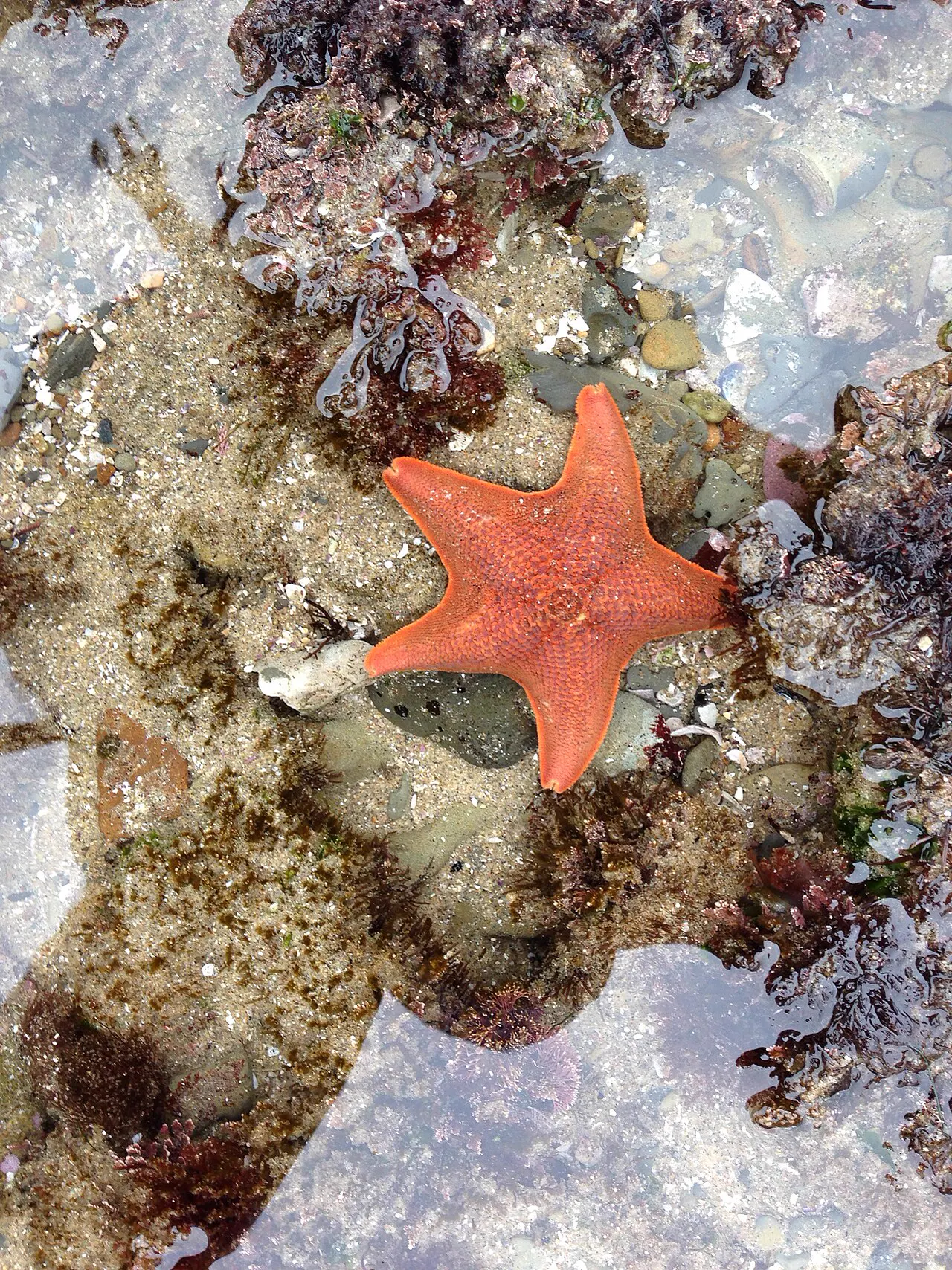
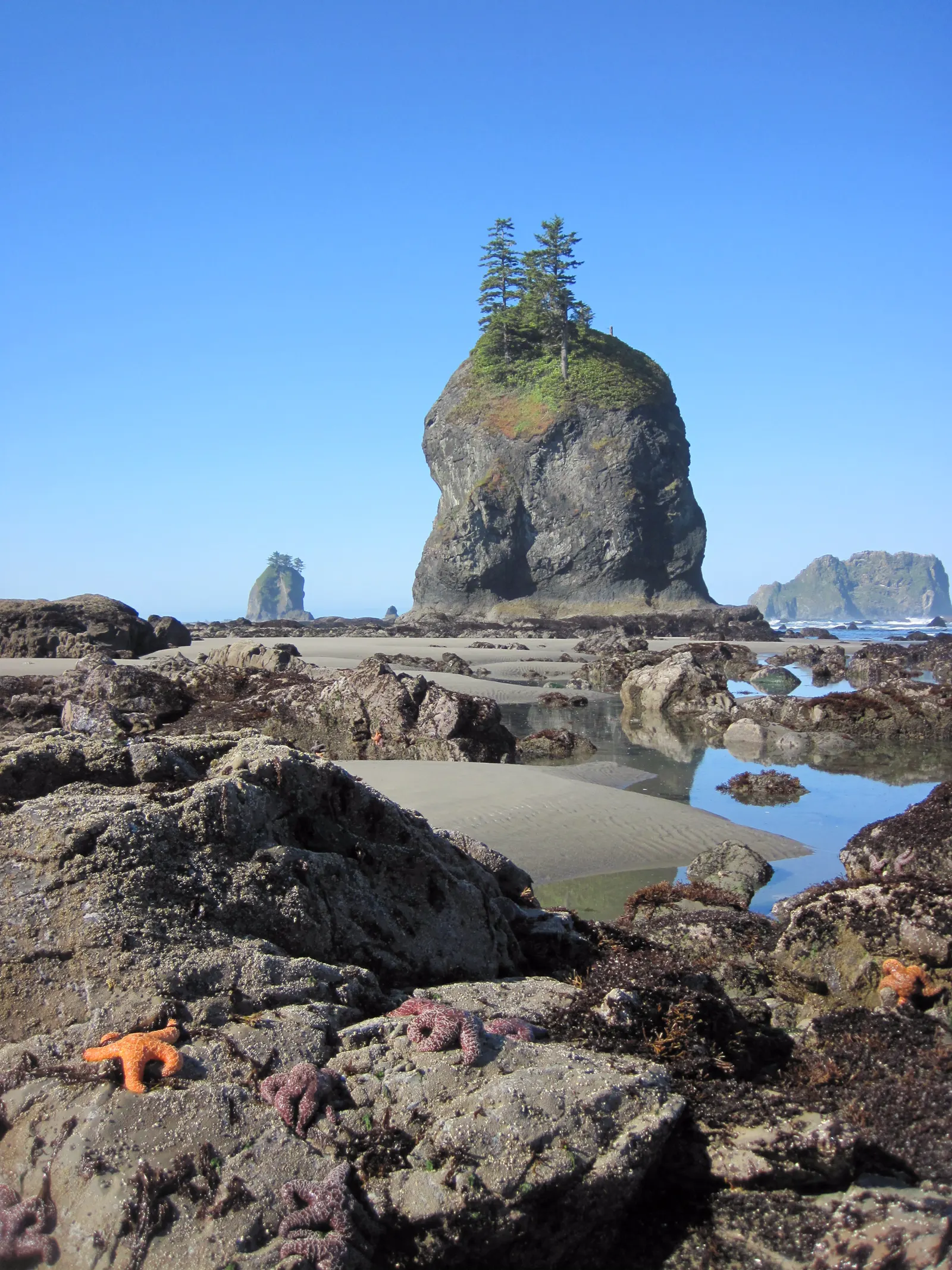
Sea stars are sturdy, flexible predators of the rocky intertidal zone.9 Some species, such as the ochre sea star, play an especially important role in the rocky shore community.10 A wasting disease killed huge numbers of sea stars along the Pacific coast of North America in 2013 and 2014.11
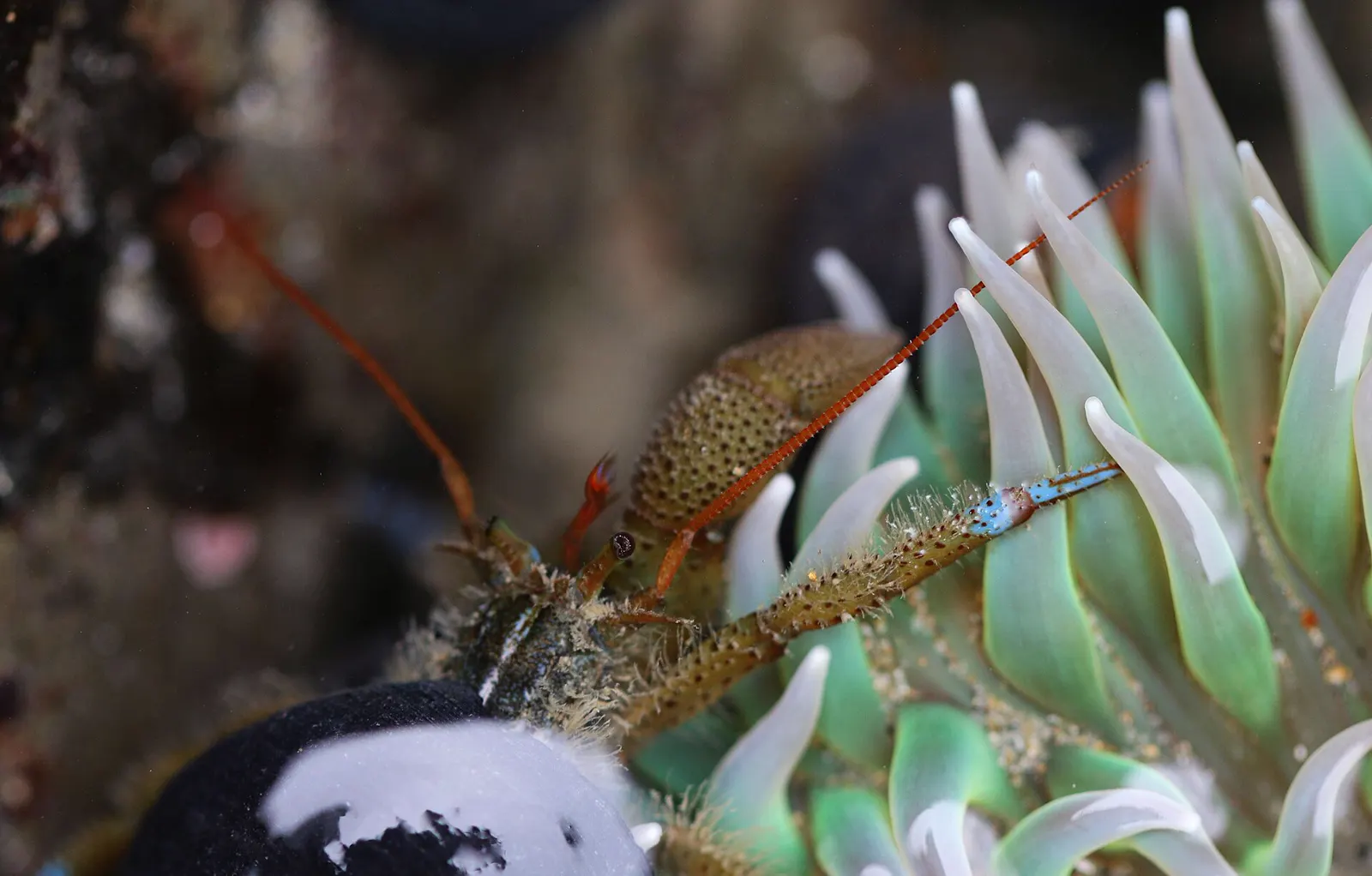
Hermit crabs are among the animals visitors may see in the rocky intertidal at Cabrillo National Monument.12 Empty Tegula (black turban snail) shells are a favourite home for hermit crabs.13
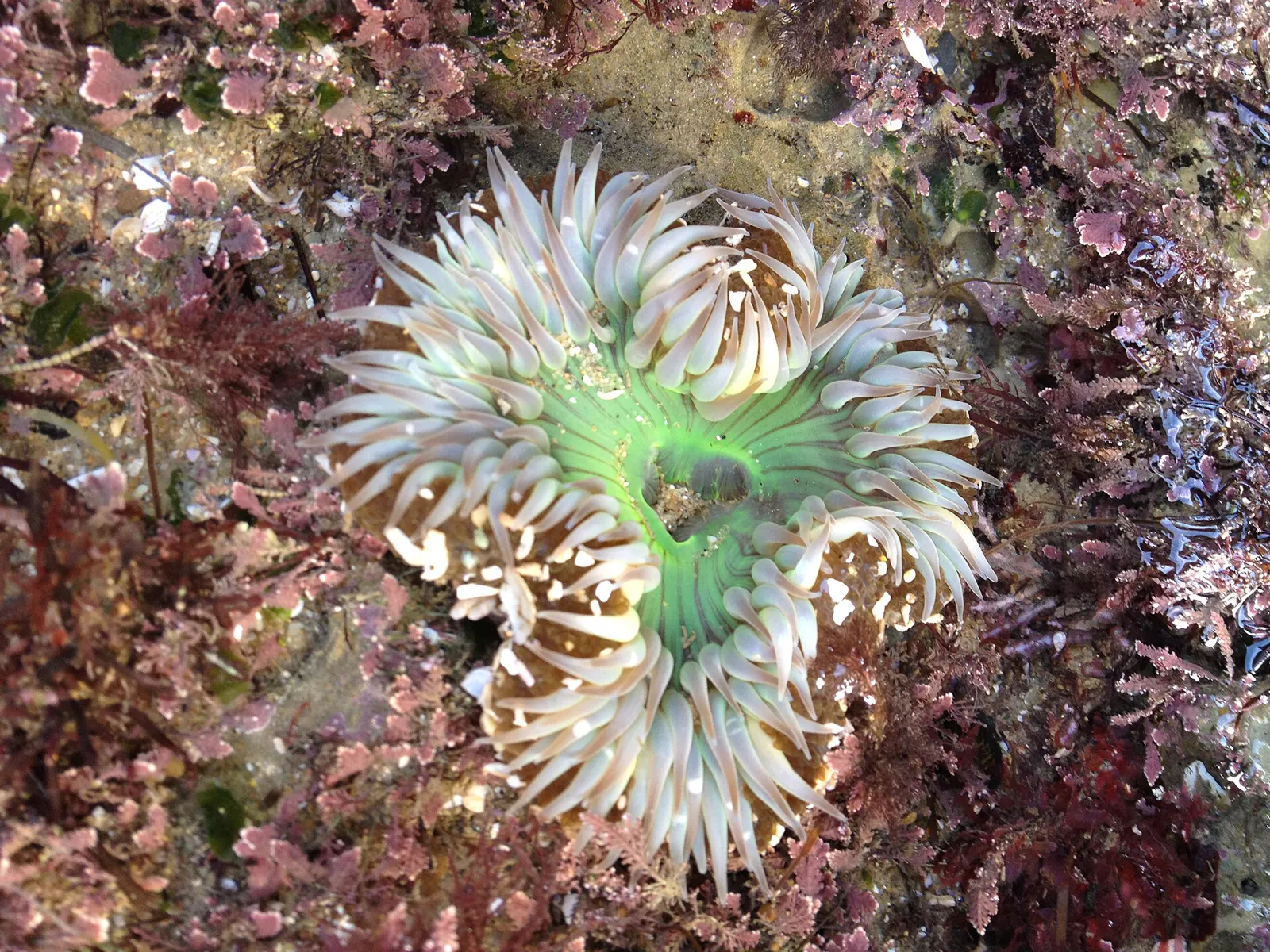
The giant green anemone and the slightly smaller aggregating anemone are both common in tidepools.14 Anemones have no hard shell. Their soft, flexible bodies bend with the moving water.15 They catch prey with stinging cells called nematocysts.13
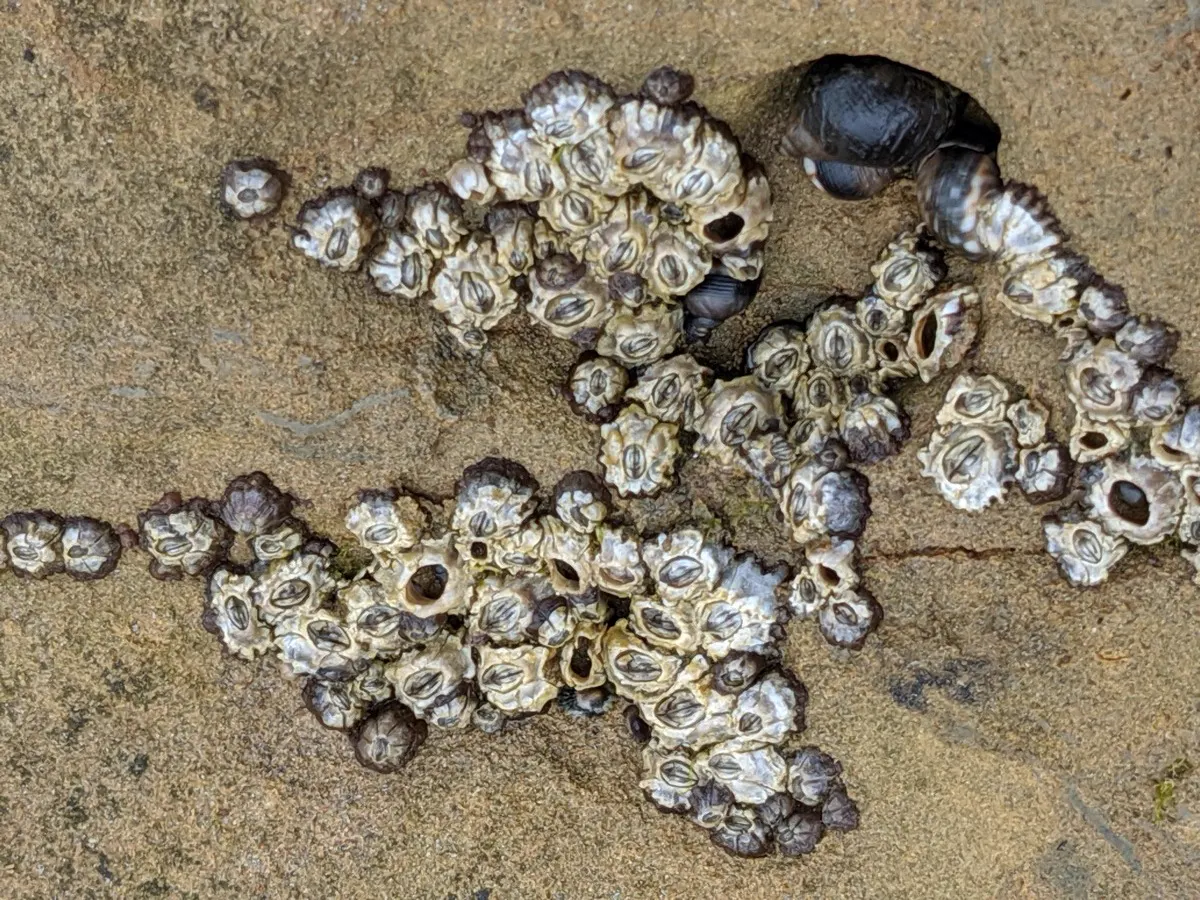
Barnacles are relatives of crabs and shrimp that cluster on surfaces at every level of the intertidal zone.16 They attach head-first and use their feathery legs to take in oxygen and net food floating past.16
Stay safe
- Watch the tide. Watch closely for the returning tide and sneaker waves (NPS).6
- Slippery rock. Algae and seaweed make the rocks extremely slippery: test each rock before you step onto it, and don't leap from rock to rock. Keep at least one foot on the ground (NPS).6
- Children close. Keep children close: rocks and waves can be unpredictable, and falls can cause severe injury (NPS).6
- Stay off the logs. Powerful waves can roll and tumble driftwood logs. Don't play on beach logs, especially when the tide is high (NPS).17
Read more: ocean safety · shore safety · first aid
Getting there
Photos of this spot
Nearby tide pools
Page history
- : Second Beach: rules updated
- : Second Beach: good-practice advice added
- : Second Beach added
Sources
- National Park Service: Second Beach Trailhead (place page) (opens in a new tab) · accessed 18 November 2026
- NOAA Office of National Marine Sanctuaries (Olympic Coast National Marine Sanctuary): Tidepooling (opens in a new tab) · accessed 18 November 2026
- National Park Service (Olympic National Park): Tides and Your Safety (opens in a new tab) · accessed 18 November 2026
- Forks Community Hospital: Emergency Care (opens in a new tab) · accessed 18 November 2026
- National Park Service: Plan Like a Park Ranger: Top 10 Tips for Visiting Olympic National Park (opens in a new tab) · accessed 18 November 2026
- National Park Service (Olympic National Park): Tidepool Activities on the Coast of Olympic National Park (opens in a new tab) · accessed 18 November 2026
- NOAA CO-OPS: Tide predictions (high/low), station 9442396 La Push, Quillayute River; MLLW, feet, local time (opens in a new tab) · accessed 18 November 2026
- NOAA CO-OPS: Metadata API: station names and positions (9410166, 9410230, 9410580) (opens in a new tab) · accessed 17 November 2026
- National Park Service, Point Reyes National Seashore: Echinoderms (opens in a new tab) · page updated 19 September 2022 · accessed 17 November 2026
- National Park Service, Redwood National and State Parks: Sea Stars (opens in a new tab) · page updated 7 December 2020 · accessed 17 November 2026
- MARINe (Multi-Agency Rocky Intertidal Network), UC Santa Cruz: Sea Star Wasting Disease (opens in a new tab) · page updated 6 October 2026 · accessed 17 November 2026
- National Park Service, Cabrillo National Monument: Tidepool Wayside Display (opens in a new tab) · page updated 20 February 2024 · accessed 17 November 2026
- National Park Service, Cabrillo National Monument: Intertidal Field Guide (opens in a new tab) · page updated 25 June 2021 · accessed 17 November 2026
- National Park Service, Channel Islands National Park: Anemone (opens in a new tab) · page updated 21 May 2021 · accessed 17 November 2026
- National Park Service, Klamath Inventory and Monitoring Network: On the Edge: The Curious Lives of Intertidal Organisms and How We Monitor Them (opens in a new tab) · page updated 28 November 2022 · accessed 17 November 2026
- National Park Service, Channel Islands National Park: Barnacles (opens in a new tab) · page updated 21 May 2021 · accessed 17 November 2026
- National Park Service: Go to the Beach (Olympic National Park) (opens in a new tab) · accessed 18 November 2026
Checked against the sources above on 18 November 2026. Hours, fees and rules can change without notice, so check with the National Park Service (Olympic National Park) before you go. Not affiliated with or endorsed by the National Park Service (Olympic National Park) or NOAA.
Report a change
Visited recently and something's different? Reports go to review first. They don't change the page until we check them against the official source.
Send a report How reports work