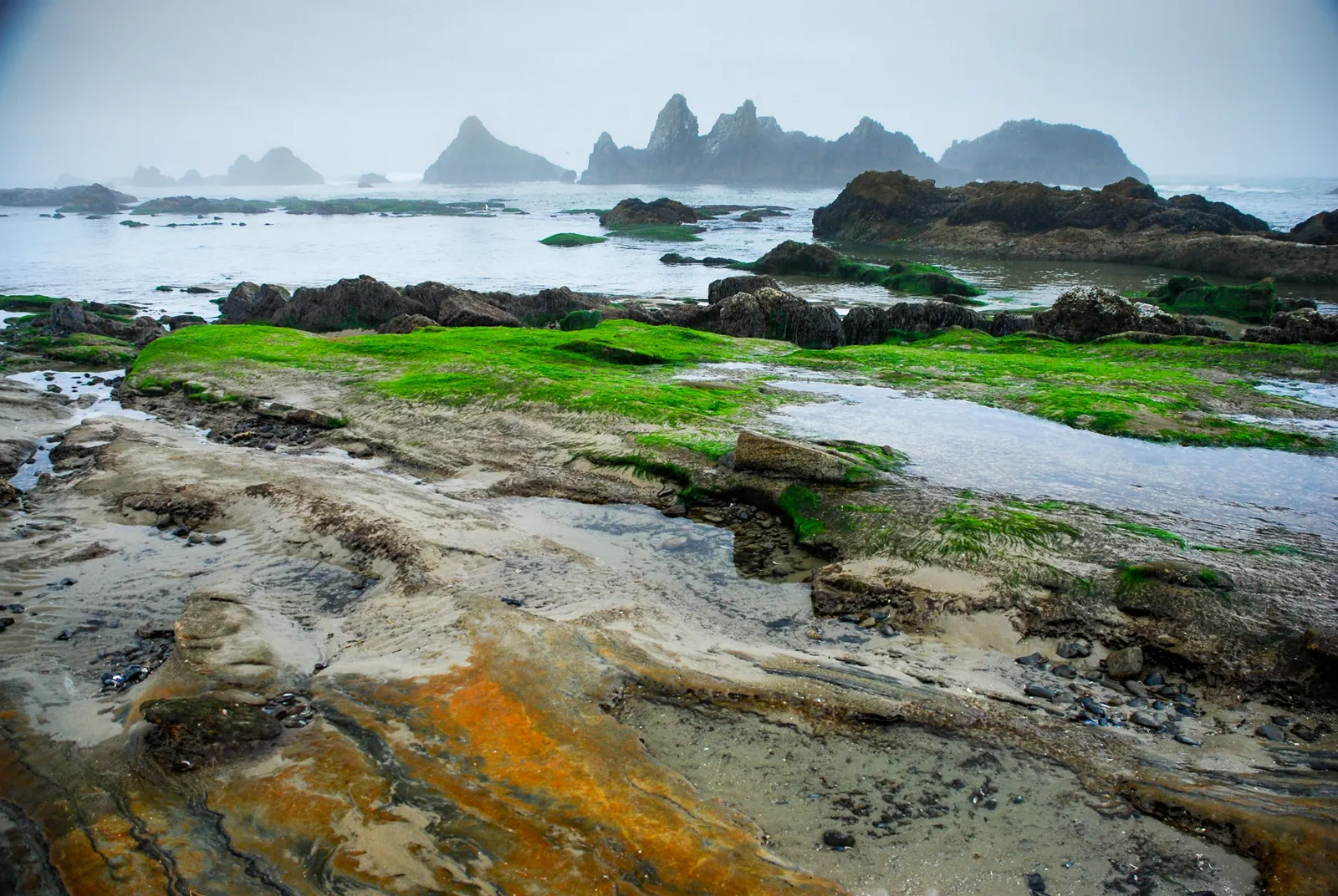
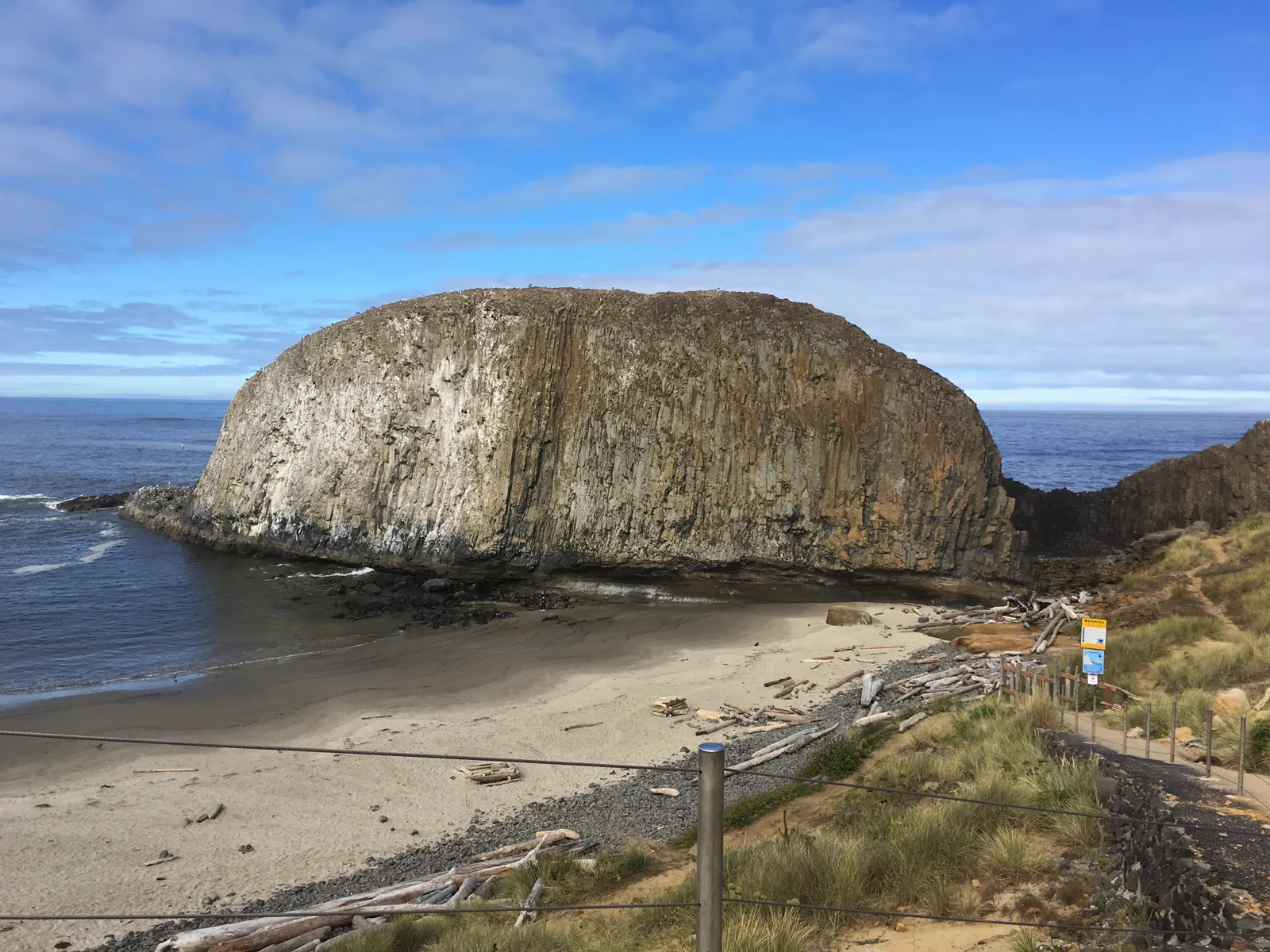
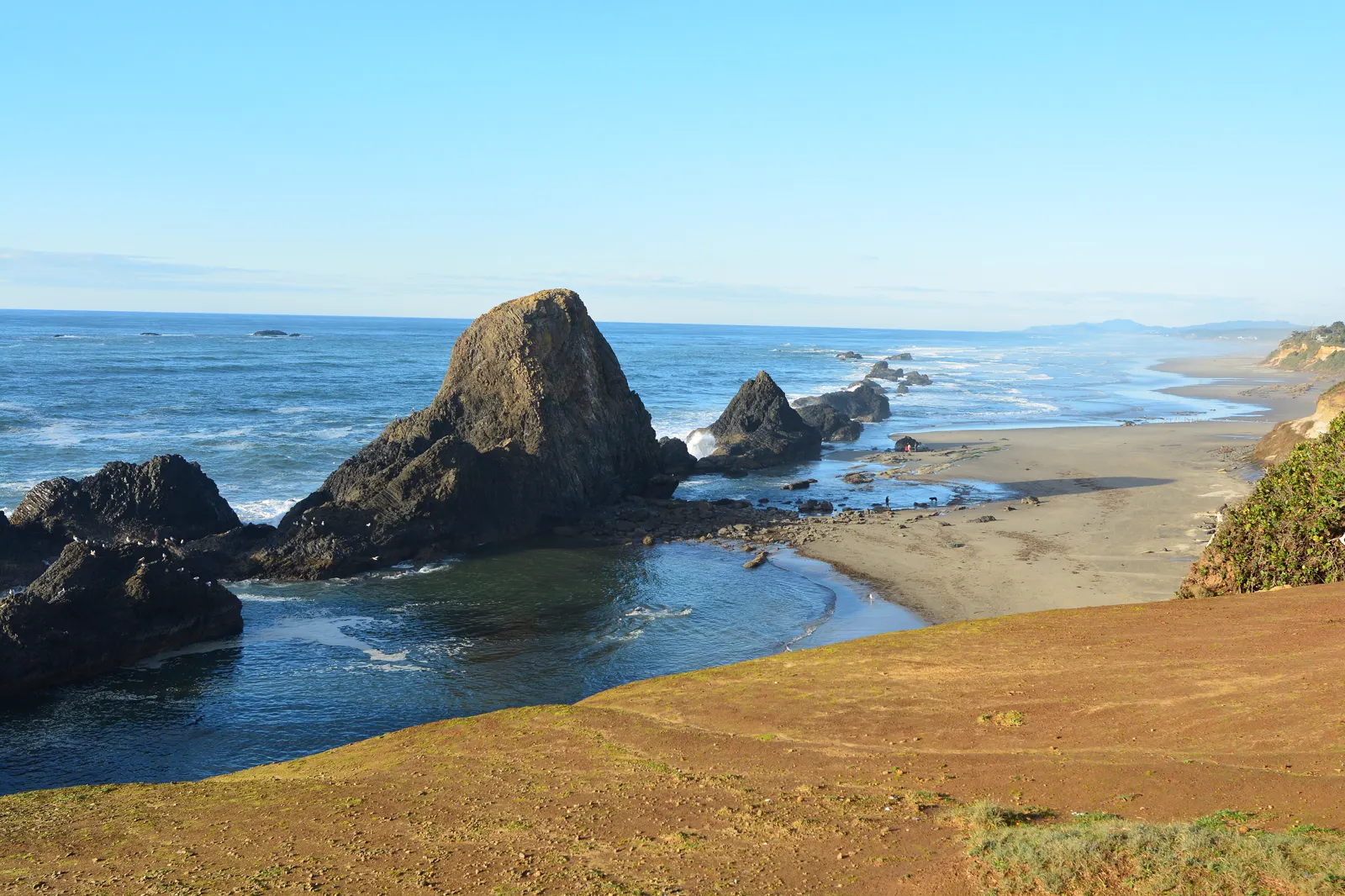
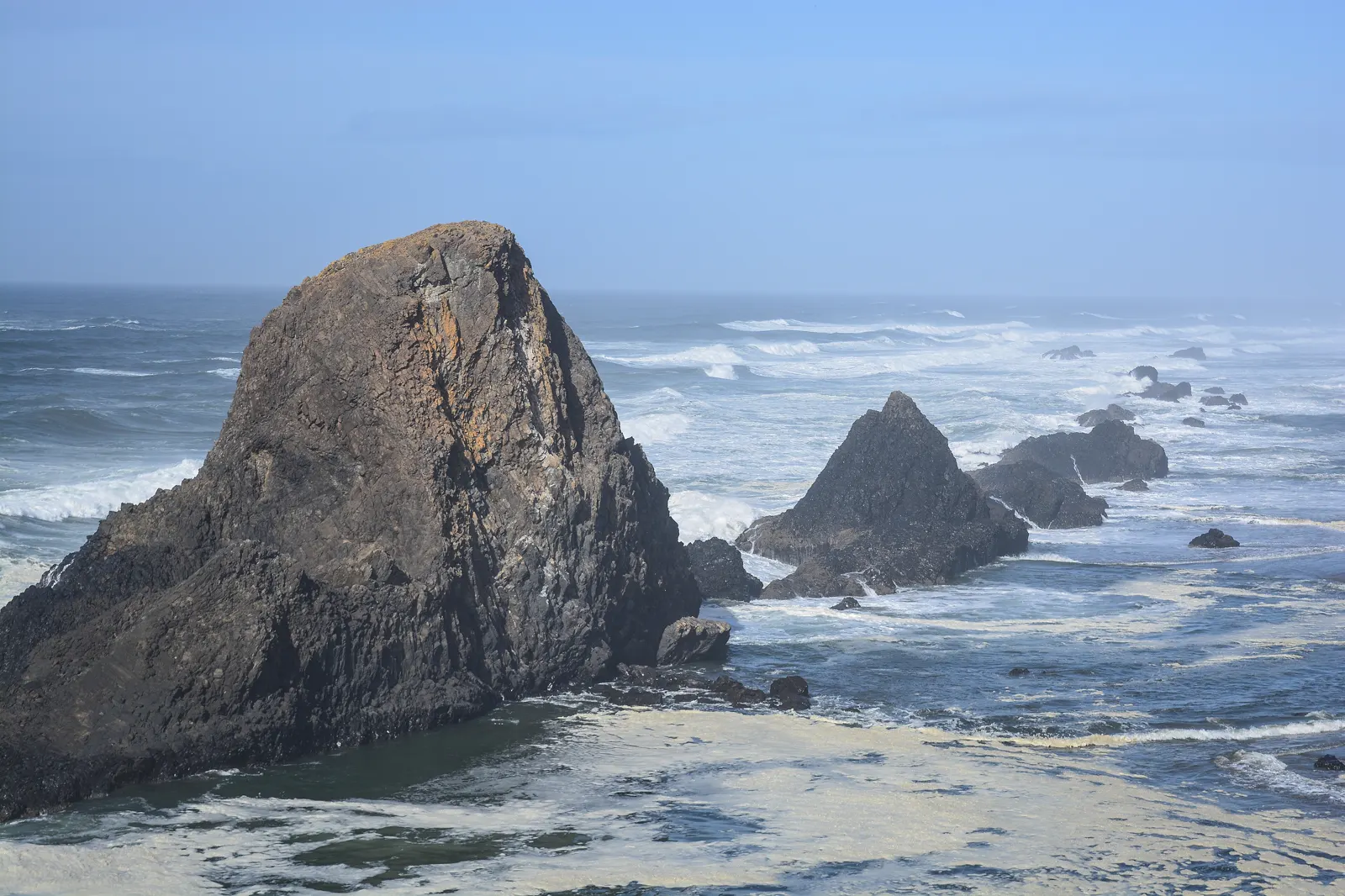
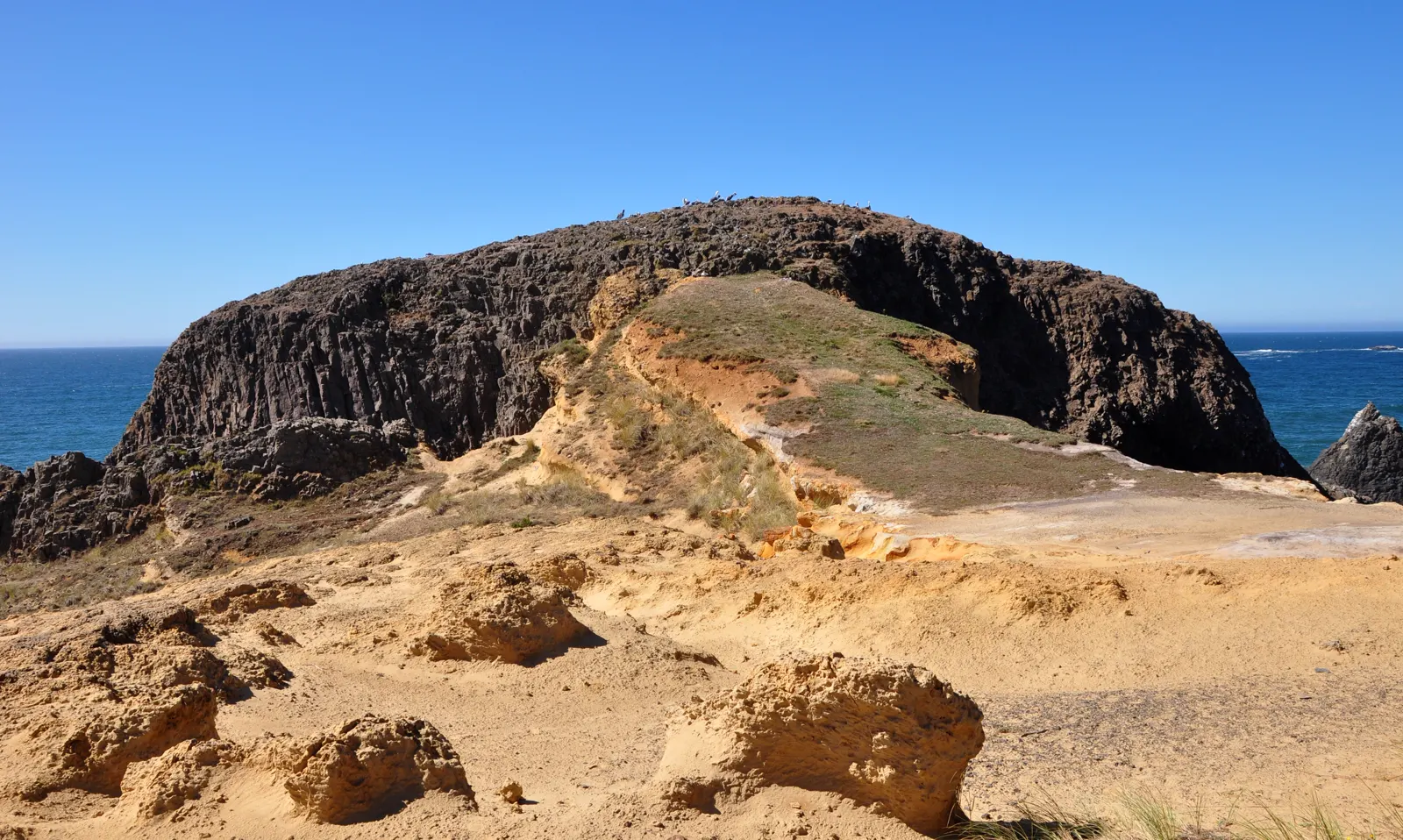
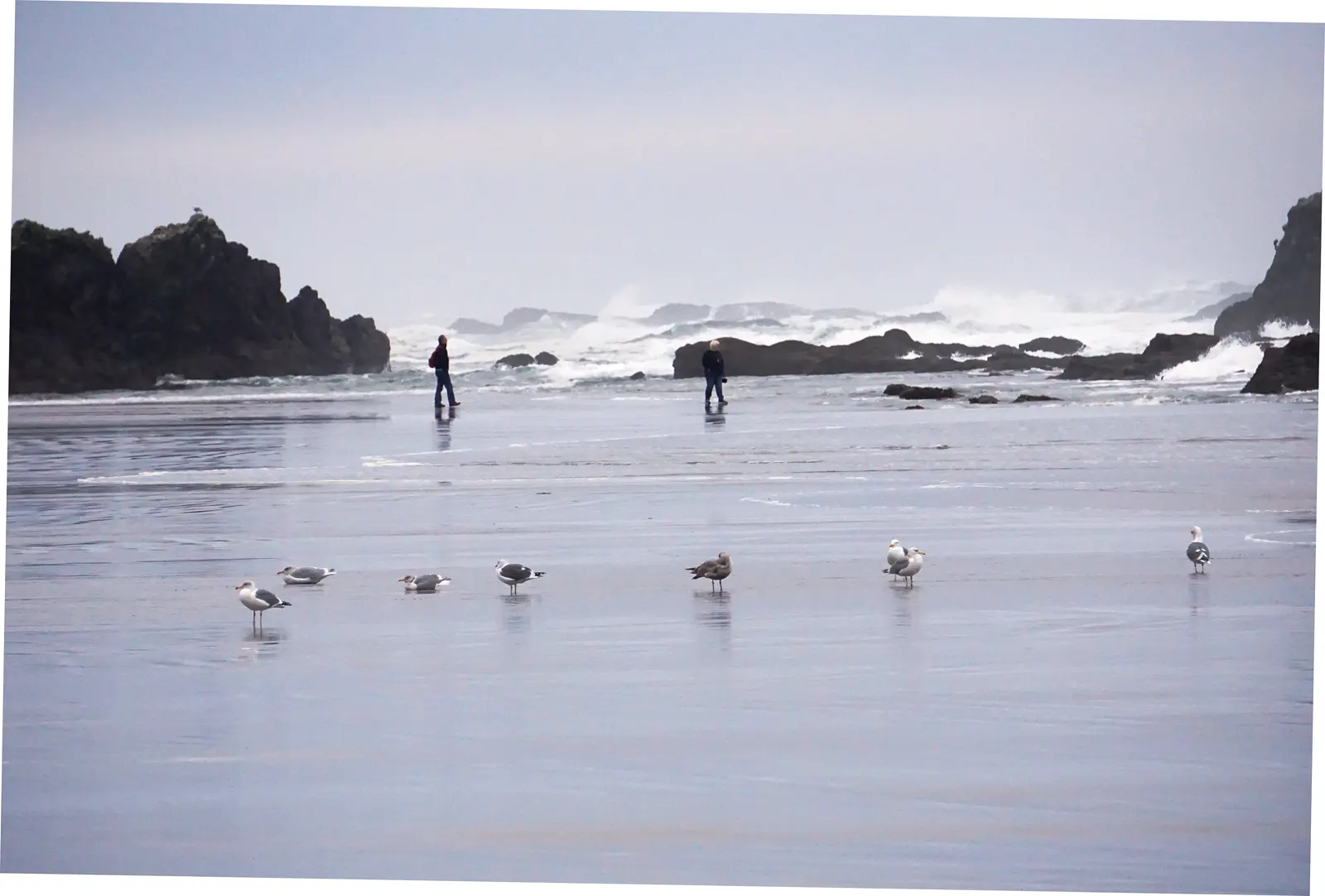
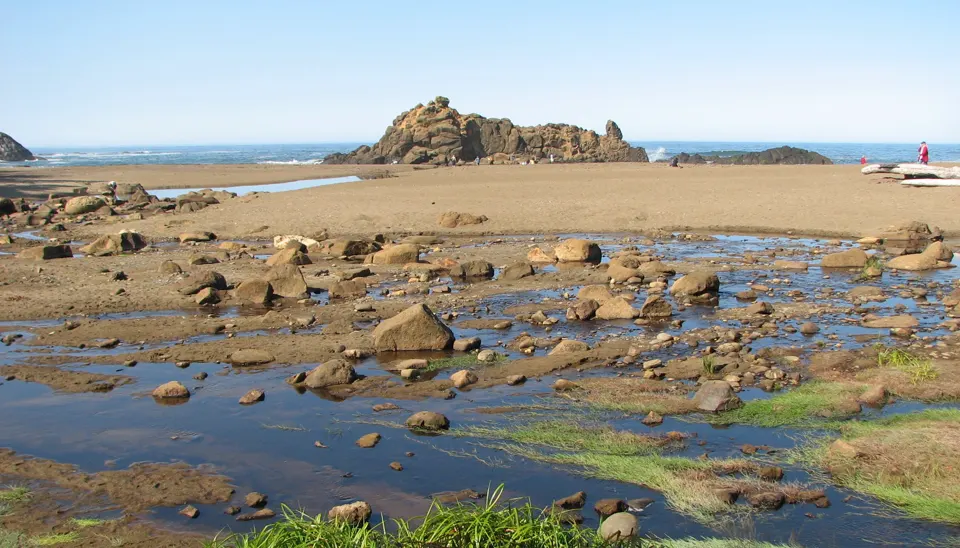
South of Newport, Seal Rock's large offshore rocks give habitat to seals, sea lions and seabirds, and the beach includes interesting tidepools (Oregon State Parks).1
In an emergency
Emergency: call 911- Non-emergency Oregon Parks and Recreation Department (park information): 541-867-74511
- Nearest emergency department Samaritan Pacific Communities Hospital (Emergency Department: always open), 930 SW Abbey St, Newport, OR 97365, 541-265-2244 (hospital main line)2
Nearest full-service emergency department by road distance (OpenStreetMap routing, checked 2026-11-18). No drive time is given.
Best times to go
Oregon State Parks: tides of zero feet and lower are best for tidepools, and tides up to two feet can still give good viewing when the ocean is calm. Arrive at least an hour before low tide and start with the pools closest to the ocean.3
Next low tides 0 ft or lower in daylight3
| Date | Low tide | Height |
|---|---|---|
| Sun 22 Nov 2026 | 4:34 PM | −0.54 ft |
| Mon 21 Dec 2026 | 4:15 PM | −0.69 ft |
| Tue 19 Jan 2027 | 3:59 PM | −0.62 ft |
| Wed 20 Jan 2027 | 4:51 PM | −1.29 ft |
| Wed 17 Feb 2027 | 3:42 PM | −0.46 ft |
| Thu 18 Feb 2027 | 4:34 PM | −0.97 ft |
| Fri 19 Feb 2027 | 5:20 PM | −1.25 ft |
| Thu 18 Mar 2027 | 4:18 PM | −0.22 ft |
| Fri 19 Mar 2027 | 5:08 PM | −0.43 ft |
| Sat 20 Mar 2027 | 5:52 PM | −0.43 ft |
| Sun 21 Mar 2027 | 6:32 PM | −0.19 ft |
| Tue 23 Mar 2027 | 7:44 AM | −0.33 ft |
Predictions from NOAA CO-OPS. Not for navigation. Station 9435380, South Beach, Yaquina Bay. Heights in feet relative to MLLW, local time, rounded to 0.01 ft. We choose which lows to show; times and heights are NOAA's. Sunrise and sunset are our calculation for the tide station's position.45
Hours, fees and status
- Open
- Day use, year round1
Rules
Oregon State Parks asks visitors to leave plants and animals just as they found them: state parks are nature preserves, where all living things are protected.3
Animals found along this coast
Typical of Oregon's rocky shores, from Oregon State Parks' statewide tidepool guide (2018). No official source lists the animals at this spot itself, so these aren't confirmed here.3
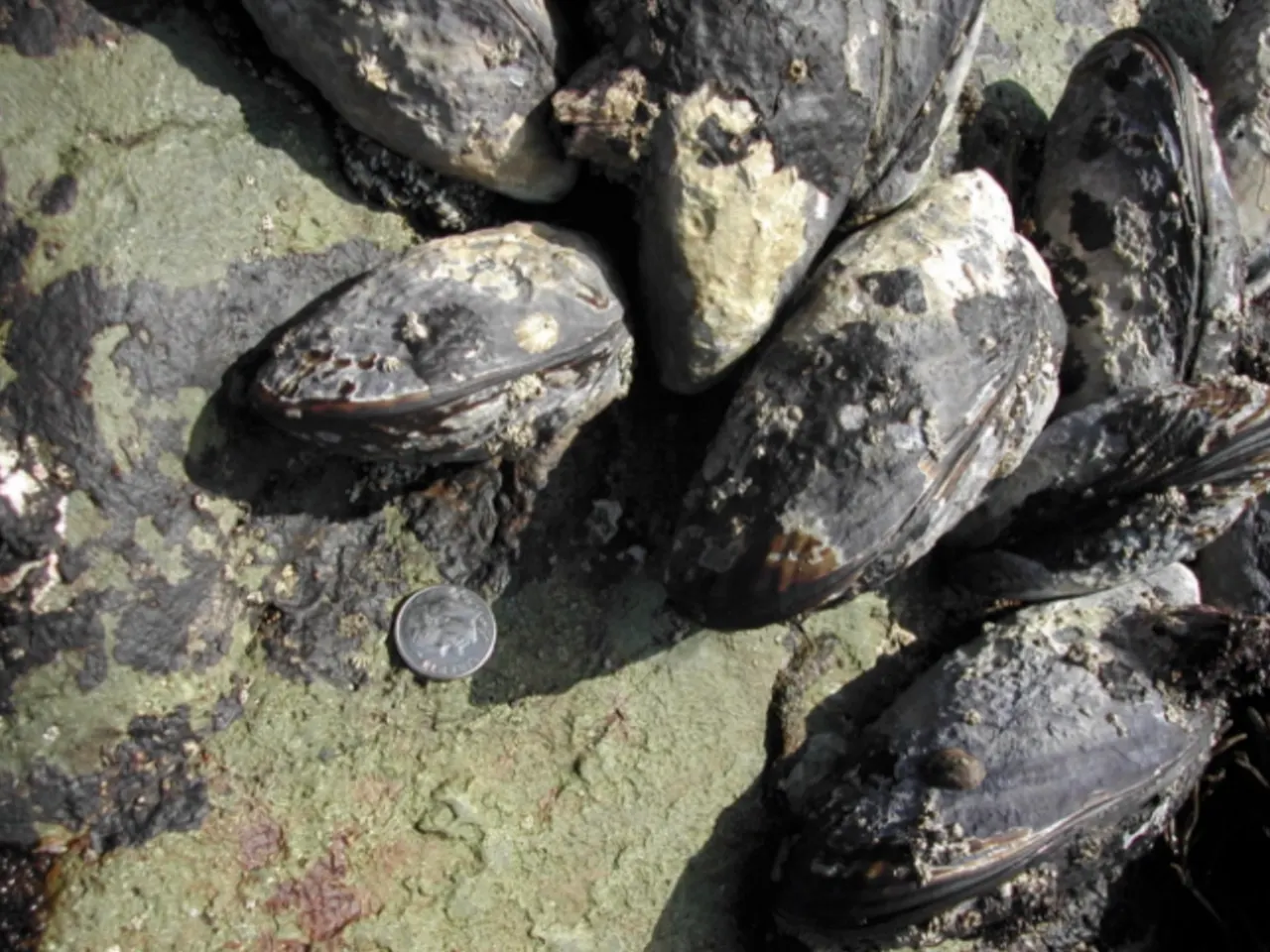
California mussels grow in beds held firmly to the rocks by tough strands. Their shells are tear-shaped and dark blue-black.7 They are commonly 3 to 5 inches long and open at high tide to filter plankton from the water.7
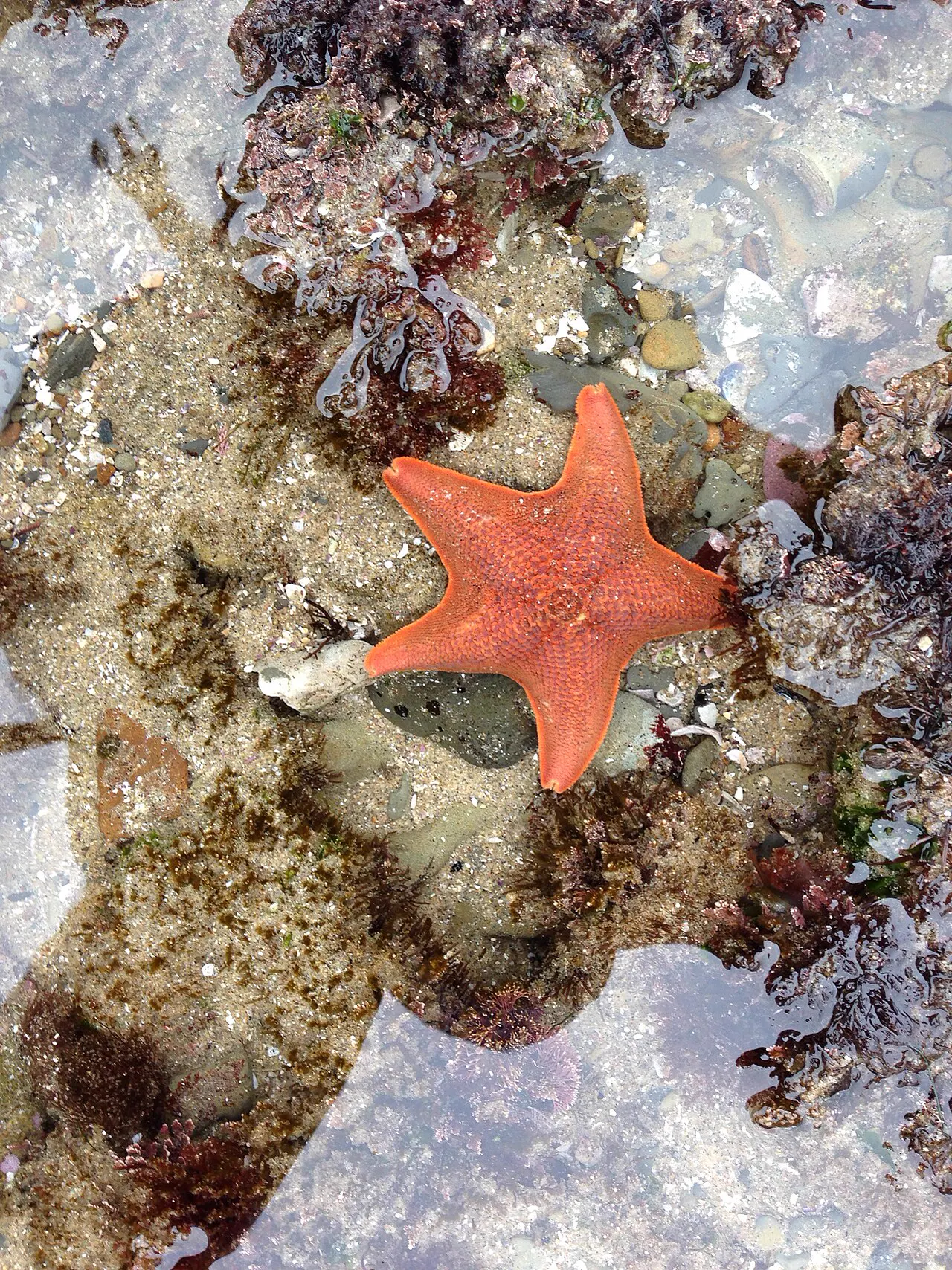
Sea stars are sturdy, flexible predators of the rocky intertidal zone.8 Some species, such as the ochre sea star, play an especially important role in the rocky shore community.9 A wasting disease killed huge numbers of sea stars along the Pacific coast of North America in 2013 and 2014.10
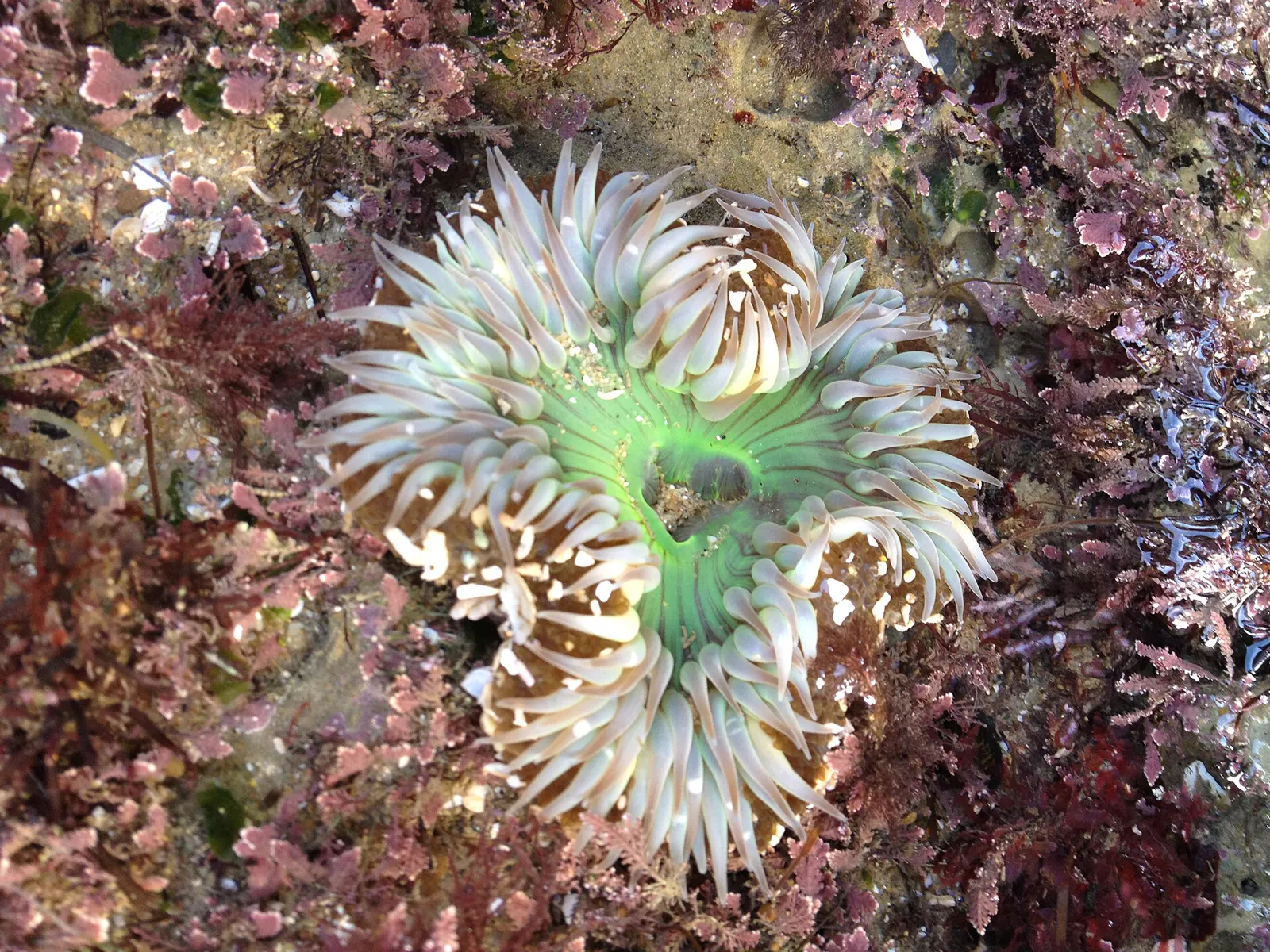
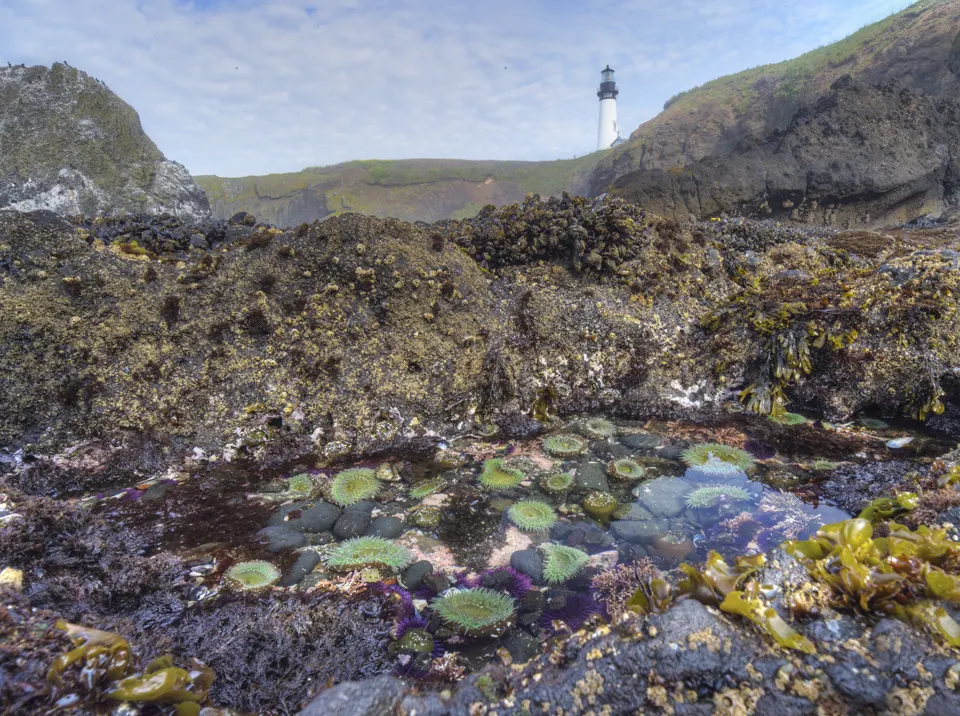
The giant green anemone and the slightly smaller aggregating anemone are both common in tidepools.11 Anemones have no hard shell. Their soft, flexible bodies bend with the moving water.12 They catch prey with stinging cells called nematocysts.7
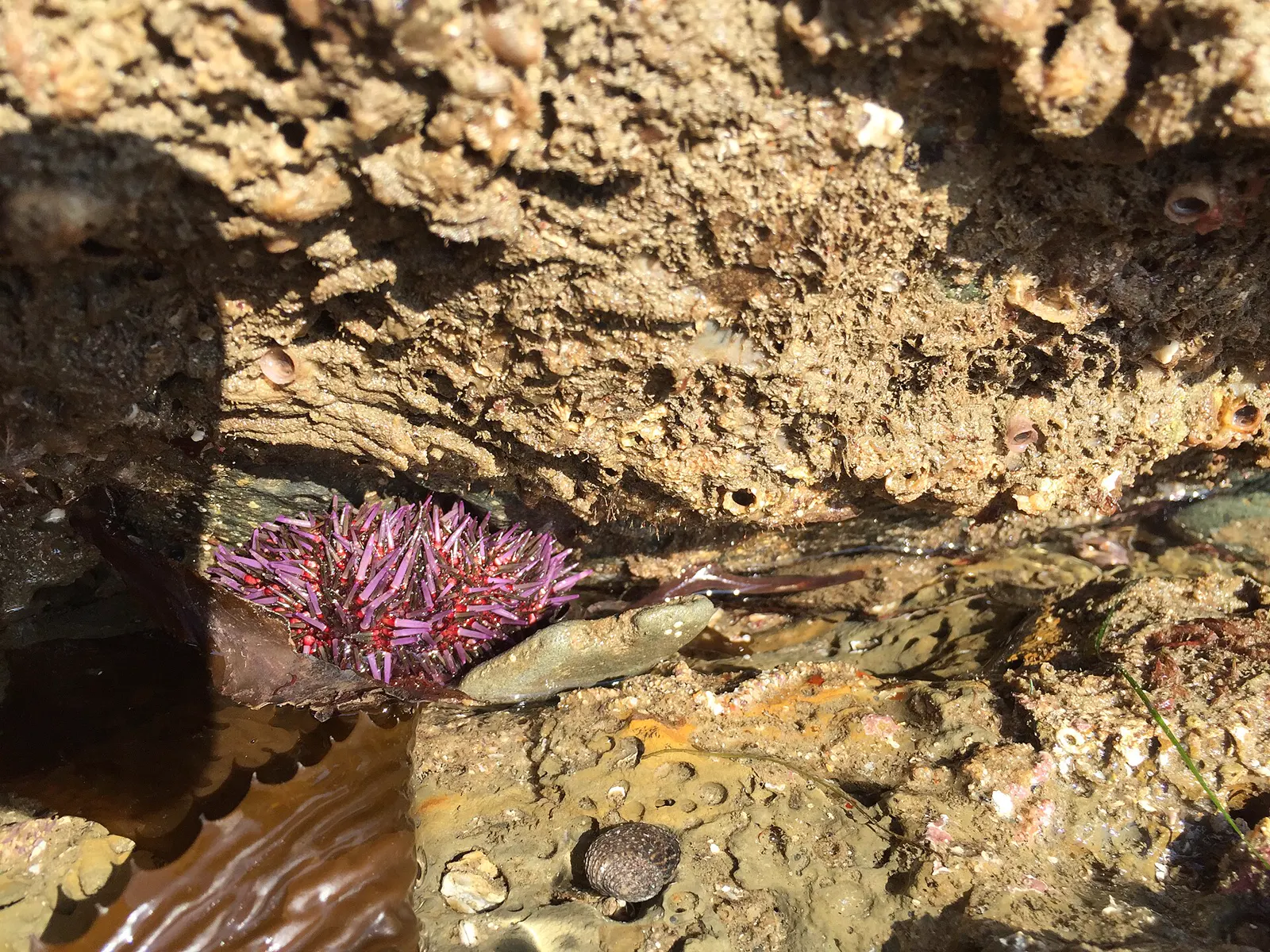
Sea urchins live in tide pools in the lower intertidal zone and are abundant below the tide line.8 Purple sea urchins graze on algae and help control how dense kelp forests become.13
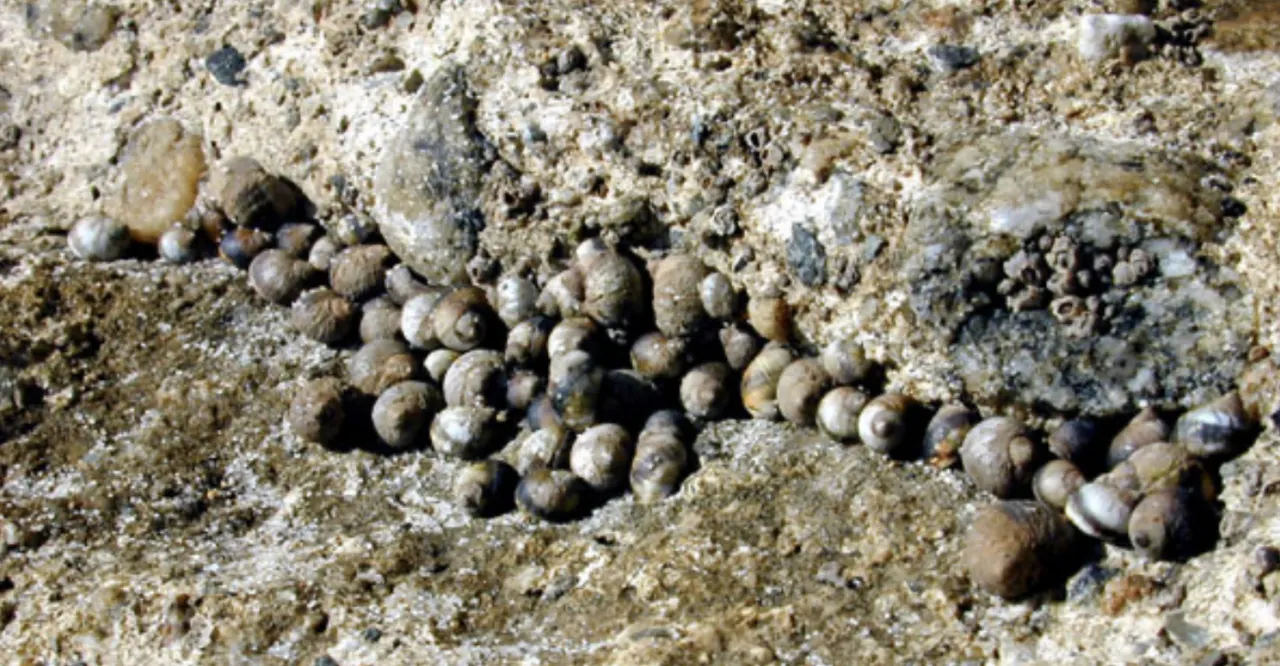
Snails are abundant in the intertidal zone. Common kinds include black and brown turban snails and periwinkles.14 Most graze on algae, scraping it off the rock with a rough, tongue-like radula.14
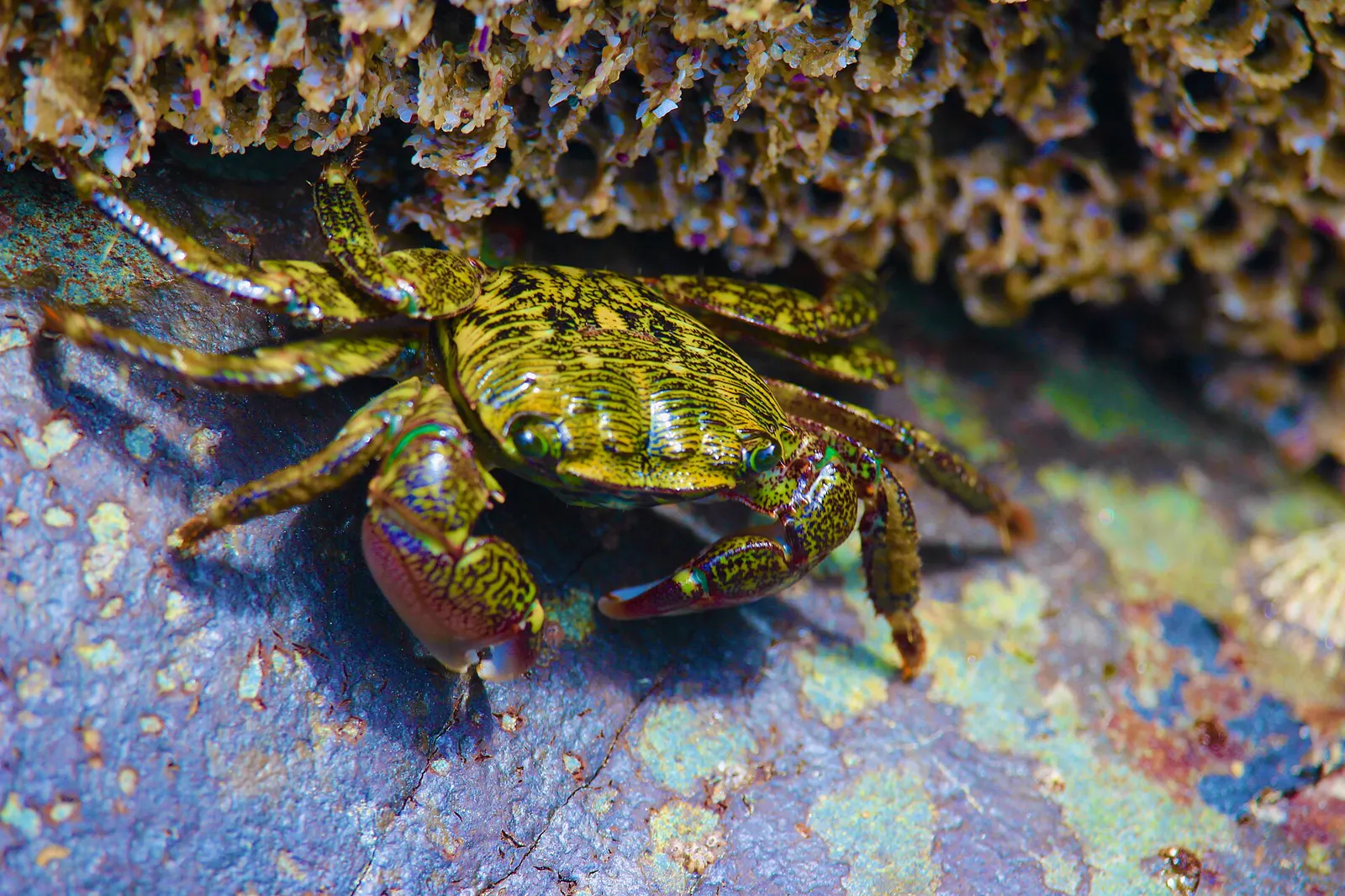
Crabs live even in the high, splash zone of the tidepools, alongside barnacles, limpets, chitons and mussels.15 The shore crab is commonly found in rock crevices in the mid to high intertidal.7
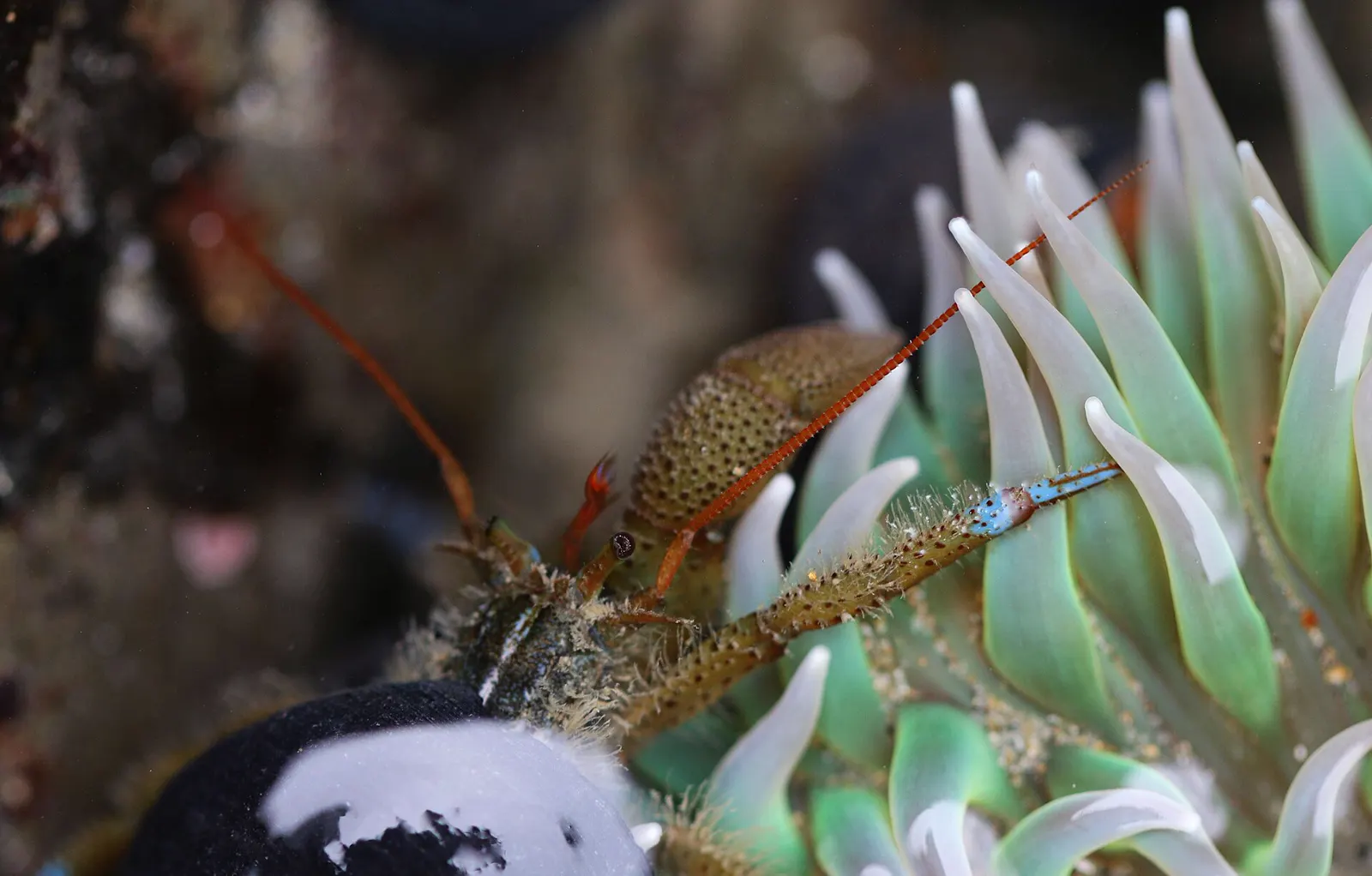
Hermit crabs are among the animals visitors may see in the rocky intertidal at Cabrillo National Monument.16 Empty Tegula (black turban snail) shells are a favourite home for hermit crabs.7
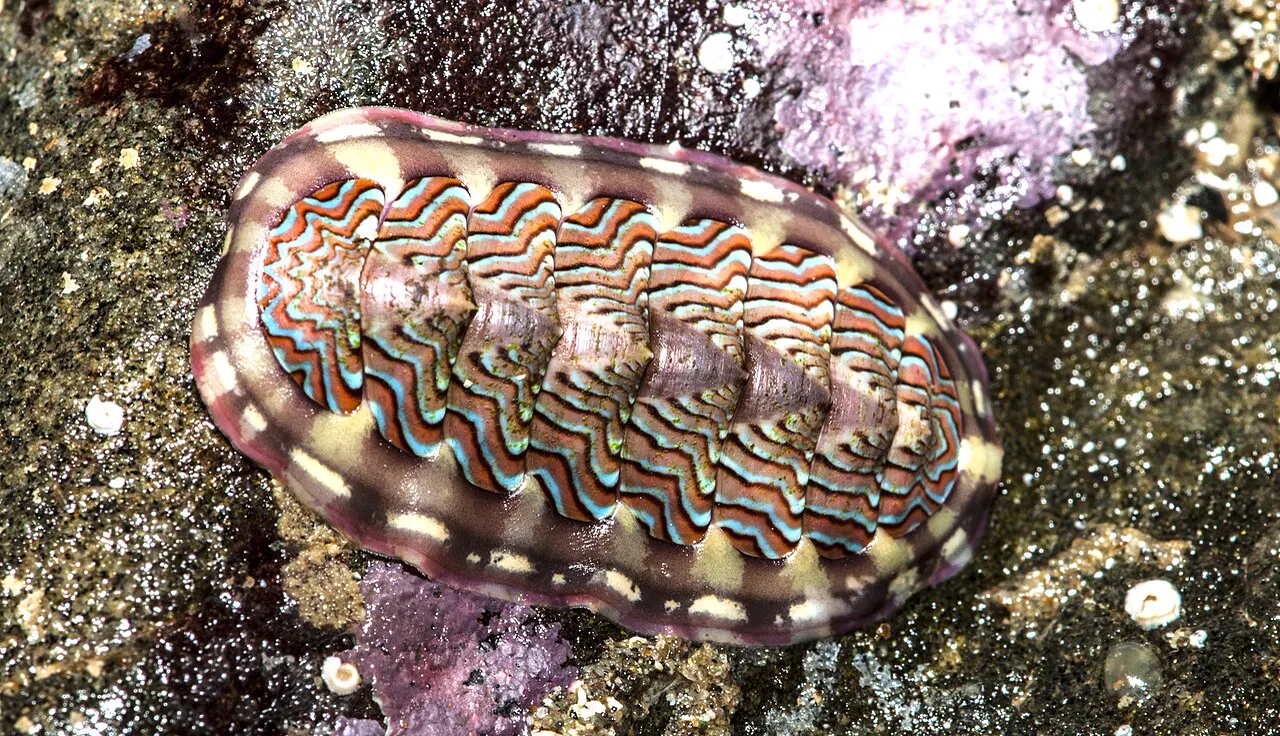
Chitons are oval mollusks with flattened bodies and eight plates along their backs.17 They feed when the tide is high, scraping algae, bacteria and diatoms off the rocks.18
Also seen from here
Oregon State Parks says the offshore rocks are habitat for seals, sea lions and seabirds.1
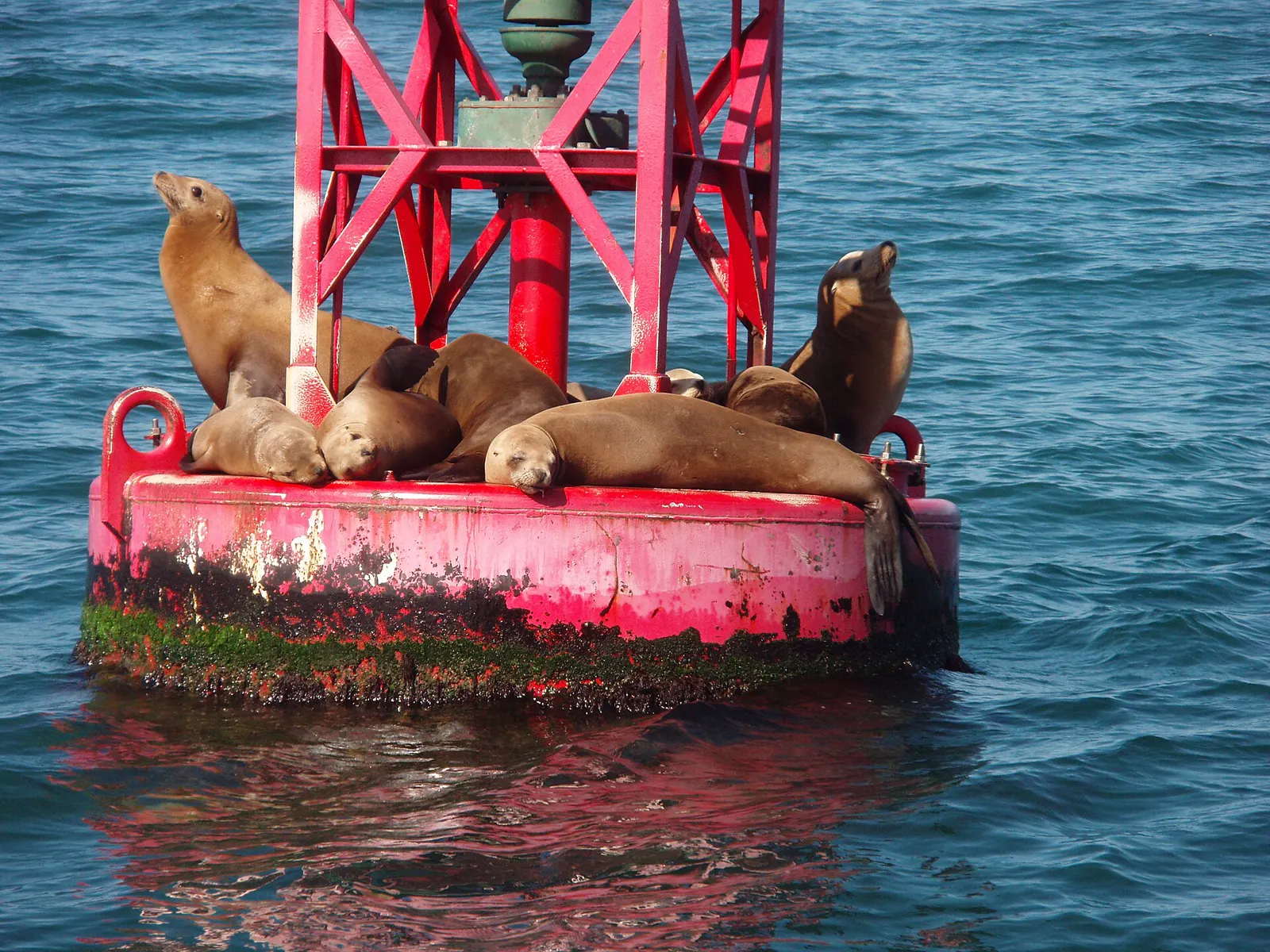
The California sea lion is an "eared seal" native to the West Coast of North America.19 They rest on beaches, docks, buoys and jetties, and are loud, with a call like a barking dog.19 Like all marine mammals, they are protected by federal law.19
Stay safe
- Keep one eye on the ocean. Make sure an incoming wave doesn't sneak up on you. If a big wave heads your way, lie flat on the rocks and hold on tight (Oregon State Parks).3
- Slippery rocks. Travel slowly and carefully: rocks and marine algae can be slippery.3
- Cold and wet. Expect to get wet. Evening temperatures can drop quickly on the coast, so dry off soon to avoid hypothermia.3
Read more: ocean safety · shore safety · weather · first aid
Getting there
- The short trail to the beach is steep in places, with an accessible viewpoint at the midway point overlooking the beach and tidepools.1
- Oregon State Parks' brochure says access is from the main site and from two turn-offs south of it.3
Seal Rock State Recreation Site
Directions to Seal Rock State Recreation Site, using the map point Oregon State Parks gives for the park.1 Loads Google Maps when you tap.
Photos of this spot
Nearby tide pools
Page history
- : Seal Rock tide pools, Oregon: "Animals found along this coast" added (typical of Oregon's rocky shores, not confirmed at the spot)
- : Seal Rock: hours, fees or status added
- : Seal Rock added
Sources
- Oregon Parks and Recreation Department: Seal Rock State Recreation Site (opens in a new tab) · accessed 18 November 2026
- Samaritan Health Services: Samaritan Pacific Communities Hospital (opens in a new tab) · accessed 18 November 2026
- Oregon Parks and Recreation Department: Oregon's Rocky Intertidal Areas (brochure 63400-8136, 5/2018) (opens in a new tab) · accessed 18 November 2026
- NOAA CO-OPS: Tide predictions (high/low), station 9435380 South Beach, Yaquina Bay; MLLW, feet, local time (opens in a new tab) · accessed 18 November 2026
- NOAA CO-OPS: Metadata API: station names and positions (9410166, 9410230, 9410580) (opens in a new tab) · accessed 17 November 2026
- Oregon Parks and Recreation Department: Ecola State Park (opens in a new tab) · accessed 18 November 2026
- National Park Service, Cabrillo National Monument: Intertidal Field Guide (opens in a new tab) · page updated 25 June 2021 · accessed 17 November 2026
- National Park Service, Point Reyes National Seashore: Echinoderms (opens in a new tab) · page updated 19 September 2022 · accessed 17 November 2026
- National Park Service, Redwood National and State Parks: Sea Stars (opens in a new tab) · page updated 7 December 2020 · accessed 17 November 2026
- MARINe (Multi-Agency Rocky Intertidal Network), UC Santa Cruz: Sea Star Wasting Disease (opens in a new tab) · page updated 6 October 2026 · accessed 17 November 2026
- National Park Service, Channel Islands National Park: Anemone (opens in a new tab) · page updated 21 May 2021 · accessed 17 November 2026
- National Park Service, Klamath Inventory and Monitoring Network: On the Edge: The Curious Lives of Intertidal Organisms and How We Monitor Them (opens in a new tab) · page updated 28 November 2022 · accessed 17 November 2026
- MARINe (Multi-Agency Rocky Intertidal Network), UC Santa Cruz: Strongylocentrotus purpuratus (Purple Urchin) (opens in a new tab) · page updated 7 August 2025 · accessed 17 November 2026
- National Park Service, Channel Islands National Park: Snails (opens in a new tab) · page updated 21 May 2021 · accessed 17 November 2026
- National Park Service: Cabrillo National Monument: The Rocky Intertidal Zone (opens in a new tab) · page updated 31 October 2026 · accessed 17 November 2026
- National Park Service, Cabrillo National Monument: Tidepool Wayside Display (opens in a new tab) · page updated 20 February 2024 · accessed 17 November 2026
- National Park Service, Glacier Bay National Park & Preserve: Snails, Limpets & Chitons (opens in a new tab) · page updated 16 March 2018 · accessed 17 November 2026
- National Park Service, Channel Islands National Park: Chiton (opens in a new tab) · page updated 21 May 2021 · accessed 17 November 2026
- NOAA Fisheries: California Sea Lion (opens in a new tab) · page updated 7 April 2025 · accessed 17 November 2026
Checked against the sources above on 18 November 2026. Hours, fees and rules can change without notice, so check with the Oregon Parks and Recreation Department (Seal Rock State Recreation Site) before you go. Not affiliated with or endorsed by the Oregon Parks and Recreation Department (Seal Rock State Recreation Site) or NOAA.
Report a change
Visited recently and something's different? Reports go to review first. They don't change the page until we check them against the official source.
Send a report How reports work